Old Man's Beard
Usnea Barbata
Medicinal Facts
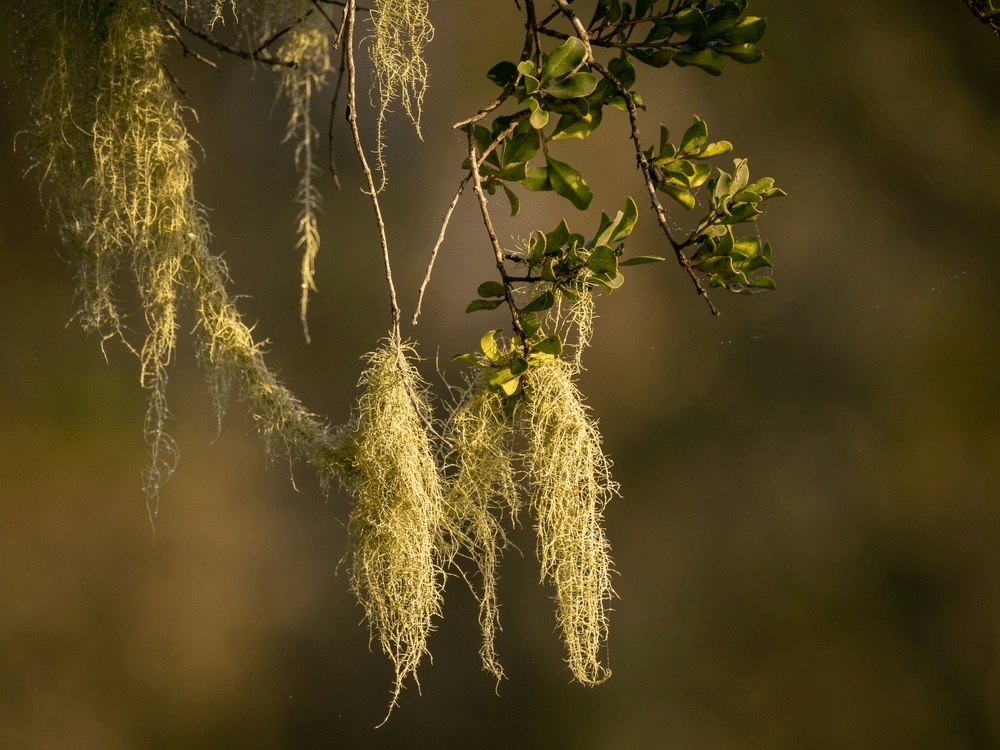
Usnea barbata, commonly known as Old Man's Beard, is a lichen whose medicinal properties are primarily attributed to usnic acid, a potent antimicrobial and anti-inflammatory compound. It sits at the intersection of traditional herbal medicine, where it has been used for respiratory and skin infections, and modern pharmacognosy, which investigates its role as an antimicrobial agent against resistant strains. The lichen's unique symbiotic nature, combining fungal and algal components, contributes to its diverse bioactive profile.
What it helps with
Respiratory infections
Usnic acid inhibits bacterial growth by disrupting ATP synthesis in the bacterial cell membrane, targeting both gram-positive and gram-negative bacteria. This mechanism has been supported by in vitro studies, and traditional use corroborates its application in treating bronchitis and pneumonia.
Skin infections and wound healing
Usnic acid exerts antimicrobial effects by interfering with bacterial protein synthesis and disrupting cell wall integrity. It is particularly effective against Staphylococcus aureus, including MRSA strains, as demonstrated in both in vitro and animal studies. Its traditional use in poultices for wounds underscores its role in skin health.
Antifungal activity
Usnic acid inhibits fungal growth by disrupting mitochondrial function, specifically targeting the electron transport chain. This has been demonstrated in vitro against Candida species, suggesting its potential in managing fungal infections.
Anti-inflammatory effects
Usnic acid modulates inflammatory pathways by inhibiting the NF-kB signaling cascade, reducing the production of pro-inflammatory cytokines such as TNF-a and IL-6. This has been observed in animal studies, aligning with traditional uses for inflammation.
Immune modulation
Polysaccharides from Usnea barbata enhance macrophage activity and cytokine production, potentially boosting innate immune responses. This immunomodulatory effect is supported by in vitro studies and traditional applications in boosting overall immunity.
Antioxidant properties
Usnic acid and other phenolic compounds in Usnea scavenge free radicals and inhibit lipid peroxidation, protecting cells from oxidative stress. This antioxidant activity has been confirmed in vitro, suggesting a role in cellular protection.
Antiviral potential
Usnic acid may interfere with viral replication by inhibiting viral DNA polymerase, as suggested by preliminary in vitro studies. While traditional use for viral infections is noted, clinical data are limited.
Key active compounds
Usnic acid
A dibenzofuran derivative that disrupts ATP synthesis in microbial cells, showing broad-spectrum antimicrobial activity. It also inhibits NF-kB, contributing to its anti-inflammatory effects. Bioavailability is a concern, with topical applications being most effective.
Polysaccharides
Complex carbohydrates that modulate immune function by enhancing macrophage activity and cytokine production. They contribute to the lichen's immunostimulatory properties.
Lichenan
A beta-glucan polysaccharide that supports immune health by activating macrophages and other immune cells, enhancing the body's defense mechanisms.
Protolichesterinic acid
An aliphatic acid with potential anti-inflammatory and antimicrobial properties, though less studied than usnic acid.
Salazinic acid
A secondary metabolite with antioxidant and antimicrobial activities, contributing to the overall bioactivity of the lichen.
Barbatic acid
A depside compound with potential antimicrobial effects, though its specific mechanisms are less characterized compared to usnic acid.
Evernic acid
A phenolic compound that may contribute to the lichen's overall antimicrobial and antioxidant properties.
What the research says
Research on Usnea barbata focuses heavily on its antimicrobial properties, with usnic acid showing strong in vitro efficacy against bacteria and fungi, including resistant strains like MRSA. Human clinical data are sparse, but traditional uses support its role in treating infections. The strongest evidence lies in topical applications due to bioavailability challenges. The main limitation is systemic absorption, as usnic acid has low oral bioavailability. Advances in formulation, such as encapsulation and topical gels, aim to enhance its delivery and efficacy.
Typical dosage
For tinctures, a common dosage is 1-2 ml taken up to three times daily. For decoctions, use 1-2 teaspoons of dried Usnea per cup of water, simmer for 20-30 minutes, and consume up to three times a day. Topical applications such as poultices or salves can be applied directly to the affected area as needed, ensuring the skin is clean before application.
About Old Man's Beard
Traditional Use
Preparations & Dosage
Preparations
- Tincture: Combine dried Usnea with alcohol (vodka or brandy) in a 1:5 ratio. Seal in a jar and let it sit for 4-6 weeks, shaking occasionally. Strain and store in a dark bottle.
- Decoction: Simmer 1-2 teaspoons of dried Usnea in a cup of water for 20-30 minutes. Strain and drink warm.
- Poultice: Moisten dried Usnea with water or herbal tea, then apply directly to the skin. Cover with a clean cloth and leave for several hours.
- Salve: Infuse dried Usnea in olive oil over low heat for several hours. Strain and mix with beeswax to thicken. Pour into containers and let cool.
Interactions & Warnings
Use with caution
Usnea is generally considered safe for topical use, but internal use should be approached with caution due to potential liver toxicity. Pregnant or breastfeeding women and those with liver conditions should avoid internal use. Always consult with a healthcare provider before using it internally.
Herb Interactions
Combined use may enhance immune-stimulating effects, which could be excessive in some individuals.
Community Plants
Real plants of this species grown and shared by the MyFloralVault community.

More in Immune Support





Was this helpful?
0 · 0
Care Guide Available
Learn how to grow and care for Old Man's Beard at home