Bearberry
Arctostaphylos Uva-ursi
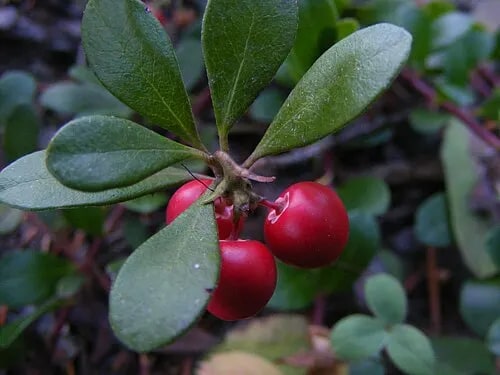
Medicinal Facts
Arctostaphylos uva-ursi, commonly known as bearberry, is renowned for its high arbutin content, a glycoside with notable antimicrobial properties. It stands at the intersection of traditional Native American and European herbal medicine, where it has been used for urinary tract health, and modern phytotherapy research, which explores its role as a natural urinary antiseptic. The plant also contains tannins and flavonoids, contributing to its astringent and anti-inflammatory effects, although its use is limited by potential hepatotoxicity with prolonged use.
What it helps with
Urinary tract infections
Arbutin, upon hydrolysis in the body, releases hydroquinone, which exerts antimicrobial effects against common uropathogens. It inhibits bacterial adhesion to the urinary tract lining, a mechanism supported by both traditional use and modern in vitro studies. Human trials are limited, but the compound's pharmacodynamics are well-documented.
Kidney health
The diuretic effect of uva-ursi is attributed to its arbutin content, which promotes urine flow and helps flush out pathogens. This mechanism, while primarily supported by traditional use, is corroborated by animal studies showing increased renal clearance.
Anti-inflammatory effects
The tannins in uva-ursi, such as gallotannins, exert anti-inflammatory effects by inhibiting pro-inflammatory cytokines like TNF-alpha and IL-6. This action is primarily supported by in vitro studies, highlighting its potential in reducing inflammation in urinary tract tissues.
Antioxidant properties
Flavonoids in bearberry, including quercetin, exhibit antioxidant activity by scavenging free radicals and upregulating endogenous antioxidant enzymes via the Nrf2 pathway. This mechanism is supported by in vitro and animal studies, suggesting a protective role against oxidative stress.
Astringent effects
The high tannin content provides astringent properties, which help tighten and tone mucous membranes. This effect is traditionally utilized to manage diarrhea and inflammation, although clinical evidence is primarily anecdotal.
Skin health
Topically, bearberry extracts are used for their skin-lightening properties, attributed to arbutin's inhibition of tyrosinase, an enzyme crucial in melanin synthesis. This mechanism is supported by in vitro studies, though human trials are sparse.
Gastrointestinal health
The astringent tannins in uva-ursi help reduce gastrointestinal inflammation and diarrhea by binding to proteins and forming a protective layer on mucosal surfaces. This traditional use is supported by anecdotal evidence and limited preclinical studies.
Key active compounds
Arbutin
A glycoside that, upon hydrolysis, releases hydroquinone, which has antimicrobial properties. It is primarily responsible for bearberry's urinary antiseptic effects. Its bioavailability is enhanced in alkaline urine.
Hydroquinone
The active metabolite of arbutin, exhibiting antimicrobial activity by disrupting bacterial cell walls. It is a potent compound, but its use is limited by potential toxicity at high doses.
Gallotannins
Polyphenolic compounds with astringent and anti-inflammatory properties. They bind to proteins, reducing inflammation and protecting mucous membranes.
Quercetin
A flavonoid with antioxidant properties, it modulates the Nrf2 pathway, enhancing cellular defenses against oxidative stress. It also exhibits anti-inflammatory effects by inhibiting pro-inflammatory cytokines.
Catechin
A flavonoid contributing to the antioxidant and anti-inflammatory effects of bearberry. It scavenges free radicals and supports vascular health by modulating nitric oxide pathways.
Tannic acid
A type of tannin that provides astringent properties, helping to tighten and tone tissues. It also exhibits antimicrobial activity by precipitating microbial proteins.
Ursolic acid
A triterpenoid with anti-inflammatory and antimicrobial properties. It modulates NF-kB signaling, reducing inflammation, and supports skin health by promoting collagen synthesis.
What the research says
Research on bearberry primarily focuses on its urinary antiseptic properties, with arbutin and its metabolite hydroquinone being the most studied compounds. Preclinical studies demonstrate significant antimicrobial effects, while human trials are limited but suggest potential efficacy in preventing recurrent urinary tract infections. The antioxidant and anti-inflammatory properties of its flavonoids and tannins are well-supported by in vitro studies, though clinical evidence is less robust. The main limitation of bearberry use is the potential for toxicity with prolonged use, particularly due to hydroquinone; thus, it is recommended for short-term use only. Strategies to mitigate toxicity include using standardized extracts and monitoring dosage carefully.
Typical dosage
For tea/infusion, use 1-2 teaspoons of dried leaves per cup of boiling water, steep for 10-15 minutes, and consume up to three times daily. For tinctures, a typical dose is 1-2 ml up to three times daily. Capsules and powders should be taken according to product instructions, usually not exceeding 500 mg of arbutin daily. Topical applications are used as needed for skin conditions, but internal use should not exceed one week without medical supervision.
About Bearberry
Traditional Use
Preparations & Dosage
Preparations
- Tea / Infusion: Use 1-2 teaspoons of dried bearberry leaves per cup of boiling water. Steep for 10-15 minutes, strain, and consume. Add honey or lemon for taste if desired.
- Tincture: Use a standard tincture ratio of 1:5 (herb to alcohol). Take 1-2 ml up to three times daily, diluted in water or juice.
- Capsule: Follow product instructions, typically 1-2 capsules (containing 300-500 mg of dried leaf) up to three times daily.
- Powder: Mix 1/2 to 1 teaspoon of bearberry powder in water, juice, or smoothies. Consume up to twice daily.
- Topical application: Prepare a poultice or ointment using bearberry extract or powder. Apply to affected skin areas as needed.
Interactions & Warnings
Use with caution
Bearberry should not be used for extended periods or in high doses due to potential liver toxicity from hydroquinone. Pregnant or nursing women, children, and individuals with kidney disease should avoid it. It may cause nausea or vomiting in sensitive individuals.
Herb Interactions
May increase photosensitivity when combined, leading to a higher risk of sunburn.
Both have antimicrobial properties; combined use should be monitored to avoid excessive antibacterial effects.
Community Plants
Real plants of this species grown and shared by the MyFloralVault community.

More in Immune Support





Was this helpful?
0 · 0