Bearberry
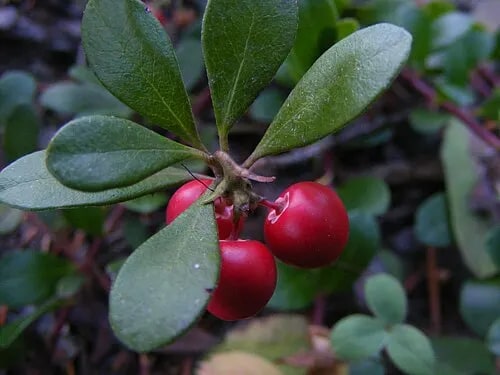
Description by @jominime
produces clusters of small orange-red berries that bears are visibly fond of.
the leaves are the medicinal part.
leaves include arbutin at 5–15%, methylarbutin at ~4%, and free aglycones, along with tannic acid, ursolic acid, galloyl-tannins, gallic acid, syringic acid, p-coumaric acid, flavonoids, and galloylarbutin.
comprehensive HPLC-IMS analysis identified 88 phenolic compounds in bearberry leaves: 14 arbutin derivatives, 33 hydrolyzable tannins, 6 flavanols, 26 flavonols, 9 saccharide derivatives, and glycosidic compounds. the most abundant compound was arbutin, averaging above 5% dry weight and exceeding 10% in some populations. 1,2,3,4,6-pentagalloylglucose (6.6–12.9 mg/g), quercetin 3-galactoside/quercetin 3-glucoside (2.72–5.69 mg/g), quinic acid, and ellagic acid also present at significant concentrations.
additional constituents from the leaf: corilagin (a potent antimicrobial ellagitannin), ursolic acid (triterpene), oleanolic acid, lupeol, α- and β-amyrin, essential oil (α-terpineol, linalool, geraniol, thymol, borneol), anthocyanins cyanidin and delphinidin, myricetin, and isoquercetin.
arbutin is the flagship depigmenting compound and bearberry is its primary natural source — so much so that cosmetic-grade "natural arbutin" is essentially bearberry extract.
arbutin is the most important antioxidant and antibacterial compound in bearberry leaves, and it suppresses biosynthesis of melanin in human skin — widely used in skin-lightening agents.
the depigmenting mechanism works through inhibition of melanosomal tyrosinase specifically, rather than suppression of tyrosinase expression and synthesis.
arbutin and methylarbutin are hydrolyzed in alkaline urine to free hydroquinone, which is the active antiseptic form excreted directly into the urinary tract. arbutin and methylarbutin have anti-inflammatory and antiseptic activities that are excreted in the urine. traditionally used for dysuria, cystitis, urethritis, and kidney and bladder stones.
a 56-year-old woman who had taken uva-ursi for 3 years developed reduced visual acuity with a typical bull's-eye maculopathy bilaterally — the authors suggested the effect was due to impaired melanin synthesis in the retinal pigment epithelium.
melanin in the retinal pigment epithelium is not cosmetically inconvenient — it's structurally essential. the RPE relies on melanin to absorb stray light and protect photoreceptors. arbutin taken internally long-term can deplete retinal melanin and cause permanent macular damage. short-term topical use in cosmetics is considered safe; long-term oral dosing is not recommended.
topical cosmetic use is fine, extended internal supplementation is not.
Related Plants
Plant information is for educational purposes only.