Noni
Morinda Citrifolia

Medicinal Facts
Morinda citrifolia, commonly known as Noni, is renowned for its diverse phytochemical profile, particularly its iridoids, polysaccharides, and anthraquinones. It sits at the intersection of Polynesian traditional medicine, where it is used for its broad tonic effects, and emerging scientific research focused on its immunomodulatory and antioxidant properties. The fruit's complex matrix of compounds is studied for their synergistic effects on inflammation, immune response, and cellular health. Its traditional use in treating infections and supporting overall vitality is now being explored through modern pharmacological lenses.
What it helps with
Immune modulation
Noni's polysaccharides, particularly noni-ppt, enhance immune response by activating macrophages and increasing the production of cytokines such as IL-1 and IL-6. This immunomodulatory action is supported by in vitro and animal studies, which demonstrate enhanced phagocytic activity and lymphocyte proliferation.
Chronic inflammation
Iridoids such as deacetylasperulosidic acid inhibit the COX-2 enzyme and modulate the NF-kB pathway, reducing the production of pro-inflammatory cytokines like TNF-a and IL-1b. These effects have been observed in animal models, suggesting potential benefits in inflammatory conditions.
Antioxidant support
Anthraquinones, including damnacanthal, exhibit strong antioxidant activity by scavenging free radicals and upregulating Nrf2-dependent antioxidant enzymes. This mechanism is primarily supported by in vitro studies, highlighting its potential in oxidative stress-related disorders.
Metabolic health
Noni juice has been shown to improve lipid profiles and insulin sensitivity, potentially through the modulation of PPAR-gamma and AMPK pathways. Small human trials suggest a reduction in total cholesterol and triglycerides, though larger studies are needed to confirm these findings.
Pain management
The analgesic properties of Noni are attributed to its ability to inhibit COX-2 and modulate opioid receptors, providing pain relief comparable to some NSAIDs in animal models. Traditional use for pain relief is supported by these pharmacological insights.
Cancer-adjunct research
Damnacanthal and other anthraquinones have been shown to induce apoptosis in cancer cells by modulating pathways such as MAPK and PI3K/Akt. While promising, these effects are primarily observed in vitro, and clinical evidence remains preliminary.
Digestive health
Traditionally used as a digestive tonic, Noni's anthraquinones stimulate intestinal motility and enhance digestive enzyme activity. This is supported by animal studies showing improved gastrointestinal transit and reduced symptoms of constipation.
Cardiovascular health
Noni's iridoids and phenolic compounds enhance endothelial function by increasing nitric oxide production and reducing oxidative stress. Human trials have reported improvements in blood pressure and vascular health, though results vary.
Key active compounds
Deacetylasperulosidic acid
An iridoid glycoside with anti-inflammatory properties, it inhibits COX-2 and modulates NF-kB, contributing to Noni's overall anti-inflammatory effects.
Damnacanthal
An anthraquinone with potent antioxidant and anticancer properties, it modulates MAPK and PI3K/Akt pathways, inducing apoptosis in cancer cells.
Noni-ppt
A polysaccharide-rich fraction that enhances immune function by activating macrophages and increasing cytokine production, crucial for its immunomodulatory effects.
Scopoletin
A coumarin compound that exhibits vasodilatory effects by increasing nitric oxide production, contributing to cardiovascular benefits.
Quercetin
A flavonoid with strong antioxidant properties, it scavenges free radicals and modulates inflammatory pathways, enhancing Noni's overall therapeutic profile.
Rutin
A glycoside of quercetin, it supports vascular health by strengthening capillaries and reducing oxidative stress, often working synergistically with other flavonoids.
Beta-sitosterol
A phytosterol that modulates cholesterol metabolism and supports immune function, contributing to Noni's benefits in metabolic and cardiovascular health.
What the research says
Research on Noni focuses heavily on its immunomodulatory and anti-inflammatory properties. Polysaccharides like noni-ppt show strong preclinical evidence for immune enhancement, while iridoids provide a basis for its anti-inflammatory effects, primarily in animal models. Human studies are more limited but suggest benefits in metabolic and cardiovascular health, with small trials indicating improvements in lipid profiles and blood pressure. The primary limitation in Noni research is the variability in bioactive compound concentrations across different preparations, which affects the consistency of results. Standardization of Noni products and further large-scale human trials are needed to fully validate its therapeutic potential.
Typical dosage
For noni juice, a typical dosage is 30-60 ml per day, taken on an empty stomach. Capsules are usually standardized to contain 500-1000 mg of noni fruit extract, taken once or twice daily. Tinctures can be used at a dosage of 1-2 ml, diluted in water, up to three times a day. For topical applications, noni leaf or fruit pulp can be applied directly to the skin for wound healing, but should be used cautiously to avoid skin irritation.
About Noni
Traditional Use
Preparations & Dosage
Preparations
- Juice: Harvest ripe noni fruits and wash thoroughly. Blend the fruits with water until smooth. Strain the mixture to remove pulp, and store the juice in a refrigerator. Consume 30-60 ml on an empty stomach.
- Capsule: Use commercially available noni capsules. Follow the manufacturer's dosage instructions, typically 500-1000 mg once or twice daily.
- Tea / Infusion: Dry noni leaves and crush them. Steep 1-2 teaspoons of dried leaves in boiling water for 10-15 minutes. Strain and serve warm.
- Topical application: Mash fresh noni fruit or leaves into a paste. Apply directly to the affected skin area and cover with a clean bandage. Leave for several hours or overnight.
Interactions & Warnings
Use with caution
Noni should be used with caution by individuals with kidney problems due to its high potassium content. Pregnant or breastfeeding women should consult a healthcare provider before use. Excessive consumption may lead to liver toxicity.
Herb Interactions
May reduce the effectiveness of noni due to enzyme induction, affecting metabolism.
Both have anti-inflammatory properties, which may enhance each other's effects.
Community Plants
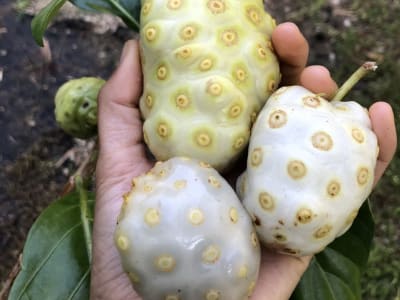
Real plants of this species grown and shared by the MyFloralVault community.
More in Immune Support





Was this helpful?
0 · 0
Care Guide Available
Learn how to grow and care for Noni at home