Cat's Claw
Uncaria Tomentosa
Medicinal Facts
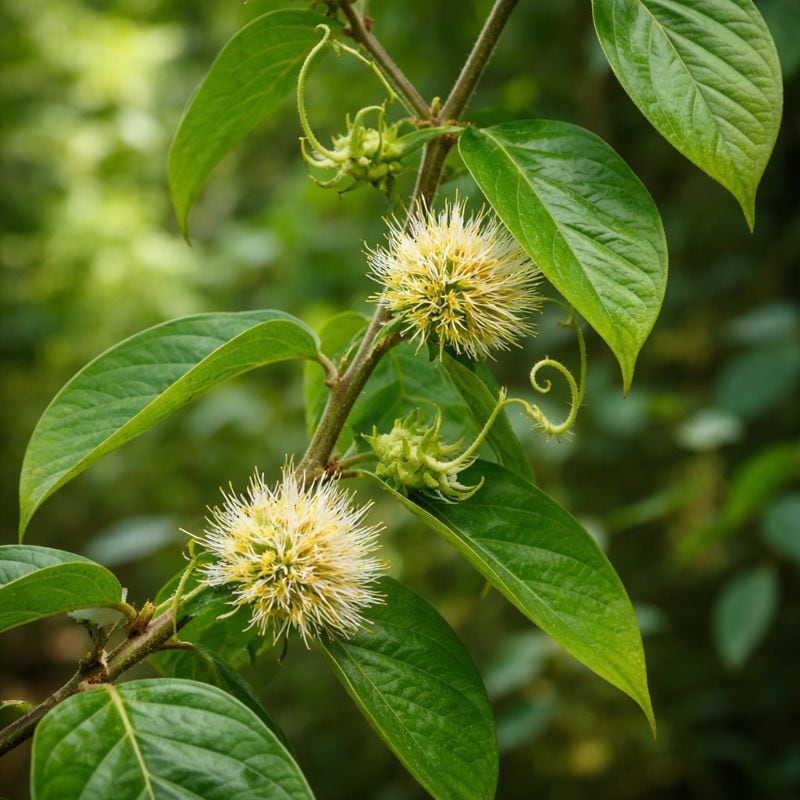
Uncaria tomentosa, commonly known as Cat's Claw, derives its medicinal properties primarily from oxindole alkaloids and quinovic acid glycosides. It is positioned at the intersection of traditional Amazonian medicine, where it is used for inflammatory and immune disorders, and contemporary research, which explores its NF-kB inhibition and immune modulation. The plant's complex alkaloid profile, including pentacyclic and tetracyclic oxindole alkaloids, underpins its diverse therapeutic potential.
What it helps with
Inflammatory conditions
The pentacyclic oxindole alkaloids (POAs) in Cat's Claw inhibit the NF-kB pathway, reducing the expression of pro-inflammatory cytokines such as TNF-alpha and IL-1beta. This mechanism is supported by in vitro and animal studies, suggesting potential benefits in conditions like rheumatoid arthritis and osteoarthritis. Human trials are limited but promising.
Immune system modulation
Cat's Claw enhances phagocytosis and modulates the production of interleukins, particularly IL-1 and IL-6, through its alkaloid content. This immunomodulatory effect has been observed in both animal models and preliminary human studies, indicating its use in supporting immune function during infections and autoimmune conditions.
Antioxidant support
Quinovic acid glycosides in Cat's Claw scavenge free radicals and upregulate Nrf2, a transcription factor that enhances the expression of antioxidant enzymes. This action helps protect cells from oxidative stress, a mechanism explored in vitro and in animal models.
Gastrointestinal health
Traditionally used for digestive disorders, Cat's Claw's anti-inflammatory properties may protect the gastric mucosa. Its alkaloids inhibit NF-kB, reducing inflammation in the gastrointestinal tract, as demonstrated in animal studies.
Antiviral activity
Cat's Claw has shown antiviral properties against certain viruses, including herpes simplex virus, through the inhibition of viral replication. This is attributed to its alkaloid and quinovic acid glycoside content, with evidence primarily from in vitro studies.
Joint health
The anti-inflammatory action of Cat's Claw, particularly through NF-kB inhibition by POAs, supports joint health by reducing inflammation and pain associated with arthritis. Some human trials indicate a reduction in pain and swelling in osteoarthritis patients.
Neuroprotection
Cat's Claw may offer neuroprotective benefits by reducing neuroinflammation and oxidative stress, mediated by its alkaloids and antioxidant compounds. This potential is being explored in preclinical studies focusing on neurodegenerative diseases.
Key active compounds
Pentacyclic oxindole alkaloids (POAs)
These alkaloids are key to Cat's Claw's anti-inflammatory and immune-modulating effects, inhibiting NF-kB and modulating cytokine production. They are more bioactive than tetracyclic oxindole alkaloids in immune modulation.
Tetracyclic oxindole alkaloids (TOAs)
TOAs are less active in immune modulation compared to POAs but may influence the central nervous system. Their precise role is less understood, and they may counteract some effects of POAs.
Quinovic acid glycosides
These compounds exhibit antiviral and antioxidant activities, contributing to the plant's protective effects against oxidative stress and viral infections.
Proanthocyanidins
These polyphenolic compounds contribute to the antioxidant capacity of Cat's Claw, scavenging free radicals and potentially enhancing vascular health.
Sterols
Phytosterols in Cat's Claw may support cholesterol metabolism and have anti-inflammatory effects, although specific mechanisms in this plant are less detailed.
Triterpenes
These compounds contribute to the anti-inflammatory and antiviral properties of Cat's Claw, although their specific mechanisms are less explored compared to alkaloids.
What the research says
Research on Cat's Claw is concentrated on its anti-inflammatory and immune-modulating properties. Human studies, though limited, suggest its potential in reducing inflammation in osteoarthritis, with pentacyclic oxindole alkaloids being the most studied compounds. Preclinical studies highlight its antioxidant and antiviral activities, with quinovic acid glycosides and proanthocyanidins showing promise. The main limitation is the variability in alkaloid content between different preparations, which can affect efficacy. Standardization of extracts to specific alkaloid profiles is a common approach to address this issue.
Typical dosage
For tea or infusion, use 1-2 teaspoons of dried bark per cup of water, steep for 10-15 minutes, and consume up to three times daily. Tinctures can be taken in doses of 1-2 ml, up to three times daily. Capsules typically contain 250-350 mg of standardized extract, taken 1-2 times daily. For topical applications, use as directed by a healthcare provider. Always start with the lowest dose to assess tolerance.
About Cat's Claw
Traditional Use
Preparations & Dosage
Preparations
- Tea / Infusion: Use 1-2 teaspoons of dried Cat's Claw bark per cup of boiling water. Steep for 10-15 minutes, then strain. Serve hot, optionally with honey or lemon for taste.
- Tincture: Use a dropper to measure 1-2 ml of Cat's Claw tincture. Mix with a small amount of water or juice if desired. Take up to three times daily.
- Capsule: Take 1-2 capsules of standardized Cat's Claw extract (250-350 mg each) with water, once or twice daily.
- Powder: Mix 1 teaspoon of Cat's Claw powder into smoothies, juices, or water. Consume once daily.
- Topical application: Prepare a paste with Cat's Claw powder and water. Apply to affected area and leave for 20-30 minutes before rinsing.
Interactions & Warnings
Use with caution
Cat's Claw should be avoided by pregnant or breastfeeding women, as well as individuals with autoimmune diseases or those undergoing organ transplants due to its immune-stimulating properties. It may also interact with blood pressure medications and anticoagulants, so consultation with a healthcare provider is recommended before use.
Herb Interactions
Both herbs stimulate the immune system, which may lead to overactivity in individuals with autoimmune conditions.
Combining with Cat's Claw may increase the risk of bleeding due to potential blood-thinning effects.
Community Plants
Real plants of this species grown and shared by the MyFloralVault community.

More in Immune Support





Was this helpful?
0 · 0
Care guides for related plants
Care Guide Available
Learn how to grow and care for Cat's Claw at home