Bunchberry
Cornus Canadensis

Medicinal Facts
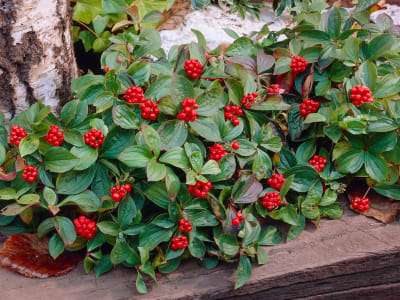
Cornus canadensis, commonly known as bunchberry, is a small herbaceous plant whose medicinal potential is primarily attributed to its rich content of iridoid glycosides, flavonoids, and anthocyanins. It sits at the intersection of traditional Indigenous medicine, where it is used for its anti-inflammatory and analgesic properties, and modern phytochemical research, which investigates its antioxidant and neuroprotective effects. The plant's unique combination of bioactive compounds makes it a subject of interest for both traditional applications and contemporary scientific exploration.
What it helps with
Anti-inflammatory effects
Iridoid glycosides, particularly cornin, inhibit the NF-kB pathway, reducing the production of pro-inflammatory cytokines like IL-6 and TNF-a. This mechanism underlies its traditional use in treating inflammation and has been supported by in vitro and animal studies.
Antioxidant support
The anthocyanins present in Cornus canadensis, such as cyanidin-3-glucoside, scavenge free radicals and upregulate Nrf2-mediated antioxidant pathways. This enhances the cellular antioxidant defense system, as evidenced by in vitro studies demonstrating significant reduction in oxidative stress markers.
Neuroprotection
Flavonoids in bunchberry, including quercetin, modulate the expression of brain-derived neurotrophic factor (BDNF) and inhibit neuroinflammatory pathways. Animal studies suggest these compounds may protect against neurodegenerative processes by reducing amyloid-beta aggregation and enhancing neuronal survival.
Pain relief
Cornus canadensis has been traditionally used for its analgesic properties, likely due to the modulation of COX-2 and TRPV1 receptors by its iridoid glycosides. This action reduces nociceptive signaling and has been partially validated by preclinical research.
Immune modulation
Polysaccharides in bunchberry stimulate macrophage activity and enhance the production of immunoglobulins, thereby modulating immune responses. These effects have been observed in vitro and align with traditional uses for boosting immune function.
Cardiovascular health
The flavonoids in Cornus canadensis, such as kaempferol, activate endothelial nitric oxide synthase (eNOS), promoting vasodilation and improving blood flow. Preliminary studies suggest potential benefits for cardiovascular health, though human data are limited.
Skin health
Anthocyanins contribute to skin health by inhibiting matrix metalloproteinases (MMPs) and promoting collagen synthesis. These effects support the traditional use of bunchberry in treating skin conditions and are corroborated by in vitro studies.
Key active compounds
Cornin
An iridoid glycoside that exhibits anti-inflammatory properties by inhibiting the NF-kB pathway and reducing cytokine production. It is a key compound in modulating inflammatory responses.
Cyanidin-3-glucoside
An anthocyanin with potent antioxidant activity, known for scavenging free radicals and upregulating Nrf2 pathways. It contributes significantly to the plant's antioxidant capacity.
Quercetin
A flavonoid that modulates BDNF expression and inhibits neuroinflammation, offering neuroprotective benefits. It also contributes to the plant's overall antioxidant profile.
Kaempferol
A flavonoid that activates eNOS and promotes vasodilation, potentially benefiting cardiovascular health. It is part of the plant's flavonoid complex that supports vascular function.
Polysaccharides
Complex carbohydrates that enhance immune function by stimulating macrophage activity and immunoglobulin production. They play a role in the plant's immune-modulating effects.
Iridoid glycosides
A class of compounds that include cornin, known for their anti-inflammatory and analgesic properties. They modulate COX-2 and TRPV1 receptors to reduce pain and inflammation.
Anthocyanins
Pigmented flavonoids that provide antioxidant support and contribute to skin health by inhibiting MMPs and promoting collagen synthesis.
What the research says
Research on Cornus canadensis is primarily preclinical, with a strong focus on its anti-inflammatory and antioxidant properties. Iridoid glycosides and anthocyanins show the most promise in vitro and in animal models, particularly for inflammation and oxidative stress reduction. Neuroprotective and cardiovascular effects are also under investigation, with flavonoids like quercetin and kaempferol being key compounds of interest. The main limitation in translating these findings to human health benefits is the lack of clinical trials, compounded by potential bioavailability challenges. Formulation strategies to enhance absorption, such as encapsulation or combination with bioenhancers, are areas of ongoing research.
Typical dosage
For a tea or infusion, use 1-2 teaspoons of dried bunchberry leaves per cup of boiling water, steep for 10-15 minutes, and consume up to three times daily. For a tincture, take 1-2 ml up to three times a day. Decoctions can be made by simmering 1-2 tablespoons of dried leaves or berries in water for 20 minutes. Poultices can be applied directly to the skin as needed. Always start with lower doses to assess individual tolerance.
About Bunchberry
Traditional Use
Preparations & Dosage
Preparations
- Tea / Infusion: Use 1-2 teaspoons of dried bunchberry leaves per cup of boiling water. Steep for 10-15 minutes, strain, and serve. Add honey or lemon for taste if desired.
- Tincture: Combine 1 part dried bunchberry leaves with 5 parts alcohol (such as vodka). Seal in a jar and store in a cool, dark place for 4-6 weeks, shaking occasionally. Strain and store in a dark glass bottle.
- Decoction: Simmer 1-2 tablespoons of dried leaves or berries in 2 cups of water for 20 minutes. Strain and serve warm.
- Poultice: Crush fresh leaves and berries into a paste. Apply directly to the affected area and cover with a clean cloth. Leave on for 20-30 minutes.
Interactions & Warnings
Use with caution
Cornus canadensis is generally considered safe for consumption and use in traditional remedies. However, individuals with allergies to plants in the Cornaceae family should exercise caution. Always consult a healthcare provider before starting any new herbal treatment, especially if pregnant or nursing.
Herb Interactions
May enhance immune-boosting effects when combined.
Community Plants
Real plants of this species grown and shared by the MyFloralVault community.
More in Immune Support





Was this helpful?
0 · 0