Chaga
Inonotus Obliquus
Medicinal Facts
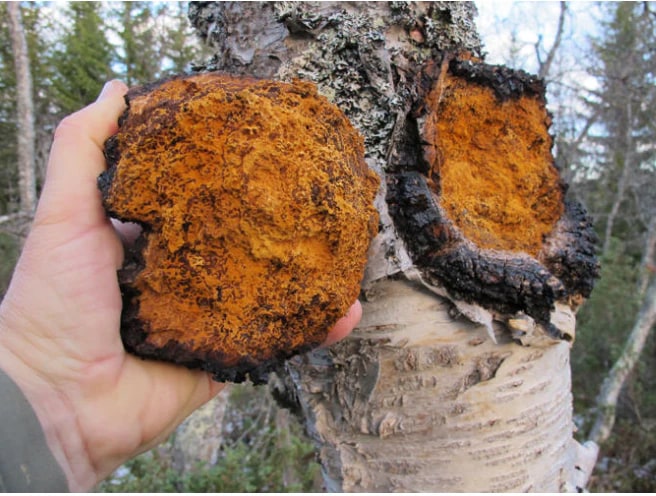
Inonotus obliquus, commonly known as Chaga, is a medicinal fungus renowned for its high concentration of polyphenols, particularly betulinic acid and inotodiol. It sits at the intersection of traditional Siberian and Northern European folk medicine, where it's revered for immune support and vitality, and modern mycological research, which investigates its antioxidant and antitumor properties. Chaga's unique melanin content contributes to its potent free radical scavenging ability, while its polysaccharides are studied for their immunomodulatory effects. The mushroom's therapeutic potential is tempered by its complex bioactive profile, necessitating careful extraction methods to harness its full benefits.
What it helps with
Immune modulation
Chaga polysaccharides, particularly beta-glucans, enhance macrophage activation and cytokine production, modulating immune responses. They engage the dectin-1 receptor, promoting a Th1-mediated immune response. Evidence spans in vitro and animal studies, with traditional use supporting immune resilience.
Antioxidant support
Chaga's high melanin content and polyphenols, including betulinic acid, exert strong antioxidant effects by neutralizing free radicals and upregulating Nrf2, a key transcription factor for antioxidant response. This mechanism is supported by preclinical studies and aligns with its traditional use for vitality.
Anti-inflammatory effects
Inotodiol, a triterpenoid found in Chaga, inhibits the NF-kB pathway, reducing the expression of pro-inflammatory cytokines such as TNF-a and IL-6. This action is corroborated by animal models and in vitro studies, suggesting potential for chronic inflammation management.
Antitumor activity
Betulinic acid and inotodiol induce apoptosis in cancer cells via the mitochondrial pathway and modulate angiogenesis through VEGF inhibition. Preclinical research highlights Chaga's potential in oncology, though human trials are limited.
Gastrointestinal health
Chaga polysaccharides may support gut health by enhancing mucosal immunity and modulating gut microbiota. They interact with gut-associated lymphoid tissue (GALT), promoting a balanced immune response. Evidence is primarily from animal studies.
Cardiovascular health
Betulinic acid in Chaga may improve lipid profiles by inhibiting HMG-CoA reductase, the enzyme targeted by statins, thereby reducing cholesterol synthesis. This effect is supported by animal studies and aligns with traditional uses for heart health.
Longevity & cellular aging
Chaga's polyphenols, particularly betulinic acid, activate SIRT1, a sirtuin associated with lifespan extension and cellular stress resistance. This mechanism is explored in preclinical studies, suggesting potential anti-aging benefits.
Skin health
Chaga's melanin and polyphenols protect against UV-induced oxidative stress and support collagen synthesis through TGF-beta signaling. This dual action is explored in vitro and aligns with its traditional use for skin vitality.
Key active compounds
Betulinic acid
A triterpenoid with potent antitumor and anti-inflammatory properties. It induces apoptosis via mitochondrial pathways and inhibits angiogenesis by targeting VEGF. It also contributes to Chaga's antioxidant profile.
Inotodiol
A lanostane-type triterpenoid that modulates immune responses and inhibits NF-kB, reducing inflammation. It shows promise in cancer models by inducing apoptosis and inhibiting tumor growth.
Polysaccharides (beta-glucans)
Complex carbohydrates that enhance immune function by activating dectin-1 receptors on macrophages and promoting cytokine production. They are central to Chaga's immunomodulatory effects.
Melanin
A pigment with strong antioxidant properties, protecting cells from oxidative damage. It contributes to Chaga's free radical scavenging ability and is studied for its protective effects against UV radiation.
Ergosterol
A sterol precursor to vitamin D2, contributing to Chaga's nutritional profile. It exhibits antioxidant properties and may enhance immune function.
Phenolic compounds
Includes p-coumaric acid and gallic acid, which contribute to Chaga's antioxidant and anti-inflammatory effects by scavenging free radicals and modulating enzyme activity.
Triterpenoids
A class of compounds including inotodiol and lanosterol, known for their anti-inflammatory and antitumor activities. They modulate key signaling pathways like NF-kB and VEGF.
What the research says
Research on Chaga is robust in preclinical settings, particularly concerning its antioxidant and antitumor properties. Betulinic acid and inotodiol show the strongest evidence in animal models for cancer and inflammation, while polysaccharides are well-supported for immune modulation. Human studies are limited but growing, particularly in the areas of immune support and skin health. The primary limitation is the variability in bioactive compound extraction, which can affect efficacy. Standardized extraction methods and formulations are being developed to ensure consistent therapeutic outcomes.
Typical dosage
For tea or infusion, use about 1-2 teaspoons of dried chaga chunks per cup of water, simmering for 30-45 minutes. For tinctures, follow the manufacturer's instructions, typically 1-2 ml up to three times daily. Chaga powder can be taken in doses of 1-2 grams per day, mixed with water or smoothies. Capsules usually contain 500 mg to 1 gram, taken 1-2 times daily. Always start with the lowest dose to assess tolerance.
About Chaga
Traditional Use
Preparations & Dosage
Preparations
- Tea / Infusion: Use 1-2 teaspoons of dried chaga chunks per cup of water. Simmer for 30-45 minutes, strain, and serve warm. Optionally, add honey or lemon for flavor.
- Tincture: Follow the manufacturer's instructions for dosing. Typically, use 1-2 ml up to three times daily. Shake well before use.
- Powder: Mix 1-2 grams of chaga powder with water, smoothies, or juice. Stir well before consuming.
Interactions & Warnings
Use with caution
Chaga may interact with anticoagulant medications and could potentially affect blood sugar levels. Individuals with autoimmune diseases or those undergoing immunosuppressive therapy should consult a healthcare provider before use. Pregnant or breastfeeding women should also seek medical advice prior to consumption.
Herb Interactions
Both may have blood-thinning effects, increasing the risk of bleeding.
Combining with chaga may enhance anticoagulant effects, leading to increased bleeding risk.
Community Plants
Real plants of this species grown and shared by the MyFloralVault community.

More in Immune Support





Was this helpful?
0 · 0
Care guides for related plants
Care Guide Available
Learn how to grow and care for Chaga at home