Getto
Alpinia Zerumbet

Medicinal Facts
Alpinia zerumbet, commonly known as Getto, is a plant rich in flavonoids such as kaempferol and quercetin, along with essential oils like zerumbone. It stands at the intersection of traditional Okinawan medicine, where it is used for longevity and cardiovascular health, and modern pharmacological research focusing on its anti-inflammatory and antihypertensive effects. The plant's diverse bioactive compounds offer a wide range of therapeutic potentials, yet its primary limitation lies in the variability of bioactive concentrations depending on the growing conditions.
What it helps with
Hypertension
Alpinia zerumbet contains flavonoids such as kaempferol, which may exert antihypertensive effects by modulating the nitric oxide (NO) pathway. These compounds enhance endothelial nitric oxide synthase (eNOS) activity, leading to improved vasodilation and blood pressure regulation. Animal studies support its potential, but human trials are limited.
Inflammation
The essential oil component zerumbone inhibits the NF-kB signaling pathway, reducing the expression of pro-inflammatory cytokines like TNF-a and IL-6. This mechanism is supported by in vitro and animal studies, suggesting its role in managing chronic inflammatory conditions.
Antioxidant support
Quercetin and kaempferol, both present in Alpinia zerumbet, activate the Nrf2 pathway, enhancing the expression of endogenous antioxidant enzymes such as glutathione S-transferase. This action helps mitigate oxidative stress, as demonstrated in several preclinical models.
Neuroprotection
Compounds in Alpinia zerumbet, particularly quercetin, may offer neuroprotective benefits by modulating the GABA-A receptor and reducing neuroinflammation. Animal studies indicate potential benefits in neurodegenerative conditions, though human evidence is still emerging.
Longevity & cellular aging
Kaempferol and other flavonoids in Alpinia zerumbet may influence longevity by activating SIRT1 and PGC-1a pathways, which are involved in mitochondrial biogenesis and cellular stress resistance. This mechanism is primarily supported by in vitro studies, aligning with traditional uses in Okinawan culture.
Antimicrobial activity
The essential oils, including zerumbone, exhibit antimicrobial properties by disrupting microbial cell membranes and inhibiting biofilm formation. This is supported by in vitro studies, suggesting potential applications in managing infections.
Digestive health
Traditionally, Alpinia zerumbet is used to support digestion, possibly through its essential oils, which may enhance gastric motility and reduce gastrointestinal discomfort. This use is primarily anecdotal, with limited clinical evidence.
Key active compounds
Kaempferol
A flavonoid that activates the eNOS and SIRT1 pathways, contributing to antihypertensive and longevity effects. It is well-absorbed and widely studied for its cardiovascular benefits.
Quercetin
A flavonoid known for its antioxidant properties, acting through Nrf2 activation and GABA-A receptor modulation. It enhances cellular resistance to oxidative stress.
Zerumbone
A sesquiterpene found in the essential oil, notable for its anti-inflammatory and antimicrobial activities. It inhibits NF-kB signaling, reducing inflammatory cytokine production.
Essential oils
Comprising various terpenes, these oils contribute to the plant's antimicrobial and digestive health properties. They are volatile and require careful extraction to preserve efficacy.
Flavonoids
A group of polyphenolic compounds that collectively contribute to the plant's antioxidant and anti-inflammatory effects, primarily through Nrf2 and NF-kB modulation.
Terpenoids
These compounds, including zerumbone, provide the aromatic and therapeutic qualities of the essential oil, with roles in inflammation and microbial inhibition.
What the research says
Research on Alpinia zerumbet is concentrated on its cardiovascular and anti-inflammatory properties. Kaempferol and zerumbone are the most studied compounds, with animal models showing promising antihypertensive and anti-inflammatory effects. Human trials remain sparse, limiting definitive clinical recommendations. The primary challenge is the variability in bioactive compound concentrations, which can be influenced by environmental factors. Standardization of extracts and further human studies are needed to fully validate its therapeutic potential.
Typical dosage
For tea or infusion, use 1-2 teaspoons of dried leaves per cup of boiling water, steep for 10-15 minutes, and consume up to three times daily. For tinctures, a typical dosage is 1-2 ml taken two to three times per day. Essential oils should be diluted before topical application, and capsules can be taken as directed on the product label, usually 500 mg once or twice daily. Always start with the lowest dose to assess tolerance.
About Getto
Traditional Use
Preparations & Dosage
Preparations
- Tea / Infusion: Boil water and pour over 1-2 teaspoons of dried Alpinia zerumbet leaves. Cover and steep for 10-15 minutes. Strain and serve hot or cold. Add honey or lemon for flavor if desired.
- Tincture: Combine dried Alpinia zerumbet rhizomes with alcohol in a jar (1:5 ratio). Seal and store in a dark place for 4-6 weeks, shaking occasionally. Strain and store in a dark glass bottle.
- Essential Oil: Extract essential oils through steam distillation of Alpinia zerumbet rhizomes. Dilute with a carrier oil before topical application.
Interactions & Warnings
Use with caution
Alpinia zerumbet should be used with caution by individuals with low blood pressure or those taking antihypertensive medications, as it may enhance their effects. Pregnant or breastfeeding women should consult a healthcare provider before use. Allergic reactions are possible in sensitive individuals.
Herb Interactions
Both herbs have blood pressure-lowering effects, which may lead to excessive hypotension if combined.
Community Plants
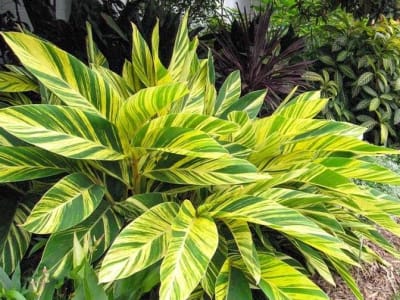
Real plants of this species grown and shared by the MyFloralVault community.
More in Cardiovascular & Blood




Was this helpful?
0 · 0
Care guides for related plants
Care Guide Available
Learn how to grow and care for Getto at home