Butcher's Broom
Ruscus Aculeatus

Medicinal Facts
Butcher's Broom (Ruscus aculeatus) is renowned for its ruscogenins, including ruscogenin and neoruscogenin, which are steroidal saponins pivotal in vascular health. This plant sits at the intersection of traditional European herbal medicine, where it is used to support venous circulation and reduce edema, and contemporary pharmacological research exploring its effects on vasoconstriction and anti-inflammatory pathways. The primary focus of modern studies is on its ability to modulate venous tone and capillary permeability, with a growing interest in its potential for managing chronic venous insufficiency.
What it helps with
Chronic venous insufficiency
Ruscogenins from Butcher's Broom enhance venous tone by binding to alpha-adrenergic receptors, promoting vasoconstriction. This action reduces venous pooling and edema, improving symptoms of heaviness and swelling in the legs. Human trials have demonstrated improvements in venous tone and capillary resistance, particularly when combined with hesperidin methyl chalcone and ascorbic acid.
Lymphedema
Butcher's Broom's ruscogenins may reduce lymphatic congestion by decreasing capillary permeability and supporting lymphatic drainage. This is thought to occur through the inhibition of inflammatory pathways, including the downregulation of NF-kB, which reduces the production of pro-inflammatory cytokines. Evidence is primarily from traditional use and small clinical studies.
Hemorrhoids
The vasoconstrictive properties of ruscogenins help reduce the swelling and discomfort associated with hemorrhoids. By activating alpha-adrenergic receptors, these compounds enhance venous return and reduce venous congestion in the rectal area. Clinical evidence supports its use as part of a comprehensive treatment plan for hemorrhoidal disease.
Orthostatic hypotension
Ruscogenins may help alleviate symptoms of orthostatic hypotension by promoting peripheral vasoconstriction, thus supporting blood pressure regulation upon standing. This effect is mediated through adrenergic receptor activation, enhancing vascular resistance. While promising, this application is primarily supported by anecdotal and preliminary research.
Anti-inflammatory effects
Butcher's Broom exhibits anti-inflammatory properties by modulating the NF-kB pathway and inhibiting the synthesis of pro-inflammatory cytokines like TNF-a and IL-6. This action helps reduce systemic inflammation and may benefit conditions characterized by chronic inflammation. Most evidence is from in vitro and animal studies.
Capillary fragility
Ruscogenins strengthen capillary walls by enhancing the synthesis of collagen and elastin, thus reducing capillary fragility. This is particularly beneficial in conditions like petechiae and easy bruising. The mechanism involves the modulation of endothelial cell function and has been supported by small-scale clinical trials.
Diuretic support
Traditionally, Butcher's Broom has been used as a mild diuretic, promoting the excretion of excess fluid. This action is thought to be mediated by the modulation of renal blood flow and electrolyte balance, although specific molecular mechanisms remain under-researched. Its diuretic effects are mainly supported by traditional use.
Key active compounds
Ruscogenin
A steroidal saponin that primarily binds to alpha-adrenergic receptors, promoting vasoconstriction and improving venous tone. It also exhibits anti-inflammatory properties by modulating NF-kB activity.
Neoruscogenin
Similar to ruscogenin, it enhances venous tone and capillary resistance through adrenergic receptor activation. It also contributes to the anti-inflammatory effects of Butcher's Broom.
Saponins
These compounds, including ruscogenin and neoruscogenin, are responsible for the plant's vascular and anti-inflammatory effects. They enhance the bioavailability of other active components.
Flavonoids
Present in smaller quantities, they contribute to the antioxidant and capillary-strengthening effects of the plant. They work synergistically with saponins to enhance vascular health.
Polyphenols
These compounds provide additional antioxidant support, reducing oxidative stress and supporting endothelial function. They enhance the overall anti-inflammatory profile of the plant.
Coumarins
Found in trace amounts, they may contribute to the anticoagulant and vasodilatory effects, although their specific role in Butcher's Broom is less well-defined.
What the research says
Research on Butcher's Broom focuses heavily on its vascular effects, with human trials supporting its use in chronic venous insufficiency, often in combination with other flavonoids like hesperidin. These studies highlight improvements in venous tone and reductions in edema. Preclinical studies emphasize its anti-inflammatory and capillary-strengthening mechanisms, primarily through NF-kB modulation and adrenergic receptor activation. The main limitation in research is the variability in active compound concentrations across different extracts, leading to inconsistent results. Standardized extracts and combination formulations are often used to address this issue, ensuring consistent therapeutic outcomes.
Typical dosage
For capsules, a common dosage is 100-150 mg of Butcher's Broom extract standardized to contain 7-11% ruscogenins, taken twice daily. Tinctures can be used at a dosage of 1-2 ml, three times a day. For tea, steep 1-2 teaspoons of dried root in boiling water for 10-15 minutes, consumed 1-2 times daily. Topical creams should be applied to affected areas as directed by the product instructions.
About Butcher's Broom
Traditional Use
Preparations & Dosage
Preparations
- Tea / Infusion: Use 1-2 teaspoons of dried Butcher's Broom root. Add to a cup of boiling water and steep for 10-15 minutes. Strain and drink warm. Add honey or lemon for taste if desired.
- Capsule: Take 100-150 mg of Butcher's Broom extract standardized to 7-11% ruscogenins, twice daily with meals.
- Tincture: Use 1-2 ml of Butcher's Broom tincture, diluted in water, taken three times a day.
- Topical cream: Apply a small amount of Butcher's Broom cream to the affected area, massaging gently until absorbed. Use as directed on the product label.
Interactions & Warnings
Use with caution
Butcher's Broom is generally safe for most people when used appropriately. However, individuals with high blood pressure or those taking blood pressure medications should use caution, as it may affect blood pressure levels. Pregnant or breastfeeding women should consult a healthcare provider before use.
Herb Interactions
Combined use may enhance blood circulation effects, potentially leading to excessive blood flow or bleeding in sensitive individuals.
Both have blood-thinning properties, which may increase the risk of bleeding if used together in high doses.
Community Plants
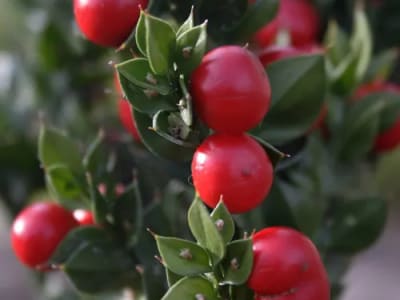
Real plants of this species grown and shared by the MyFloralVault community.
More in Cardiovascular & Blood




Was this helpful?
0 · 0
Care guides for related plants
Care Guide Available
Learn how to grow and care for Butcher's Broom at home