Vitex
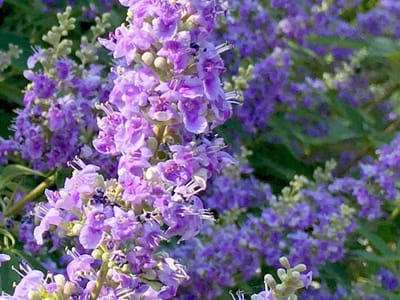
Vitex Agnus-castus

Medicinal Facts
Vitex agnus-castus, commonly known as Vitex or Chaste Tree, is primarily valued for its diterpenes, particularly agnuside and aucubin, which influence hormonal balance. It sits at the intersection of traditional herbal protocols for women's health, especially in regulating menstrual cycles and alleviating premenstrual syndrome (PMS), and contemporary research into dopaminergic modulation and prolactin suppression. Vitex's therapeutic potential is largely attributed to its ability to interact with the dopaminergic system, offering a natural approach to hormonal regulation.
What it helps with
Premenstrual syndrome (PMS)
Agnuside and aucubin, the active compounds in Vitex, exert their effects by binding to dopamine D2 receptors, which leads to the inhibition of prolactin release from the pituitary gland. This reduction in prolactin can alleviate symptoms such as breast tenderness and mood swings. Clinical trials have demonstrated that Vitex can significantly reduce PMS symptoms compared to placebo.
Menstrual cycle regulation
Vitex influences the hypothalamic-pituitary-gonadal axis by modulating luteinizing hormone (LH) and follicle-stimulating hormone (FSH) levels. Agnuside's dopaminergic activity indirectly affects the secretion of these hormones, promoting a more regular menstrual cycle. Evidence from both traditional use and modern studies supports its role in addressing irregular cycles.
Hyperprolactinemia
The dopaminergic action of Vitex, primarily through D2 receptor agonism, results in decreased prolactin levels. This mechanism is particularly beneficial in cases of mild hyperprolactinemia, where Vitex has been shown to normalize prolactin levels and improve associated symptoms such as infertility and irregular menstruation.
Menopausal symptoms
Vitex may support menopausal women by modulating the balance of estrogen and progesterone through its effects on the pituitary gland. While not a direct phytoestrogen, its influence on hormonal pathways can alleviate symptoms like hot flashes and mood disturbances, as suggested by preliminary studies.
Acne
By reducing prolactin levels and subsequently balancing sex hormones, Vitex may help in managing acne, particularly in cases linked to hormonal imbalances. The reduction in prolactin decreases androgen production, which can reduce sebaceous gland activity and acne severity.
Luteal phase defects
Vitex's regulation of prolactin and its impact on the luteal phase of the menstrual cycle can enhance progesterone production. This is crucial for addressing luteal phase defects, which are often characterized by insufficient progesterone levels, leading to fertility issues.
Breast pain (mastalgia)
The prolactin-lowering effect of Vitex, mediated through D2 receptor activity, has been shown to reduce cyclic breast pain. Clinical studies indicate that Vitex can significantly decrease the severity and frequency of mastalgia compared to placebo.
Key active compounds
Agnuside
A diterpene that acts as a dopaminergic agent, primarily influencing D2 receptors. It plays a key role in reducing prolactin secretion, which is central to Vitex's hormonal effects.
Aucubin
An iridoid glycoside with anti-inflammatory and dopaminergic properties. It supports agnuside in modulating hormonal pathways, particularly in the context of prolactin suppression.
Casticin
A flavonoid that exhibits anti-inflammatory and antioxidant activities. It contributes to the overall hormonal modulation by enhancing the effects of other active compounds in Vitex.
Rotundifuran
A diterpene that has been shown to interact with dopamine receptors, aiding in the regulation of prolactin levels. It complements the action of agnuside and aucubin.
Vitexin
A flavonoid glycoside known for its antioxidant properties. While not directly involved in hormonal modulation, it supports the plant's overall therapeutic profile.
Isovitexin
A structural isomer of vitexin with similar antioxidant effects. It enhances the stability and bioactivity of Vitex preparations.
Essential oils
Comprising various monoterpenes and sesquiterpenes, these oils contribute to the plant's therapeutic aroma and may have mild sedative effects, supporting its use in stress-related menstrual disorders.
What the research says
Research into Vitex agnus-castus primarily focuses on its role in women's health, particularly in alleviating PMS and regulating menstrual cycles. Human clinical trials have shown that standardized extracts can significantly reduce PMS symptoms, with agnuside and aucubin being the most studied compounds. The dopaminergic modulation and prolactin suppression are well-supported by both preclinical and clinical studies, making these mechanisms central to its therapeutic use. However, the main limitation of Vitex is the variability in active compound concentrations across different preparations, which can affect efficacy. Standardization of extracts and further research into optimal dosing strategies are ongoing to address these challenges.
Typical dosage
For tinctures, a typical dosage is 20-40 drops in water, taken once daily. Capsules are often standardized to contain 400-500 mg of Vitex extract, with a common dosage being one capsule per day. For tea, steep 1-2 teaspoons of dried berries in hot water for 10-15 minutes, consuming up to twice daily. When using extracts, follow the manufacturer's instructions, as concentrations can vary. It is recommended to use Vitex consistently for at least three months to observe effects.
About Vitex
Traditional Use
Preparations & Dosage
Preparations
- Tea / Infusion: Use 1-2 teaspoons of dried Vitex berries per cup of boiling water. Steep for 10-15 minutes, then strain and drink. It can be sweetened with honey or combined with other herbs like chamomile for enhanced effects.
- Tincture: Take 20-40 drops of Vitex tincture in a small amount of water once daily, preferably in the morning. Shake well before use.
- Capsule: Take one capsule (400-500 mg) of standardized Vitex extract daily with water, preferably at the same time each day.
Interactions & Warnings
Use with caution
Vitex Agnus-castus should be used with caution by individuals taking hormonal medications or those with hormone-sensitive conditions. Pregnant or breastfeeding women should avoid it unless advised by a healthcare provider. It may cause mild side effects such as gastrointestinal upset or skin reactions.
Herb Interactions
Vitex may interfere with the effectiveness of hormonal contraceptives due to its influence on hormone levels.
Vitex may alter the effects of hormone replacement therapies by affecting hormone balance.
Community Plants
Real plants of this species grown and shared by the MyFloralVault community.
More in Hormonal Balance


Was this helpful?
0 · 0
Care Guide Available
Learn how to grow and care for Vitex at home