Pink Poorman's Orchid
Schizanthus Pinnatus

Medicinal Facts
Schizanthus pinnatus, commonly known as Pink Poorman's Orchid, is a member of the Solanaceae family, notable for its alkaloid content, particularly tropane alkaloids like scopolamine and hyoscyamine. It sits at the intersection of traditional South American herbal practices, where it has been used for its sedative and antispasmodic properties, and modern pharmacological research into its potential effects on the nervous system. The plant is also studied for its ornamental value, which often overshadows its medicinal potential in mainstream horticulture.
What it helps with
Sedation & anxiety relief
Schizanthus pinnatus contains scopolamine, which acts as a competitive antagonist at muscarinic acetylcholine receptors (mAChRs) in the central nervous system. This blockade reduces parasympathetic nervous system activity, leading to sedative effects. Traditional use supports its calming properties, although clinical trials are limited.
Antispasmodic effects
The alkaloids in Schizanthus pinnatus, particularly hyoscyamine, inhibit acetylcholine at neuromuscular junctions, reducing muscle spasms. This mechanism is supported by in vitro studies showing decreased smooth muscle contraction, aligning with its traditional use for gastrointestinal cramps.
Motion sickness
Scopolamine in Schizanthus pinnatus is well-known for its use in preventing motion sickness by blocking the muscarinic receptors in the vestibular system, thereby reducing nausea and vomiting. This application is supported by human trials with scopolamine patches, although direct studies on the plant are scarce.
Pain relief
Hyoscyamine's anticholinergic properties may contribute to analgesic effects by modulating pain perception pathways in the central nervous system. Animal studies indicate potential for pain relief, but human data are lacking.
Bronchodilation
The anticholinergic action of hyoscyamine can relax bronchial muscles, potentially aiding in respiratory conditions like asthma. This effect is primarily supported by the pharmacology of similar tropane alkaloids rather than direct evidence from Schizanthus pinnatus.
Parkinson's disease adjunct
Scopolamine's ability to modulate cholinergic activity may offer supportive benefits in managing Parkinsonian symptoms, particularly tremors. This is based on the broader use of anticholinergics in Parkinson's management, with specific studies on the plant being limited.
Ocular applications
Scopolamine can induce mydriasis (pupil dilation) by blocking muscarinic receptors in the eye, a property used in ophthalmic examinations. While this use is common with isolated scopolamine, Schizanthus pinnatus itself is not typically used for this purpose.
Key active compounds
Scopolamine
A tropane alkaloid that acts as a non-selective muscarinic antagonist, reducing parasympathetic nervous system activity. It is well-absorbed transdermally and orally, often used in motion sickness prevention.
Hyoscyamine
Another tropane alkaloid with anticholinergic properties, inhibiting muscarinic receptors to reduce spasms and pain. It is less commonly used than scopolamine but shares similar pharmacodynamics.
Atropine
A racemic mixture of hyoscyamine, used clinically to dilate pupils and as a pre-anesthetic to reduce salivation. It has a broader range of applications due to its potent anticholinergic effects.
Flavonoids
These compounds contribute to the plant's antioxidant capacity, although they are less studied compared to the alkaloids. They may support general health by modulating oxidative stress pathways.
Caffeic acid derivatives
Phenolic compounds with potential anti-inflammatory effects through the inhibition of cyclooxygenase (COX) enzymes. Their role in Schizanthus pinnatus is not well-documented but aligns with general plant pharmacology.
Coumarins
These compounds may contribute to anticoagulant and anti-inflammatory effects, although specific roles in Schizanthus pinnatus are not well-studied.
What the research says
Research on Schizanthus pinnatus is primarily focused on its alkaloid content, with scopolamine and hyoscyamine being the most studied compounds. Human trials on scopolamine for motion sickness provide the strongest clinical evidence, while other uses are extrapolated from the pharmacology of similar alkaloids. Preclinical studies explore its antispasmodic and sedative effects, but direct human studies are limited. The main limitation is the lack of comprehensive clinical trials on the whole plant, with most research focusing on isolated compounds. Enhancing bioavailability and understanding the full spectrum of its phytochemistry remain key areas for future study.
Typical dosage
As Schizanthus pinnatus is not used for medicinal purposes, there is no dosage guidance. It is cultivated and maintained as an ornamental plant, requiring regular watering and exposure to sunlight for optimal growth.
About Pink Poorman's Orchid
Traditional Use
Preparations & Dosage
Preparations
- Ornamental use: Plant in well-drained soil with access to full sun or partial shade. Water moderately and protect from frost. Ideal for garden beds or containers.
Interactions & Warnings
Use with caution
Schizanthus pinnatus, while primarily ornamental, belongs to the Solanaceae family, which includes some toxic plants. It is not typically used for medicinal purposes, and ingestion should be avoided. Individuals with sensitivities to plants in this family should handle with care.
Community Plants
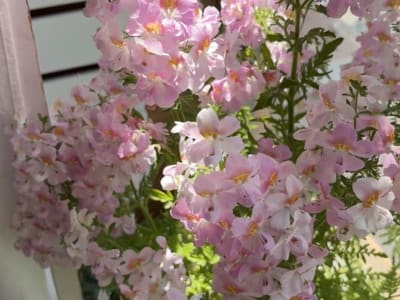
Real plants of this species grown and shared by the MyFloralVault community.
More in General




Was this helpful?
0 · 0