Paracress
Acmella Oleracea

Medicinal Facts
Acmella oleracea, commonly known as Paracress, is renowned for its bioactive compound spilanthol, an alkylamide with significant anesthetic and anti-inflammatory properties. This plant sits at the intersection of traditional Amazonian medicine, where it is used for toothaches and oral health, and modern pharmacological research exploring its potential in pain management and anti-inflammatory applications. Its unique mechanism of action involves modulation of TRPV1 receptors, which are crucial in pain and inflammation pathways. The plant's traditional uses are supported by emerging evidence on its efficacy in modulating inflammatory cytokines and providing localized analgesia.
What it helps with
Pain relief & anesthesia
Spilanthol, the primary active compound, acts on TRPV1 receptors, which are involved in the sensation of pain and heat. By modulating these receptors, spilanthol provides a numbing effect, traditionally used for toothaches and oral discomfort. Animal studies support its efficacy, showing reduced pain perception and inflammation.
Inflammatory conditions
Spilanthol inhibits the release of pro-inflammatory cytokines such as TNF-alpha and IL-1beta, which are pivotal in the inflammatory response. This action is mediated through the modulation of NF-kB signaling pathways. Preclinical studies demonstrate its potential in reducing inflammation, although human trials are limited.
Oral health
Traditionally used for its antimicrobial properties, spilanthol exhibits activity against oral pathogens by disrupting bacterial cell membranes. This contributes to its role in managing oral infections and maintaining oral hygiene. Evidence is primarily anecdotal and from traditional use, with limited clinical validation.
Immune modulation
Spilanthol may enhance immune function by modulating macrophage activity and cytokine production, potentially through pathways involving NF-kB and MAPK. This immunomodulatory effect is supported by in vitro studies, suggesting a role in bolstering immune defenses.
Skin health & wound healing
The anti-inflammatory and antimicrobial properties of spilanthol support its use in topical applications for skin conditions. It promotes wound healing by reducing local inflammation and preventing infection, with evidence from traditional use and preliminary in vitro studies.
Rheumatic pain
Spilanthol's modulation of TRPV1 and its anti-inflammatory effects suggest potential benefits for rheumatic conditions. It may reduce joint pain and inflammation, as supported by animal models, although human evidence is sparse.
Nervous system support
Beyond pain relief, spilanthol's action on TRPV1 receptors may offer neuroprotective benefits by modulating neuroinflammation. This is a speculative area of research, with potential implications for conditions like neuropathic pain.
Key active compounds
Spilanthol
An alkylamide responsible for the plant's anesthetic and anti-inflammatory properties. It modulates TRPV1 receptors and inhibits pro-inflammatory cytokines, but has limited bioavailability, which affects its systemic use.
Flavonoids
These compounds contribute to the plant's antioxidant profile, scavenging free radicals and supporting spilanthol's anti-inflammatory effects. They may also enhance the bioactive potential of spilanthol through synergistic interactions.
Polysaccharides
These components may support immune modulation by enhancing macrophage activity and cytokine production, although their specific mechanisms in Acmella oleracea are less well-characterized.
Essential oils
Comprising various terpenes, these oils contribute to the antimicrobial and aromatic properties of the plant, potentially enhancing the penetration and efficacy of spilanthol in topical applications.
Alkamides
Beyond spilanthol, other alkamides in the plant may contribute to its overall pharmacological profile, particularly in modulating inflammation and pain pathways.
Tannins
These polyphenolic compounds have astringent properties that may support the plant's traditional use in oral health by tightening tissues and reducing inflammation.
What the research says
Research on Acmella oleracea focuses on its pain-relieving and anti-inflammatory properties, primarily attributed to spilanthol. Animal studies highlight its efficacy in reducing pain perception and inflammation through TRPV1 modulation and cytokine inhibition. Human data are limited, but traditional use supports its application in oral health and localized pain relief. The main limitation is spilanthol's poor bioavailability, which restricts systemic effects. Formulation strategies, such as encapsulation or combination with other bioenhancers, are under investigation to improve its pharmacokinetic profile and broaden its therapeutic potential.
Typical dosage
For tea or infusion, use 1-2 teaspoons of dried leaves or flowers per cup of boiling water, steep for 10 minutes, and consume up to three times daily. For tinctures, take 10-20 drops in water or juice up to three times daily. Topical applications should be used as directed, typically applied to the affected area 2-3 times daily. Capsules and extracts should be used according to the manufacturer's instructions, typically not exceeding 500 mg per day.
About Paracress
Traditional Use
Preparations & Dosage
Preparations
- Tea / Infusion: Boil water and pour over 1-2 teaspoons of dried Acmella oleracea leaves or flowers. Steep for 10 minutes, strain, and drink. Optionally, add honey or lemon for flavor.
- Tincture: Use a dropper to add 10-20 drops of Acmella oleracea tincture to a glass of water or juice. Stir well and consume up to three times daily.
- Topical application: Apply a small amount of Acmella oleracea extract or cream to the affected area. Gently massage until absorbed. Use 2-3 times daily.
Interactions & Warnings
Use with caution
Acmella oleracea should be used with caution by individuals with allergies to plants in the Asteraceae family. Pregnant or breastfeeding women should consult a healthcare provider before use. Excessive consumption may lead to numbness or irritation in the mouth.
Herb Interactions
Combined use may enhance sedative effects, leading to excessive drowsiness.
Community Plants
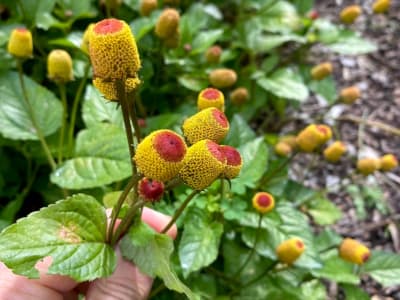
Real plants of this species grown and shared by the MyFloralVault community.
More in Pain & Inflammation




Was this helpful?
0 · 0
Care Guide Available
Learn how to grow and care for Paracress at home