Rue
Ruta Graveolens

Medicinal Facts
Ruta graveolens, commonly known as rue, is renowned for its rich array of alkaloids, flavonoids, and essential oils, notably rutin and quercetin. It stands at the intersection of traditional European herbalism, where it has been used for its anti-inflammatory and antispasmodic properties, and modern pharmacological research focused on its potential neuroprotective and antimicrobial effects. Rue's complex phytochemistry underpins its diverse therapeutic potential, although its use requires caution due to potential toxicity at high doses.
What it helps with
Anti-inflammatory effects
Rutin, a major flavonoid in rue, inhibits the NF-kB pathway, reducing the expression of pro-inflammatory cytokines such as TNF-a and IL-1b. It also modulates COX-2 activity, contributing to its anti-inflammatory effects. Evidence from animal models supports its use in inflammatory conditions, although human trials are limited.
Antimicrobial activity
The essential oils of rue, particularly those containing methyl-nonyl-ketone, exhibit broad-spectrum antimicrobial activity by disrupting microbial cell membranes. This has been demonstrated in vitro against various bacterial and fungal strains, suggesting potential as a topical antimicrobial agent.
Neuroprotection
Quercetin in rue crosses the blood-brain barrier and exerts neuroprotective effects by scavenging free radicals and inhibiting neuroinflammation through the downregulation of NF-kB. Animal studies suggest potential benefits in neurodegenerative disorders, though clinical evidence is preliminary.
Antispasmodic effects
Rue has traditionally been used for its antispasmodic properties, which are attributed to alkaloids such as graveoline that modulate calcium channels and inhibit smooth muscle contraction. This is supported by traditional use and animal studies, although human clinical data are sparse.
Menstrual regulation
Rue has been traditionally used to regulate menstrual cycles, likely due to its ability to modulate uterine contractions through calcium channel inhibition. This traditional use is supported by anecdotal evidence, though it lacks robust clinical validation.
Digestive support
Rue's essential oils stimulate bile secretion and enhance digestive enzyme activity, aiding in digestion and alleviating symptoms of dyspepsia. This is supported by traditional use and limited in vitro studies.
Antioxidant properties
Rutin and quercetin in rue contribute to its antioxidant capacity by neutralizing free radicals and upregulating endogenous antioxidant enzymes such as superoxide dismutase (SOD). This action has been observed in vitro and in animal models, suggesting potential benefits for oxidative stress-related conditions.
Key active compounds
Rutin
A flavonoid glycoside that exerts anti-inflammatory and antioxidant effects by inhibiting NF-kB and scavenging free radicals. It also enhances capillary strength and is poorly absorbed, often requiring co-administration with bioavailability enhancers.
Quercetin
A flavonoid with neuroprotective and anti-inflammatory properties, known to inhibit NF-kB and modulate MAPK pathways. It is noted for its poor bioavailability, often necessitating formulation strategies to enhance absorption.
Graveoline
An alkaloid contributing to rue's antispasmodic effects by modulating calcium channels and inhibiting smooth muscle contraction. Its role is primarily supported by traditional use and preclinical studies.
Methyl-nonyl-ketone
A component of rue's essential oil with potent antimicrobial activity, disrupting microbial cell membranes. It is a key contributor to rue's topical antimicrobial effects.
Coumarins
Compounds that contribute to rue's anticoagulant and vasodilatory effects by inhibiting vitamin K-dependent clotting factors. They are also involved in phototoxic reactions, necessitating caution in use.
Furanocoumarins
Compounds that can cause photosensitivity by forming covalent bonds with DNA upon UV exposure, leading to potential phototoxicity. They are significant in the context of rue's safety profile.
Essential oils
A complex mixture including methyl-nonyl-ketone, contributing to rue's antimicrobial and digestive properties. These oils are volatile and require careful handling due to potential toxicity.
What the research says
Research on Ruta graveolens is diverse, with a strong focus on its anti-inflammatory and antimicrobial properties. Rutin and quercetin are the primary compounds with significant preclinical evidence, particularly in animal models and in vitro studies, highlighting their roles in modulating inflammatory pathways and providing neuroprotection. Clinical studies are limited, with most evidence stemming from traditional uses and laboratory research. The main limitation in rue's therapeutic use is its potential toxicity, especially at high doses or with prolonged use. This is addressed by careful dosing and the use of standardized extracts to minimize adverse effects while maximizing therapeutic benefits.
Typical dosage
For tea or infusion, use 1-2 teaspoons of dried rue leaves per cup of boiling water, steep for 10 minutes, and consume up to twice daily. Tinctures can be taken at a dose of 10-20 drops in water up to three times daily. Essential oil should be used topically in diluted form only, and not ingested. Capsules, if available, should be taken according to the manufacturer's instructions, typically not exceeding 500 mg per day. Always consult with a healthcare provider before use.
About Rue
Traditional Use
Preparations & Dosage
Preparations
- Tea / Infusion: Use 1-2 teaspoons of dried rue leaves per cup of boiling water. Steep for 10 minutes, then strain and serve. Add honey or lemon to taste if desired.
- Tincture: Combine 1 part dried rue leaves with 5 parts alcohol (such as vodka) in a jar. Seal and store in a cool, dark place for 4-6 weeks, shaking occasionally. Strain before use.
- Essential Oil: Dilute rue essential oil with a carrier oil (such as coconut or jojoba oil) at a ratio of 1 drop of essential oil to 10 drops of carrier oil. Apply topically to affected areas.
Interactions & Warnings
Use with caution
Rue should be used with caution due to its potential for causing skin irritation and photosensitivity. Pregnant women should avoid it due to its emmenagogue effects, and it should not be used in large doses as it can be toxic.
Herb Interactions
Both herbs can increase photosensitivity, leading to a higher risk of skin reactions when exposed to sunlight.
Community Plants
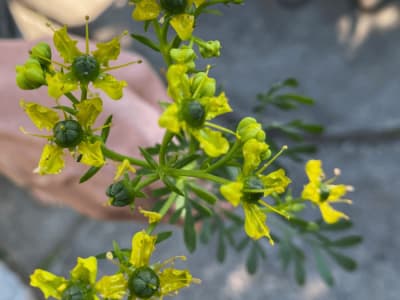
Real plants of this species grown and shared by the MyFloralVault community.
More in Pain & Inflammation




Was this helpful?
0 · 0