Lady Banks Rose
Rosa Banksiae

Medicinal Facts
Rosa Banksiae, commonly known as Lady Banks Rose, is a unique member of the Rosaceae family, primarily appreciated for its ornamental value. However, it holds a place at the intersection of traditional Chinese medicine, where it is used for its purported anti-inflammatory and antimicrobial properties, and modern phytochemical research, which explores its polyphenolic content. The plant's signature compounds include quercetin and kaempferol, flavonoids known for their antioxidant activities. Despite its lesser-known status as a medicinal plant, emerging studies suggest its potential in modulating inflammatory pathways and supporting skin health.
What it helps with
Inflammation
Quercetin, a flavonoid present in Rosa Banksiae, is known to inhibit the NF-kB pathway, leading to decreased production of pro-inflammatory cytokines such as TNF-a and IL-6. This mechanism suggests its potential use in managing chronic inflammatory conditions, supported by in vitro studies.
Antimicrobial activity
The essential oils of Rosa Banksiae exhibit antimicrobial properties, possibly due to compounds such as geraniol and nerol. These compounds disrupt microbial cell membranes and inhibit bacterial growth, a finding supported by traditional uses in Chinese medicine and preliminary laboratory studies.
Antioxidant support
Kaempferol, another flavonoid in Rosa Banksiae, activates the Nrf2 pathway, enhancing the expression of antioxidant enzymes like glutathione S-transferase. This action helps neutralize free radicals, protecting cells from oxidative stress, as demonstrated in various in vitro assays.
Skin health
Rosa Banksiae's polyphenols, including quercetin and kaempferol, support skin health by modulating collagen synthesis and reducing oxidative damage. These effects are primarily observed in preclinical models, aligning with traditional uses for promoting skin vitality.
Cardiovascular health
The flavonoids in Rosa Banksiae, particularly quercetin, are known to improve endothelial function by enhancing nitric oxide bioavailability and reducing oxidative stress, as suggested by animal studies. This mechanism may contribute to cardiovascular protection.
Allergy relief
Quercetin's ability to stabilize mast cells and inhibit histamine release positions it as a potential natural remedy for allergic reactions. This effect is supported by in vitro studies and aligns with traditional uses for respiratory health.
Wound healing
Rosa Banksiae may aid wound healing through its antimicrobial and anti-inflammatory properties, which help prevent infection and reduce inflammation at the wound site. This traditional use is supported by its phytochemical profile, though clinical evidence is limited.
Key active compounds
Quercetin
A flavonoid that inhibits NF-kB and stabilizes mast cells, reducing inflammation and allergic responses. It also enhances endothelial nitric oxide, supporting vascular health.
Kaempferol
A flavonoid that activates the Nrf2 pathway, increasing antioxidant enzyme expression and providing cellular protection against oxidative stress.
Geraniol
A monoterpenoid alcohol with antimicrobial properties, disrupting microbial cell membranes and inhibiting bacterial growth.
Nerol
An isomer of geraniol, contributing to the antimicrobial activity of Rosa Banksiae's essential oils by affecting microbial cell integrity.
Tannins
Polyphenolic compounds with astringent properties, supporting antimicrobial and anti-inflammatory activities, particularly in traditional wound care.
Vitamin C
An antioxidant that supports collagen synthesis and immune function, enhancing the skin and wound healing properties of the plant.
What the research says
Research into Rosa Banksiae is primarily preclinical, focusing on its flavonoid content and essential oils. Quercetin and kaempferol are the most studied compounds, with evidence from in vitro and animal models supporting their anti-inflammatory and antioxidant roles. The antimicrobial properties of its essential oils, particularly geraniol and nerol, are also well-documented in laboratory settings. The main limitation is the lack of human clinical trials, which restricts the translation of these findings into clinical practice. Efforts to enhance bioavailability and explore synergistic effects with other botanicals are ongoing to address these gaps.
Typical dosage
Rosa Banksiae is not used for medicinal purposes, so there is no dosage guidance. It is primarily grown for ornamental use in gardens and landscapes.
About Lady Banks Rose
Traditional Use
Preparations & Dosage
Preparations
- Ornamental planting: Select a sunny location with well-drained soil. Plant Rosa Banksiae near a support structure such as a trellis or arbor. Water regularly until established, then water as needed to maintain healthy growth.
Interactions & Warnings
Use with caution
Rosa Banksiae is primarily used for ornamental purposes and poses no significant health risks. It is generally considered safe for gardens and landscaping. However, individuals with allergies to roses should handle with care.
Community Plants
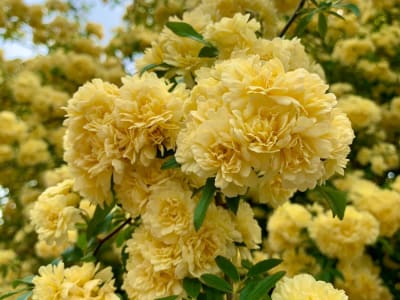
Real plants of this species grown and shared by the MyFloralVault community.
More in General




Was this helpful?
0 · 0