Japanese Wisteria
Wisteria Floribunda

Medicinal Facts
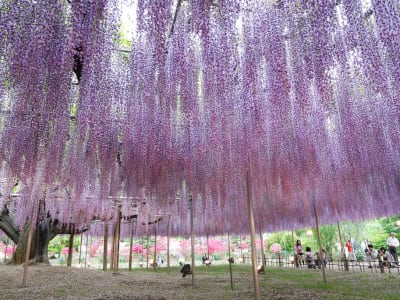
Japanese Wisteria, or Wisteria floribunda, is a climbing vine known for its beautiful cascading flowers and its intriguing phytochemical profile, primarily consisting of lectins, flavonoids, and alkaloids. It bridges the worlds of traditional Asian medicine, where it has been used for its purported detoxifying and anti-inflammatory properties, and modern pharmacological research, which investigates its lectins for potential antitumor and immunomodulatory effects. Despite its ornamental appeal, the plant's toxicity in certain parts requires careful handling and precise application in medicinal contexts.
What it helps with
Antitumor potential
Lectins from Wisteria floribunda have shown the ability to bind specific glycoproteins on cancer cell surfaces, potentially triggering apoptosis through the modulation of cell signaling pathways such as MAPK and PI3K/Akt. Preclinical studies suggest these lectins may inhibit tumor growth by disrupting cellular adhesion and metastasis.
Immunomodulation
Wisteria floribunda lectins can modulate immune responses by binding to glycoproteins on immune cells, influencing pathways like NF-kB and MAPK. This action may enhance macrophage activation and cytokine production, which are crucial for mounting an effective immune response. Evidence is primarily from in vitro studies.
Anti-inflammatory effects
Flavonoids in Wisteria floribunda, such as quercetin, may inhibit the COX-2 enzyme and downregulate NF-kB signaling, reducing the production of pro-inflammatory cytokines like TNF-a and IL-6. This mechanism supports its traditional use in managing inflammation, although most evidence is preclinical.
Antioxidant activity
The flavonoid quercetin, found in Wisteria floribunda, acts as a potent antioxidant by scavenging free radicals and upregulating the Nrf2 pathway, enhancing the expression of endogenous antioxidant enzymes like superoxide dismutase (SOD). This activity helps protect cells from oxidative stress, with evidence primarily from in vitro assays.
Antimicrobial properties
Alkaloids present in Wisteria floribunda may exhibit antimicrobial effects by disrupting bacterial cell membranes and inhibiting essential enzymes. While traditional uses include treating infections, modern studies are limited and mostly in vitro.
Detoxification support
Traditionally, Wisteria floribunda is used for detoxification, potentially due to its flavonoids which may enhance liver enzyme activity involved in detoxification pathways, such as cytochrome P450. This supports the body's ability to process and eliminate toxins, though clinical evidence is lacking.
Neurological health
Some compounds in Wisteria floribunda may interact with neurotransmitter pathways, such as GABA-A receptors, potentially offering neuroprotective effects. These interactions could support traditional uses for calming the nervous system, though research is still in early stages.
Key active compounds
Lectins
Proteins that bind carbohydrates, influencing cell-cell interactions and signaling. They show potential in cancer research due to their ability to target specific glycoproteins on tumor cells.
Quercetin
A flavonoid with strong antioxidant properties. It modulates the Nrf2 pathway and inhibits enzymes like COX-2, contributing to its anti-inflammatory effects.
Alkaloids
Nitrogen-containing compounds that can disrupt microbial cell membranes and inhibit essential bacterial enzymes, contributing to antimicrobial activity.
Kaempferol
A flavonoid that may exert anti-inflammatory and antioxidant effects by modulating pathways such as NF-kB and scavenging free radicals.
Wisterin
A toxic glycoside that, while harmful if ingested in large amounts, is part of the plant's defense mechanism against herbivory.
Tannins
Polyphenolic compounds that can precipitate proteins and have astringent properties, potentially contributing to antimicrobial effects.
What the research says
Research on Wisteria floribunda is largely preclinical, with a focus on its lectins for antitumor and immunomodulatory effects. Lectins show promise in vitro for disrupting cancer cell adhesion and signaling. Quercetin and kaempferol, flavonoids found in the plant, are studied for their antioxidant and anti-inflammatory pathways, primarily in animal models. The main limitation of current research is the plant's toxicity, which complicates safe dosage determination for human use. Future studies may focus on isolating specific compounds to minimize toxicity while maximizing therapeutic potential.
Typical dosage
Due to its toxicity, there is no recommended dosage for Wisteria floribunda. It should not be consumed or used for medicinal purposes.
About Japanese Wisteria
Traditional Use
Preparations & Dosage
Preparations
- None recommended due to toxicity
Interactions & Warnings
Use with caution
Wisteria floribunda is known to be toxic if ingested, with all parts of the plant containing toxic compounds. Symptoms of poisoning include nausea, vomiting, diarrhea, and abdominal pain. It should not be used for medicinal purposes without professional guidance.
Community Plants
Real plants of this species grown and shared by the MyFloralVault community.
More in General




Was this helpful?
0 · 0
Care Guide Available
Learn how to grow and care for Japanese Wisteria at home