Ice Cream Bean
Inga Edulis

Medicinal Facts
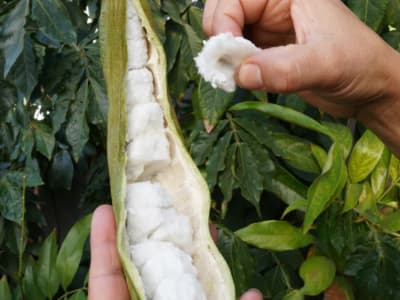
Inga edulis, commonly known as Ice Cream Bean, is a tropical fruit-bearing tree notable for its high content of flavonoids and saponins. It stands at the intersection of traditional Amazonian medicine, where it is used for its anti-inflammatory and antimicrobial properties, and emerging scientific research into its antioxidant potential. The plant's seeds and pods are particularly rich in bioactive compounds that contribute to its diverse therapeutic applications, although its pharmacological potential is still underexplored in modern clinical settings.
What it helps with
Inflammation
Flavonoids such as quercetin and kaempferol in Inga edulis modulate the NF-kB pathway, reducing the expression of pro-inflammatory cytokines like TNF-a and IL-6. This mechanism is supported by in vitro studies and aligns with traditional uses for inflammatory conditions.
Antimicrobial activity
Saponins in Inga edulis disrupt microbial cell membranes, enhancing permeability and leading to cell lysis. This effect has been observed in vitro against a range of bacterial and fungal pathogens, suggesting potential for treating infections.
Antioxidant support
The high flavonoid content, including catechins, acts as a potent scavenger of reactive oxygen species (ROS), thereby reducing oxidative stress. This antioxidant activity has been demonstrated in both in vitro assays and animal models.
Gastrointestinal health
Traditionally used to support digestion, the saponins and fiber in Inga edulis may enhance gut motility and act as prebiotics. This supports a healthy microbiome, although human clinical data are currently lacking.
Metabolic health
Compounds like quercetin may activate AMP-activated protein kinase (AMPK), improving insulin sensitivity and reducing hepatic glucose production. Animal studies suggest potential benefits for metabolic syndrome.
Cardiovascular health
The vasodilatory effects of flavonoids in Inga edulis, potentially through endothelial nitric oxide synthase (eNOS) activation, may improve blood flow and reduce blood pressure. This is supported by preliminary animal research.
Skin health
Antioxidant and anti-inflammatory properties, primarily from flavonoids, may promote skin healing and protect against UV-induced damage. This application is traditionally noted but requires further clinical validation.
Key active compounds
Quercetin
A flavonoid that modulates NF-kB and inhibits lipid peroxidation, contributing to its anti-inflammatory and antioxidant effects. It is widely studied for its potential in reducing oxidative stress.
Kaempferol
Another flavonoid with anti-inflammatory properties, known to inhibit the production of pro-inflammatory cytokines and enhance antioxidant defenses.
Catechins
These polyphenolic compounds are potent antioxidants, scavenging free radicals and chelating metal ions, thus protecting cells from oxidative damage.
Saponins
These compounds exhibit antimicrobial properties by disrupting cell membranes and also play a role in modulating cholesterol levels.
Tannins
Polyphenolic compounds that contribute to the astringent taste and have antimicrobial and antioxidant properties, potentially useful in gastrointestinal health.
Fibers
Dietary fibers in Inga edulis aid in digestion and may have prebiotic effects, supporting a healthy gut microbiome.
What the research says
Research on Inga edulis is primarily focused on its antioxidant and anti-inflammatory properties, with flavonoids like quercetin and kaempferol showing strong in vitro and animal model evidence. These compounds are linked to reduced oxidative stress and inflammation, although human trials are sparse. Saponins and tannins contribute to its antimicrobial profile, but again, most evidence remains preclinical. The main limitation is the lack of human clinical trials, which leaves its full therapeutic potential and bioavailability underexplored. Efforts to enhance bioavailability could involve formulation strategies similar to those used for other flavonoid-rich plants, such as encapsulation or combination with absorption enhancers.
Typical dosage
For a tea or infusion, use 1-2 teaspoons of dried leaves per cup of boiling water, steep for 10-15 minutes, and consume up to three times daily. For a decoction, simmer 1-2 teaspoons of bark in water for 20-30 minutes, strain, and drink once or twice daily. Powdered forms can be taken in capsules, with a typical dose being 500 mg to 1 g, up to three times daily. Always start with a lower dose to assess tolerance.
About Ice Cream Bean
Traditional Use
Preparations & Dosage
Preparations
- Tea / Infusion: Use 1-2 teaspoons of dried Inga edulis leaves per cup of boiling water. Steep for 10-15 minutes, then strain and serve. Add honey or lemon for flavor if desired.
- Decoction: Simmer 1-2 teaspoons of Inga edulis bark in water for 20-30 minutes. Strain the liquid and drink warm. Can be sweetened with honey if preferred.
- Powder: Incorporate Inga edulis powder into smoothies or juices, or take in capsule form. A typical dose is 500 mg to 1 g, up to three times daily.
Interactions & Warnings
Use with caution
Inga edulis is generally considered safe for consumption, with no significant side effects reported. However, individuals with allergies to legumes should exercise caution. Pregnant and breastfeeding women should consult a healthcare provider before use.
Herb Interactions
Combined anti-inflammatory effects may be beneficial but should be monitored for gastrointestinal sensitivity.
Community Plants
Real plants of this species grown and shared by the MyFloralVault community.
More in Digestive Health


Was this helpful?
0 · 0
Care Guide Available
Learn how to grow and care for Ice Cream Bean at home