Gentian
Gentiana lutea
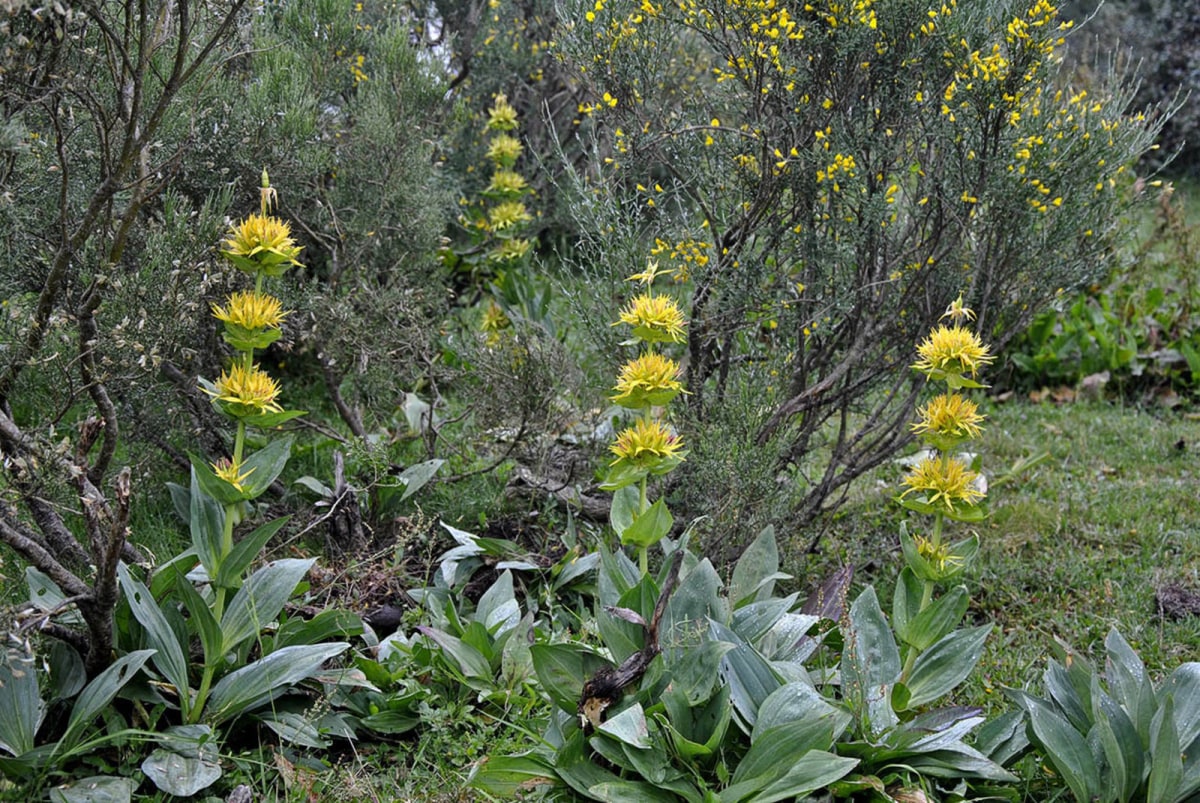
Medicinal Facts
Gentiana lutea, commonly known as Gentian, is renowned for its bitter compounds, primarily gentiopicroside and amarogentin, which are pivotal in its use as a digestive stimulant. This plant stands at the intersection of traditional European herbal medicine, where it has been used for centuries to aid digestion and stimulate appetite, and modern pharmacognosy, which explores its potential in modulating gastrointestinal motility and enzyme secretion. Its bitter principles are also being investigated for their anti-inflammatory and hepatoprotective properties, bridging traditional uses with contemporary research into liver health and inflammation modulation.
What it helps with
Digestive health & appetite stimulation
Gentiopicroside and amarogentin activate bitter taste receptors (T2Rs) in the gut, which in turn stimulate gastric acid secretion and enhance digestive enzyme activity. This mechanism supports its traditional use in treating dyspepsia and loss of appetite. Human trials have confirmed increased gastric secretion and improved digestive efficiency.
Liver health & hepatoprotection
Amarogentin exhibits hepatoprotective effects by modulating the Nrf2 pathway, enhancing the expression of antioxidant enzymes such as glutathione S-transferase. Animal studies suggest it may protect against chemically induced liver damage, supporting its traditional use in liver tonic formulations.
Anti-inflammatory effects
Gentiopicroside has been shown to inhibit the NF-kB pathway, reducing the production of pro-inflammatory cytokines like TNF-a and IL-6. This action underlies its potential use in inflammatory conditions, with evidence primarily from in vitro and animal studies.
Antimicrobial activity
Compounds in Gentiana lutea, including amarogentin, demonstrate antimicrobial properties by disrupting microbial cell membranes and inhibiting enzyme systems critical for pathogen survival. These effects have been observed in vitro against a range of bacteria and fungi.
Antioxidant effects
The phenolic compounds in Gentiana lutea scavenge free radicals and upregulate endogenous antioxidant defenses through the Nrf2 pathway. This contributes to its protective effects against oxidative stress, as evidenced in various preclinical models.
Gastrointestinal motility
Bitter compounds in Gentiana lutea enhance gastrointestinal motility by stimulating the release of gastrointestinal hormones such as gastrin and cholecystokinin. This action is supported by both traditional use and modern pharmacological studies.
Mood & cognitive support
Preliminary research suggests that the modulation of gut-brain axis via bitter receptor activation may influence mood and cognitive function. This area is emerging, with animal studies indicating potential benefits.
Key active compounds
Gentiopicroside
A secoiridoid glycoside that activates bitter taste receptors, stimulating gastric secretions and showing anti-inflammatory activity via NF-kB inhibition.
Amarogentin
One of the most bitter natural compounds known, it activates bitter receptors and has hepatoprotective and antimicrobial properties, possibly via Nrf2 pathway modulation.
Gentisin
A xanthone derivative with antioxidant properties, it contributes to the plant's overall radical scavenging activity.
Swertiamarin
A secoiridoid glycoside with mild anti-inflammatory and hepatoprotective effects, acting synergistically with other bitter compounds.
Isoorientin
A flavonoid with notable antioxidant and anti-inflammatory effects, enhancing the plant's overall protective properties against oxidative stress.
Loganic acid
A monoterpene iridoid that contributes to the plant's bitter profile and has been studied for its potential anti-inflammatory effects.
What the research says
Research on Gentiana lutea focuses on its digestive and hepatoprotective effects. Human studies primarily confirm its efficacy in enhancing gastric secretions and improving appetite, with the strongest evidence for digestive health. Preclinical studies highlight its hepatoprotective and anti-inflammatory potential, particularly through Nrf2 and NF-kB pathways. The main limitation is the variability in bitter compound concentration, which can affect efficacy. Standardization of extracts and further clinical trials are needed to solidify its therapeutic roles, particularly in liver health and inflammation management.
Typical dosage
For a tea or infusion, use 1-2 grams of dried Gentian root per cup of boiling water, steep for 10-15 minutes, and consume up to three times daily before meals. For tinctures, a typical dose is 1-2 ml taken 2-3 times daily. Capsules and powders should be taken according to the manufacturer's instructions, usually around 500 mg before meals. It is important not to exceed recommended doses to avoid gastrointestinal discomfort.
About Gentian
Traditional Use
Preparations & Dosage
Preparations
- Tea / Infusion: Use 1-2 grams of dried Gentian root per cup of boiling water. Steep for 10-15 minutes, strain, and drink before meals to stimulate digestion.
- Tincture: Take 1-2 ml of Gentian tincture 2-3 times daily. Can be diluted in water or juice to mask the bitter taste.
- Capsule: Take capsules as directed by the manufacturer, usually around 500 mg before meals.
- Powder: Mix 500 mg of Gentian powder in water or juice and consume before meals.
- Decoction: Simmer 1-2 grams of Gentian root in water for 20-30 minutes. Strain and consume before meals.
Interactions & Warnings
Use with caution
Gentian should be used with caution by individuals with peptic ulcers or hyperacidity due to its bitter compounds that stimulate gastric acid production. Pregnant and breastfeeding women should avoid it due to insufficient safety data. It may interact with medications that affect stomach acid levels.
Herb Interactions
Both herbs can affect stomach acid levels and may exacerbate conditions like GERD or ulcers when combined.
May enhance digestive effects, but could increase gastric acid production.
Community Plants
Real plants of this species grown and shared by the MyFloralVault community.

More in Digestive Health


Was this helpful?
0 · 0
Care Guide Available
Learn how to grow and care for Gentian at home