Halostachys Caspica
Halostachys Caspica

Medicinal Facts
Halostachys Caspica, a halophytic plant from the Amaranthaceae family, is rich in flavonoids and saponins, which are pivotal to its medicinal applications. It sits at the intersection of traditional uses in Central Asian folk medicine, where it is employed for its anti-inflammatory and diuretic properties, and modern phytochemical research exploring its antioxidant and hepatoprotective potential. The plant's ability to thrive in saline environments also makes it a subject of interest in studies on salt tolerance and stress physiology.
What it helps with
Inflammation
Flavonoids such as quercetin in Halostachys Caspica inhibit the NF-kB pathway, reducing the expression of pro-inflammatory cytokines like TNF-a and IL-6. This mechanism is supported by in vitro studies demonstrating its potential to modulate inflammatory responses.
Oxidative stress
The plant's flavonoids and saponins enhance the activity of antioxidant enzymes such as superoxide dismutase (SOD) and catalase, neutralizing free radicals and reducing oxidative damage. This antioxidant capacity is primarily supported by preclinical studies.
Liver protection
Saponins in Halostachys Caspica may upregulate Nrf2, a transcription factor that induces the expression of detoxifying and antioxidant enzymes, offering hepatoprotective effects. Animal studies suggest its potential in mitigating liver damage from toxins.
Diuretic effects
Traditionally used as a diuretic, Halostachys Caspica's saponins may influence renal function by modulating the expression of aquaporins, which are water channel proteins, thereby promoting urine excretion. This use is primarily anecdotal with limited scientific validation.
Salt stress tolerance
Halostachys Caspica's unique adaptation to saline environments involves the regulation of ion transporters and osmoprotectants, which may have implications for enhancing salt tolerance in crops. Research focuses on its genetic and biochemical pathways.
Cardiovascular health
Flavonoids in the plant may improve endothelial function by enhancing nitric oxide (NO) production, which aids in vasodilation and blood pressure regulation. This is supported by preliminary in vitro studies.
Antimicrobial activity
Saponins and flavonoids in Halostachys Caspica exhibit antimicrobial properties by disrupting microbial cell membranes and inhibiting enzyme systems. This is evidenced by in vitro assays against various bacterial strains.
Key active compounds
Quercetin
A flavonoid that inhibits the NF-kB pathway, reducing inflammation. It also acts as a potent antioxidant by scavenging free radicals and chelating metal ions.
Saponins
These glycosides enhance membrane permeability and modulate immune responses. They are also known for their ability to form complexes with cholesterol, affecting its absorption.
Kaempferol
Another flavonoid that modulates oxidative stress by activating the Nrf2 pathway, leading to increased expression of antioxidant enzymes.
Betaine
An osmoprotectant that aids in cellular osmoregulation under saline conditions. It stabilizes protein structure and function during stress.
Caffeic acid
A phenolic acid with antioxidant properties, inhibiting lipid peroxidation and scavenging reactive oxygen species.
Chlorogenic acid
Known for its antioxidant and anti-inflammatory effects, it inhibits the release of glucose into the bloodstream, potentially affecting metabolic pathways.
Apigenin
A flavonoid that exhibits anti-inflammatory and antioxidant activities by modulating signaling pathways such as MAPK and NF-kB.
What the research says
Research on Halostachys Caspica is primarily preclinical, focusing on its flavonoids and saponins. These compounds show promising anti-inflammatory and antioxidant activities in vitro, with quercetin and saponins being the most studied for their effects on NF-kB and Nrf2 pathways, respectively. The plant's salt tolerance mechanisms are also under investigation, with potential applications in agricultural biotechnology. However, human clinical trials are lacking, and the bioavailability of its active compounds remains a significant challenge. Strategies to enhance absorption, such as nanoformulations or co-administration with bioenhancers, are potential areas for future research.
Typical dosage
There is no established dosage for Halostachys caspica due to its limited use in traditional medicine. If used as a dried herb or infusion, it is important to consult with a healthcare provider or a knowledgeable herbalist to determine appropriate usage and ensure safety.
About Halostachys Caspica
Traditional Use
Preparations & Dosage
Preparations
- Infusion: To prepare an infusion, steep 1-2 teaspoons of dried Halostachys caspica in a cup of boiling water for 10-15 minutes. Strain and serve. This method is primarily used for research purposes rather than medicinal applications.
Interactions & Warnings
Use with caution
Halostachys caspica is generally considered safe for use in traditional applications. However, its medicinal properties are not well-documented, and it should not be used as a primary treatment for any medical condition. Pregnant or nursing women should consult a healthcare provider before use.
Community Plants
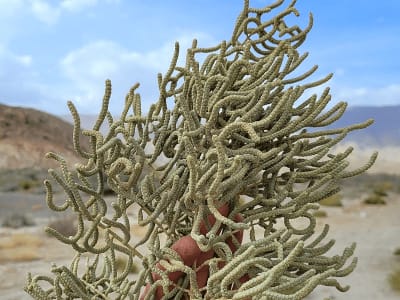
Real plants of this species grown and shared by the MyFloralVault community.
More in General




Was this helpful?
0 · 0
Care guides for related plants
Care Guide Available
Learn how to grow and care for Halostachys Caspica at home