Salal
Gaultheria Shallon
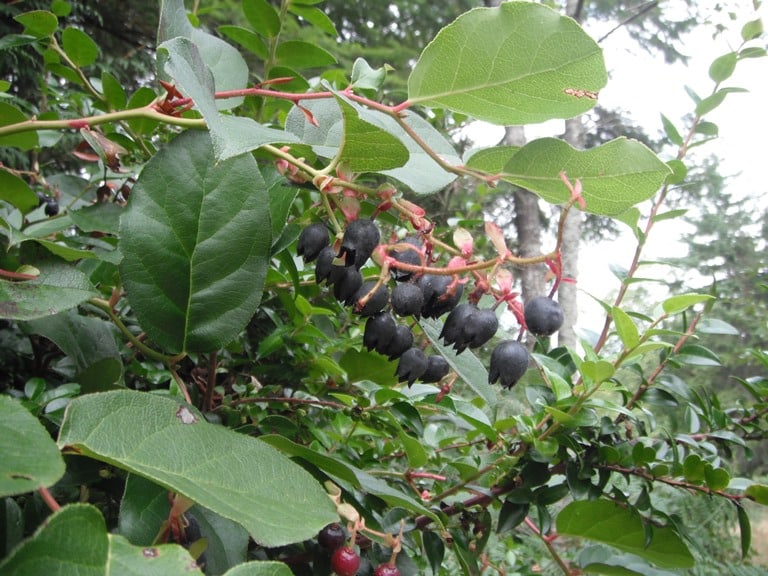
Medicinal Facts
Salal (Gaultheria shallon) is a plant rich in phenolic compounds, particularly flavonoids like quercetin and catechins, which contribute to its potent antioxidant and anti-inflammatory properties. It stands at the intersection of traditional Indigenous medicine, where it is used for wound healing and digestive issues, and contemporary research into polyphenol-rich botanicals for metabolic and cardiovascular health. The berries and leaves are both utilized, with a notable focus on their ability to modulate oxidative stress and inflammation pathways. Emerging studies also explore its role in neuroprotection and metabolic regulation.
What it helps with
Wound healing
Salal leaves are traditionally used for their astringent properties, which are attributed to tannins that promote tissue contraction and wound closure. The flavonoids quercetin and catechins enhance this effect by modulating the NF-kB pathway, reducing local inflammation, and promoting collagen synthesis. Evidence is primarily ethnobotanical, supported by in vitro studies.
Digestive health
The astringent tannins in salal help to tighten mucosal tissues, potentially alleviating diarrhea. Additionally, quercetin modulates intestinal inflammation through the inhibition of COX-2 and lipoxygenase pathways, reducing prostaglandin and leukotriene synthesis. Traditional use is corroborated by biochemical studies on tannin and flavonoid activity.
Cardiovascular health
Salal's catechins and quercetin have been shown to enhance endothelial function by upregulating endothelial nitric oxide synthase (eNOS), promoting vasodilation and reducing blood pressure. They also inhibit LDL oxidation, a key factor in atherosclerosis. Evidence includes small human trials and extensive animal studies.
Metabolic regulation
Catechins in salal may support metabolic health by activating AMP-activated protein kinase (AMPK), enhancing insulin sensitivity, and reducing hepatic glucose production. Quercetin further supports this by modulating glucose transporter 4 (GLUT4) translocation in muscle cells. Research is primarily preclinical, with promising animal model results.
Neuroprotection
Quercetin and catechins in salal cross the blood-brain barrier and exhibit neuroprotective properties by reducing oxidative stress and neuroinflammation via Nrf2 pathway activation. They may also inhibit amyloid-beta aggregation, a hallmark of Alzheimer's disease. Evidence is largely from in vitro and animal studies.
Anti-inflammatory effects
The flavonoids in salal, particularly quercetin, inhibit the NF-kB pathway, leading to decreased production of pro-inflammatory cytokines such as TNF-alpha and IL-6. This mechanism underlies its traditional use for inflammatory conditions and is supported by in vitro and animal research.
Antioxidant support
Salal's high phenolic content, including catechins and proanthocyanidins, provides robust antioxidant activity by scavenging free radicals and upregulating endogenous antioxidant enzymes via the Nrf2 pathway. This contributes to its protective effects against oxidative stress-related damage. Evidence is primarily from laboratory studies.
Key active compounds
Quercetin
A flavonoid that modulates inflammation by inhibiting NF-kB and COX-2, and enhances endothelial function through eNOS activation. It has moderate bioavailability, often enhanced by co-administration with other polyphenols.
Catechins
These polyphenolic compounds activate AMPK, improving metabolic profiles and reducing oxidative stress. They also inhibit LDL oxidation, contributing to cardiovascular benefits. Catechins are well-absorbed, especially when consumed as part of a complex matrix.
Proanthocyanidins
Potent antioxidants that scavenge free radicals and protect against oxidative stress. They also modulate inflammatory pathways and support vascular health by enhancing eNOS activity.
Tannins
Astringent compounds that promote tissue contraction and wound healing, and exhibit antimicrobial properties. They can bind to proteins and other organic compounds, affecting bioavailability and absorption.
Gallic acid
A phenolic acid with antioxidant and anti-inflammatory properties, modulating the NF-kB pathway and enhancing cellular antioxidant defenses. It is readily absorbed and contributes to the overall bioactivity of the plant.
Ellagic acid
A polyphenol with chemopreventive potential, it inhibits mutagenesis and modulates signaling pathways involved in cell proliferation. It is less bioavailable, often requiring formulation strategies to enhance absorption.
What the research says
Research on salal focuses on its rich polyphenolic content and associated health benefits. Human trials are limited, but preclinical studies highlight the cardiovascular and metabolic effects of catechins and quercetin, particularly their roles in endothelial function and glucose metabolism. Neuroprotective and anti-inflammatory effects are well-documented in vitro, with flavonoids like quercetin showing promise in reducing neuroinflammation and oxidative stress. The primary limitation is the bioavailability of these compounds, a common issue with polyphenols, which is being addressed through advanced delivery systems such as encapsulation and co-formulation with absorption enhancers.
Typical dosage
For a tea or infusion, use 1-2 teaspoons of dried Salal leaves per cup of boiling water. Steep for 10-15 minutes and consume up to three times daily. For a tincture, take 1-2 ml up to three times a day. When using as a poultice, apply the crushed leaves directly to the affected area as needed. Dosages for decoctions and syrups should follow traditional recipes or the guidance of a healthcare provider.
About Salal
Traditional Use
Preparations & Dosage
Preparations
- Tea / Infusion: Use 1-2 teaspoons of dried Salal leaves per cup of boiling water. Steep for 10-15 minutes, strain, and serve. Add honey or lemon for taste if desired.
- Tincture: Combine 1 part dried Salal leaves with 5 parts alcohol (such as vodka) in a jar. Seal and store in a cool, dark place for 4-6 weeks, shaking occasionally. Strain and store in a dark glass bottle.
- Decoction: Simmer 1-2 tablespoons of dried Salal leaves in 2 cups of water for 20-30 minutes. Strain and serve. Can be sweetened with honey if desired.
- Poultice: Crush fresh Salal leaves into a paste and apply directly to the affected area. Cover with a clean cloth or bandage and leave for several hours or overnight.
Interactions & Warnings
Use with caution
Salal is generally considered safe for most people when used in traditional amounts. However, individuals with allergies to plants in the Ericaceae family should exercise caution. Pregnant and breastfeeding women should consult a healthcare provider before use.
Herb Interactions
Combined use may enhance anti-inflammatory effects, increasing the risk of gastrointestinal irritation.
Community Plants
Real plants of this species grown and shared by the MyFloralVault community.

More in Digestive Health


Was this helpful?
0 · 0
Care guides for related plants
Care Guide Available
Learn how to grow and care for Salal at home