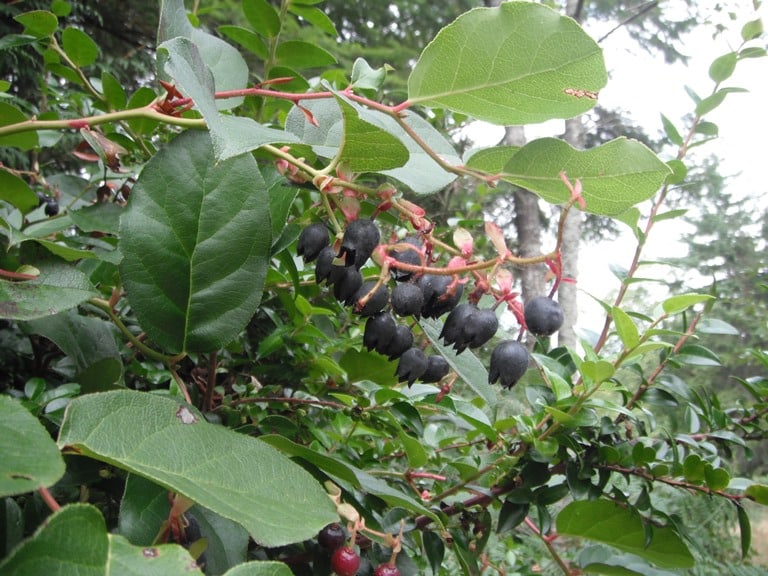
Description by @jominime
https://www.youtube.com/watch?v=rDEkFDaFIEI
Proanthocyanidin concentrations in mature salal berries exceeded those reported for blueberry, lingonberry, and cranberry.
proanthocyanidins (PAs) are condensed tannins, the same class of compounds responsible for cranberry's anti-UTI reputation, red wine's cardiovascular benefits, and grape seed extract's antioxidant profile.
the berries are rich in procyanidin A2, which has been implicated in anti-adhesion activity against uropathogenic E. coli.
procyanidin A2 is the specific compound in cranberry that prevents UTI-causing bacteria from adhering to bladder walls. salal has it, and has more total proanthocyanidins than cranberry to begin with. it's basically a stronger version of the berry people already buy for UTI prevention.
salal berry extract showed α-amylase inhibition above 61%, α-glucosidase inhibition above 62%, and DPP-IV inhibition above 56%, all key enzymes involved in type 2 diabetes management.
the leaves have an astringent and anti-inflammatory effect, and tea or tincture from the leaves is used to decrease internal inflammation including bladder inflammation, stomach and duodenal ulcers, heartburn, indigestion, sinus inflammation, and diarrhea.
has antioxidant capacity comparable to ascorbic acid.
chewing the young leaves of salal suppresses appetite.
Related Plants
Plant information is for educational purposes only.