Red Thumb
Cynomorium Coccineum
Medicinal Facts
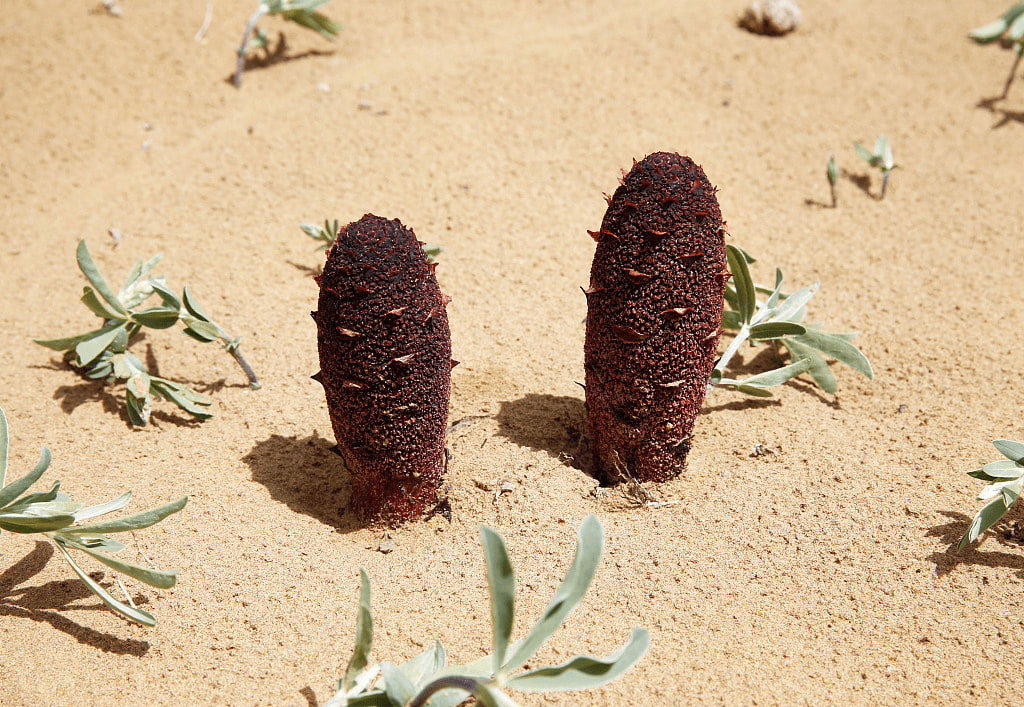
Cynomorium coccineum, commonly known as Red Thumb, is a parasitic plant renowned for its unique phytochemistry, primarily featuring triterpenoids and flavonoids. It stands at the intersection of traditional Mediterranean and North African medicine, where it is used for vitality and sexual health, and modern research exploring its antioxidant and anti-inflammatory properties. Key compounds like ursolic acid and kaempferol are central to its medicinal profile, influencing pathways related to inflammation and oxidative stress. Despite its historical use, scientific exploration into its mechanisms is ongoing, with a focus on its bioactive compounds and their potential therapeutic applications.
What it helps with
Sexual health & vitality
Traditionally used as an aphrodisiac, Cynomorium coccineum may enhance sexual health through its triterpenoid content, particularly ursolic acid, which modulates testosterone levels via the inhibition of 5-alpha-reductase. This enzyme is crucial in the conversion of testosterone to dihydrotestosterone (DHT), a pathway studied in animal models.
Anti-inflammatory effects
Ursolic acid in Cynomorium coccineum inhibits the NF-kB pathway, reducing the expression of pro-inflammatory cytokines such as TNF-a and IL-6. This mechanism is supported by in vitro studies, suggesting potential benefits in inflammatory conditions.
Antioxidant activity
The flavonoid kaempferol, found in Cynomorium coccineum, activates the Nrf2 pathway, leading to increased expression of antioxidant enzymes like superoxide dismutase (SOD) and catalase. This action helps mitigate oxidative stress, a finding supported by preclinical studies.
Digestive health
Cynomorium coccineum has been traditionally used to support digestive health, potentially through its polysaccharide content, which may modulate gut microbiota and enhance mucosal immunity. This effect is primarily documented in traditional uses and supported by preliminary research.
Blood sugar regulation
Research suggests that Cynomorium coccineum may influence blood sugar levels by modulating insulin signaling pathways, particularly through the activation of AMPK. This mechanism has been observed in animal studies, indicating potential for managing metabolic conditions.
Bone health
Ursolic acid may support bone health by promoting osteoblast differentiation and inhibiting osteoclastogenesis through the modulation of the RANK/RANKL/OPG pathway. This potential benefit is primarily supported by in vitro and animal studies.
Immune modulation
Cynomorium coccineum may modulate immune responses through its polysaccharide components, which can enhance macrophage activity and cytokine production. These effects are observed in preclinical studies, aligning with traditional uses for immune support.
Key active compounds
Ursolic acid
A triterpenoid that inhibits 5-alpha-reductase and NF-kB, contributing to anti-inflammatory and potential testosterone-modulating effects. It is a key compound in the plant's traditional use for vitality.
Kaempferol
A flavonoid that activates the Nrf2 pathway, enhancing cellular antioxidant defenses. It plays a crucial role in mitigating oxidative stress.
Polysaccharides
Bioactive components that support immune modulation and digestive health, potentially through gut microbiota interaction and mucosal immunity enhancement.
Betulinic acid
A triterpenoid with potential anti-inflammatory and anticancer properties, acting through apoptosis induction and NF-kB inhibition.
Oleanolic acid
A triterpenoid that modulates inflammatory pathways and has hepatoprotective effects, contributing to the plant's overall medicinal profile.
Gallic acid
A phenolic acid with antioxidant and antimicrobial properties, enhancing the plant's protective effects against oxidative stress.
Tannins
Polyphenolic compounds that provide astringent properties and contribute to the plant's traditional use in digestive health.
What the research says
Research on Cynomorium coccineum is primarily preclinical, with a focus on its anti-inflammatory and antioxidant properties. Ursolic acid and kaempferol are the most studied compounds, showing potential in modulating pathways like NF-kB and Nrf2 in vitro and in animal models. While traditional uses for sexual health and vitality are well-documented, scientific validation is still emerging, with limited human trials available. The main limitation in research is the lack of large-scale clinical trials, and efforts to improve bioavailability and standardize extracts are ongoing to better understand and harness its therapeutic potential.
Typical dosage
For decoctions, use 10-15 grams of dried Cynomorium coccineum per 500 ml of water, simmering for 30 minutes. Consume up to twice daily. For powders, take 1-2 grams mixed with water or juice, up to twice daily. Capsules typically contain 500 mg, with a recommended dosage of 1-2 capsules per day. Tinctures can be taken at a dose of 2-4 ml, up to twice daily. Adjust dosages based on individual response and consult a healthcare provider for prolonged use.
About Red Thumb
Traditional Use
Preparations & Dosage
Preparations
- Decoction: Use 10-15 grams of dried Cynomorium coccineum. Add to 500 ml of water and bring to a boil. Simmer for 30 minutes, then strain. Drink up to twice daily.
- Powder: Mix 1-2 grams of Cynomorium coccineum powder with water or juice. Consume up to twice daily.
- Capsule: Take 1-2 capsules (500 mg each) with water, up to twice daily.
- Tincture: Take 2-4 ml of Cynomorium coccineum tincture in a small amount of water, up to twice daily.
Interactions & Warnings
Use with caution
Cynomorium coccineum should be used with caution, especially by individuals with hormone-sensitive conditions or those on hormone-related medications. Pregnant or breastfeeding women should avoid its use due to insufficient safety data.
Herb Interactions
Both herbs may enhance libido and energy levels, potentially leading to overstimulation or hormonal imbalance if used together in high doses.
Community Plants
Real plants of this species grown and shared by the MyFloralVault community.

More in Hormonal Balance



Was this helpful?
0 · 0
Care Guide Available
Learn how to grow and care for Red Thumb at home