Prickly Water Lily
Euryale Ferox
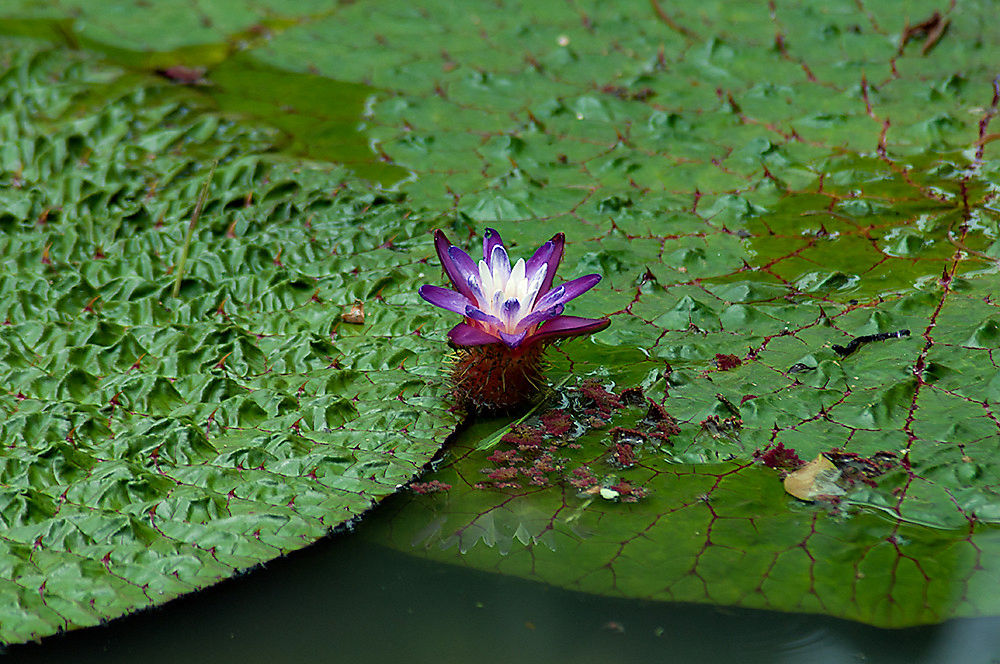
Medicinal Facts
Euryale ferox, commonly known as Prickly Water Lily, is renowned for its seeds, which are rich in flavonoids and alkaloids, particularly euryaloside. It stands at the intersection of traditional Chinese medicine, where it is used for kidney and spleen health, and modern nutritional research, which examines its antioxidant and anti-inflammatory properties. The seeds are celebrated for their adaptogenic potential, though their bioactive mechanisms are still being mapped out in contemporary studies.
What it helps with
Kidney health
Euryale ferox seeds are traditionally used to support kidney function, attributed to their diuretic properties. The alkaloid euryaloside may enhance renal filtration by modulating aquaporin channels, though this mechanism is primarily supported by traditional use and animal studies.
Spleen function
In traditional Chinese medicine, Euryale ferox is believed to strengthen the spleen. This is thought to be due to its polysaccharide content, which may enhance macrophage activity and cytokine production, though direct molecular pathways remain under-researched.
Antioxidant support
Flavonoids in Euryale ferox, such as quercetin, scavenge free radicals and upregulate Nrf2, a transcription factor that enhances the expression of antioxidant enzymes like superoxide dismutase. This mechanism is supported by in vitro studies and suggests potential for reducing oxidative stress.
Anti-inflammatory effects
The seeds exhibit anti-inflammatory properties by inhibiting the NF-kB pathway, which reduces the expression of pro-inflammatory cytokines like TNF-a and IL-1b. This action is primarily supported by preclinical studies.
Metabolic health
Euryale ferox may support metabolic health by modulating AMPK activity, which enhances glucose uptake and fatty acid oxidation. Animal studies suggest potential benefits for managing hyperglycemia and dyslipidemia.
Cognitive function
The seeds are believed to support cognitive health, possibly through flavonoid-induced modulation of BDNF pathways, which are crucial for neuroplasticity. Evidence is mostly preclinical, focusing on neuroprotection and memory enhancement.
Adaptogenic properties
Euryale ferox is traditionally used as an adaptogen, helping the body resist stress. This is thought to involve modulation of the HPA axis, though specific molecular targets remain under investigation. Traditional use is the primary evidence base.
Key active compounds
Euryaloside
An alkaloid that may modulate aquaporin channels, contributing to its diuretic effects. Its pharmacokinetics are not well-characterized, which limits clinical application.
Quercetin
A flavonoid with potent antioxidant properties, known to activate Nrf2 and inhibit NF-kB, reducing oxidative stress and inflammation. It is moderately bioavailable and often studied for its broad health benefits.
Kaempferol
Another flavonoid that contributes to the antioxidant profile by scavenging free radicals and potentially modulating signaling pathways related to inflammation.
Polysaccharides
These compounds may enhance immune function by stimulating macrophage activity and cytokine production, though their exact mechanisms in Euryale ferox are not fully elucidated.
Starch
A major component of the seeds, providing energy and potentially influencing glycemic index, though it is not directly involved in the medicinal mechanisms.
Protein
High in essential amino acids, contributing to the nutritional profile but not directly linked to specific pharmacological actions.
What the research says
Research on Euryale ferox is primarily focused on its antioxidant and anti-inflammatory properties. Flavonoids like quercetin and kaempferol have the most robust preclinical evidence, especially in vitro studies demonstrating their ability to modulate key pathways like NF-kB and Nrf2. Human clinical trials are sparse, with most insights derived from traditional use and animal models. The main limitation is the lack of detailed pharmacokinetic data, particularly concerning the bioavailability of its active compounds. Addressing this through advanced extraction techniques and formulation strategies could enhance its therapeutic potential.
Typical dosage
For decoction, use 10-15 grams of dried seeds per 500 ml of water, simmer for 20-30 minutes, and consume up to twice daily. For powder, take 1-2 teaspoons mixed with water or juice, up to twice daily. Capsules typically contain 500 mg of seed extract; take 1-2 capsules daily. Tinctures can be taken at a dose of 1-2 ml, up to three times daily. Adjust dosages based on individual tolerance and consult a healthcare provider for personalized advice.
About Prickly Water Lily
Traditional Use
Preparations & Dosage
Preparations
- Decoction: Boil 10-15 grams of dried seeds in 500 ml of water for 20-30 minutes. Strain and consume warm. Add honey or lemon for flavor if desired.
- Powder: Grind dried seeds into a fine powder. Mix 1-2 teaspoons with water, milk, or juice. Stir well before consuming.
- Capsule: Take 1-2 capsules (typically 500 mg each) with water, preferably with meals.
- Tincture: Use 1-2 ml of tincture in a small amount of water or juice, up to three times daily.
Interactions & Warnings
Use with caution
Euryale Ferox is generally considered safe for most people when consumed in moderate amounts. However, individuals with allergies to aquatic plants should exercise caution. Pregnant and breastfeeding women should consult a healthcare provider before use.
Herb Interactions
Both herbs may boost energy levels and could potentially lead to overstimulation if taken together in large amounts.
Community Plants
Real plants of this species grown and shared by the MyFloralVault community.

More in Digestive Health


Was this helpful?
0 · 0