Partridgeberry
Mitchella Repens
Medicinal Facts
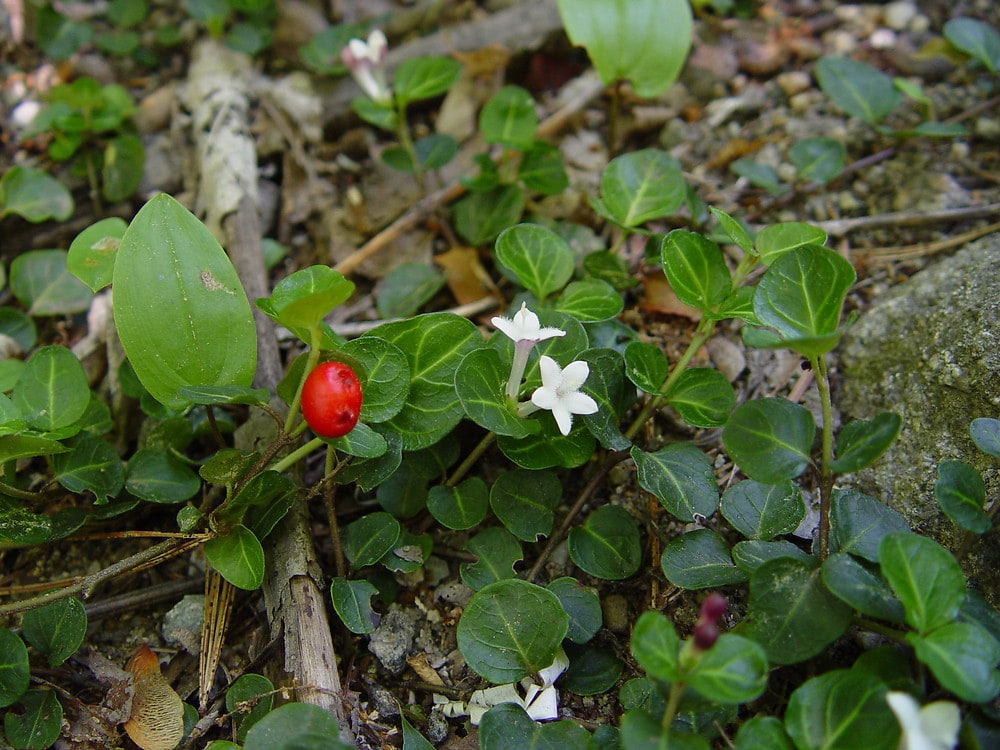
Mitchella repens, commonly known as Partridgeberry, is a plant whose medicinal potential is primarily attributed to its iridoid glycosides, tannins, and flavonoids. It stands at the intersection of traditional Native American herbal practices, where it is revered for women's health, and emerging phytochemical research exploring its anti-inflammatory and antioxidant properties. This plant is traditionally used to support reproductive health and has been investigated for its potential to modulate inflammatory pathways. Its use in modern herbalism often focuses on its gentle tonifying effects on the female reproductive system.
What it helps with
Women's reproductive health
Mitchella repens is traditionally used to support menstruation and pregnancy, with iridoid glycosides thought to play a role in modulating uterine tone. These compounds may influence calcium channels and prostaglandin pathways, although specific molecular mechanisms remain under-researched. Traditional use by Native American tribes is well-documented, yet clinical evidence is sparse.
Anti-inflammatory support
The tannins and flavonoids in Mitchella repens may inhibit the NF-kB pathway, reducing the production of pro-inflammatory cytokines like TNF-a and IL-6. This action suggests potential benefits for inflammatory conditions, though evidence is primarily from in vitro studies.
Antioxidant activity
Flavonoids in Mitchella repens, such as quercetin, may activate the Nrf2 pathway, leading to increased expression of endogenous antioxidant enzymes like superoxide dismutase (SOD) and catalase. This mechanism supports its traditional use in protecting against oxidative stress, with evidence largely from preclinical studies.
Urinary tract health
Traditionally used for urinary tract support, the astringent tannins in Mitchella repens may help reduce mucosal inflammation and inhibit bacterial adhesion. This is supported by traditional use, with limited modern clinical validation.
Digestive health
The astringent properties of tannins may help mitigate diarrhea by reducing intestinal inflammation and secretion. This traditional use is supported by the plant's historical application in gastrointestinal disturbances, though modern research is limited.
Wound healing
Topical application of Mitchella repens may benefit wound healing due to its tannins, which can promote collagen cross-linking and reduce microbial load. This use is supported by traditional practices, with limited scientific exploration of exact mechanisms.
Mild sedative effects
The plant is traditionally used for its calming effects, potentially mediated by modulation of GABAergic pathways, though specific compounds and mechanisms remain to be clarified. This use is anecdotal, with minimal direct research.
Key active compounds
Iridoid glycosides
These compounds are believed to modulate uterine tone and may influence calcium channels and prostaglandin pathways, although specific actions are not fully understood.
Tannins
Astringent compounds that can reduce inflammation by binding to proteins and forming tight complexes, thus modulating mucosal inflammation and microbial growth.
Flavonoids (e.g., quercetin)
Antioxidant compounds that may activate the Nrf2 pathway, enhancing cellular antioxidant defenses. They also exhibit anti-inflammatory properties by inhibiting NF-kB.
Anthocyanins
Pigments with antioxidant properties that may contribute to the plant's overall oxidative stress reduction, though specific mechanisms in Mitchella repens are under-researched.
Saponins
These compounds may contribute to the plant's anti-inflammatory effects by modulating immune responses, though their specific role in Mitchella repens is not well-documented.
Mucilage
A polysaccharide that may provide soothing effects on mucosal tissues, potentially aiding in digestive and urinary tract health.
What the research says
Research on Mitchella repens is primarily focused on its traditional uses and phytochemical composition. Iridoid glycosides and tannins are the most studied compounds, with in vitro and animal studies suggesting anti-inflammatory and antioxidant effects. However, human clinical trials are lacking, and much of the evidence remains anecdotal or based on traditional use. The main limitation in current research is the lack of detailed pharmacokinetic studies, which hinders understanding of bioavailability and systemic effects. Future studies could benefit from focusing on isolating active compounds and exploring their specific mechanisms in human models.
Typical dosage
For a tea or infusion, use 1-2 teaspoons of dried leaves per cup of boiling water, steep for 10-15 minutes, and consume up to three times daily. Tinctures can be taken in doses of 1-2 ml up to three times a day. Capsules typically contain 500 mg of dried herb, and the recommended dosage is 1-2 capsules daily. For a poultice, apply the mashed leaves directly to the skin for wound healing. Decoctions can be made by simmering the leaves in water for 20-30 minutes, taken in small doses as needed.
About Partridgeberry
Traditional Use
Preparations & Dosage
Preparations
- Tea / Infusion: Use 1-2 teaspoons of dried Mitchella repens leaves per cup of boiling water. Steep for 10-15 minutes, strain, and drink. Add honey or lemon for flavor if desired.
- Tincture: Use a standard tincture ratio of 1:5 (herb to alcohol). Take 1-2 ml up to three times daily. Mix with water or juice if desired.
- Capsule: Take 1-2 capsules (500 mg each) daily with meals. Ensure capsules are stored in a cool, dry place.
- Poultice: Mash fresh or dried leaves with a small amount of water to create a paste. Apply directly to the skin and cover with a clean cloth.
Interactions & Warnings
Use with caution
Mitchella repens should be used with caution during pregnancy, except under professional guidance, as it is traditionally used to prepare for labor. Individuals with known allergies to plants in the Rubiaceae family should avoid it. Always consult a healthcare provider before use, especially if taking other medications.
Herb Interactions
Both herbs are traditionally used for labor preparation and may have additive effects, potentially leading to stronger uterine contractions.
Community Plants
Real plants of this species grown and shared by the MyFloralVault community.

More in Hormonal Balance



Was this helpful?
0 · 0
Care guides for related plants
Care Guide Available
Learn how to grow and care for Partridgeberry at home