Black Walnut
Juglans Nigra
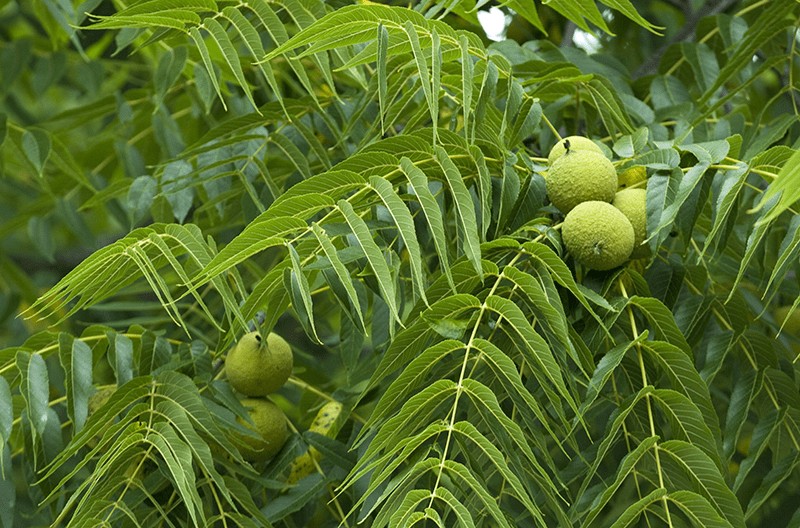
Medicinal Facts
Black Walnut, Juglans nigra, is renowned for its juglone content, a naphthoquinone with potent antimicrobial and allelopathic properties. It stands at the intersection of traditional herbal medicine, where it is used for parasitic infections and skin conditions, and contemporary research into its antimicrobial and anti-inflammatory effects. The hulls, rich in tannins and polyphenols, are particularly noted for their astringent and antioxidant properties. Modern studies focus on juglone's apoptosis-inducing capabilities in cancer research, although its use is limited by potential toxicity.
What it helps with
Parasitic infections
Juglone exerts antiparasitic effects by disrupting mitochondrial function in parasites, leading to apoptosis through the generation of reactive oxygen species (ROS). Traditional use in herbal protocols for intestinal worms is supported by in vitro studies showing efficacy against various helminths.
Skin conditions
The tannins in Black Walnut hulls have astringent properties that help tighten and dry out the skin, making them useful in traditional treatments for eczema and ringworm. Juglone also exhibits antifungal activity by inhibiting fungal cell wall synthesis, as demonstrated in laboratory studies.
Antimicrobial activity
Juglone inhibits bacterial growth by intercalating into DNA and disrupting bacterial replication. This mechanism has been observed in vitro against pathogens such as Staphylococcus aureus and Escherichia coli, aligning with traditional uses for infections.
Cancer-adjunct research
Juglone induces apoptosis in cancer cells by activating the p53 pathway and increasing intracellular ROS levels. Preclinical studies highlight its potential in treating leukemia and breast cancer, though human trials are lacking due to toxicity concerns.
Inflammation
Black Walnut polyphenols modulate inflammatory pathways by inhibiting NF-kB and downregulating pro-inflammatory cytokines like TNF-a and IL-6. Animal studies suggest a reduction in systemic inflammation, supporting its traditional use for inflammatory conditions.
Digestive health
The astringent tannins in Black Walnut hulls help reduce diarrhea by tightening the mucosal lining of the gut. This traditional use is supported by the ability of tannins to inhibit intestinal secretions and motility in animal models.
Cardiovascular health
Polyphenols in Black Walnut may support cardiovascular health by enhancing endothelial nitric oxide synthase (eNOS) activity, improving vasodilation. Preliminary studies indicate a potential for reducing blood pressure and improving arterial function.
Key active compounds
Juglone
A naphthoquinone that intercalates into DNA, disrupting replication and inducing apoptosis. It is the primary antimicrobial and allelopathic agent, though it poses toxicity risks.
Tannins
Polyphenolic compounds with astringent properties that tighten tissues and reduce secretions. They are crucial for the plant's traditional use in skin and digestive conditions.
Ellagic Acid
A polyphenol with antioxidant and anti-inflammatory properties, it scavenges free radicals and modulates inflammatory pathways such as NF-kB.
Flavonoids
These compounds exhibit antioxidant activity and contribute to the modulation of inflammatory and immune responses, enhancing the overall therapeutic profile of the plant.
Omega-3 fatty acids
Present in the seed oil, they support cardiovascular health by modulating lipid profiles and reducing inflammation through pathways like PPAR activation.
Quinones
A class of compounds including juglone, known for redox cycling and generation of reactive oxygen species, contributing to antimicrobial and cytotoxic effects.
Polyphenols
A broad class of compounds that provide antioxidant and anti-inflammatory effects, supporting various health benefits attributed to Black Walnut.
What the research says
Research on Black Walnut focuses heavily on its antimicrobial and antiparasitic properties, with juglone showing strong in vitro efficacy against bacteria, fungi, and parasites. These effects are primarily preclinical, with traditional uses providing anecdotal support. In cancer research, juglone's ability to induce apoptosis through ROS generation and p53 activation is promising, though human studies are limited due to its potential toxicity. The primary limitation in Black Walnut research is the toxicity of juglone, which restricts its use in high doses; ongoing studies are exploring safer delivery methods and formulations to mitigate these effects.
Typical dosage
For tinctures, a common dosage is 1-2 ml taken up to three times daily. Capsules typically contain 500 mg of black walnut hull extract, with a recommended dose of 1-2 capsules per day. For topical applications, apply a diluted extract to the affected area 2-3 times daily. Decoctions can be made by boiling 1-2 teaspoons of dried hulls in water for 10-15 minutes, consumed up to twice daily. Always start with the lowest dose to assess tolerance.
About Black Walnut
Traditional Use
Preparations & Dosage
Preparations
- Tincture: Combine 1 part dried black walnut hulls with 5 parts alcohol (such as vodka) in a glass jar. Seal tightly and store in a cool, dark place for 4-6 weeks, shaking occasionally. Strain through a fine mesh or cheesecloth into a clean bottle.
- Capsule: Use commercially prepared black walnut hull capsules, following the manufacturer's dosage instructions. Typically, 500 mg capsules are taken 1-2 times daily.
- Topical application: Dilute black walnut tincture with water or carrier oil (such as coconut oil) at a 1:1 ratio. Apply to affected skin areas using a cotton ball or pad.
- Decoction: Boil 1-2 teaspoons of dried black walnut hulls in 2 cups of water for 10-15 minutes. Strain and drink warm.
Interactions & Warnings
Use with caution
Black walnut should be used with caution, especially in individuals with nut allergies. Pregnant and breastfeeding women should avoid it due to insufficient safety data. High doses can cause gastrointestinal upset and skin irritation.
Herb Interactions
Both have antifungal properties and may enhance each other's effects, potentially leading to increased risk of side effects like gastrointestinal upset.
Community Plants
Real plants of this species grown and shared by the MyFloralVault community.

More in Digestive Health


Was this helpful?
0 · 0