Black Walnut
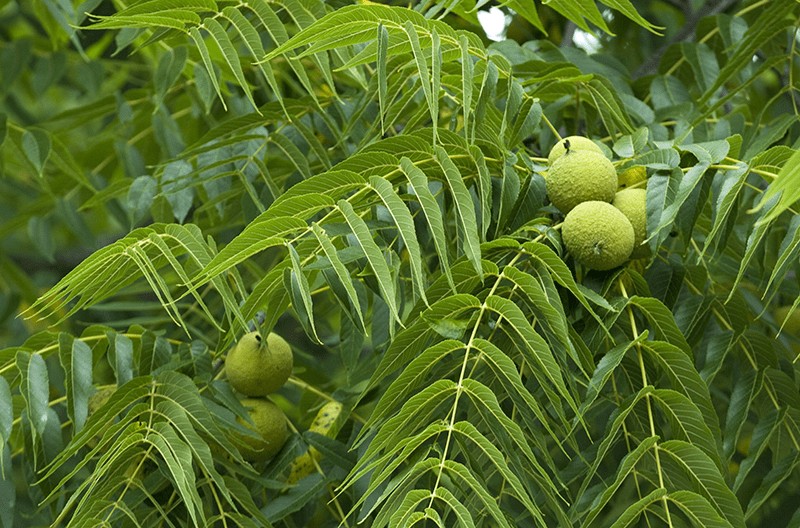
Description by @jominime
prized for its extraordinarily hard, chocolate-brown timber — the most valuable hardwood in North America by board-foot price.
juglone from black walnut hull kills a broad range of bacteria including MRSA-class gram-positives, gram-negatives, oral pathogens, and fungi. the antiparasitic effect operates by disrupting parasite energy production. typically combined with wormwood and cloves. the juglone mechanism against parasites involves inhibition of ATP production in parasite mitochondria.
juglone has antifungal, antiparasitic, and antimicrobial effects and improves intestinal function and restores mucous membrane.
juglone inhibits the activity of PI3K, a key cancer survival pathway overactivated in most human cancers. penta-O-galloyl-β-d-glucose from the kernel kills lung cancer cells.
juice of freshly macerated unripe hulls applied topically treats fungal skin infections including ringworm and athlete's foot.
the tannin content promotes wound healing and skin tightening.
protects against cardiovascular disease by reducing LDL oxidation and arterial inflammation.
juglone is toxic to horses through fresh hull contact or pasture grazing, causes laminitis.
naturally reduce weeds by releasing juglone from their roots, leaves, and nut hulls, which acts as a natural herbicide, inhibiting the growth of many surrounding plants.
Juglone inhibits respiration in other plants, stopping the energy production required for growth.
The highest concentrations of juglone are in the roots, bud scales, and nut hulls.
You can collect fallen leaves and walnut hulls to spread as mulch in specific areas to kill or suppress weeds and woody plants.
The toxic effect remains in the soil for years after a tree is removed, lasting longer in clay soils.
grasses (like bluegrass), and blackberries are immune and can thrive.
an active zone extending 50–80 feet from the trunk depending on root spread.
Caution: Do not use black walnut leaves or hulls in compost intended for sensitive plants like tomatoes, potatoes, or blueberries, as it will kill them.
Related Plants
Plant information is for educational purposes only.