Bitter apple
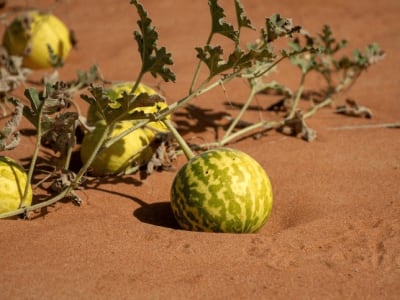
Citrullus colocynthis

Medicinal Facts
Citrullus colocynthis, commonly known as Bitter Apple, is renowned for its potent bioactive compounds, particularly cucurbitacins and colocynthin. It stands at the intersection of traditional Middle Eastern and Ayurvedic medicine, where it is utilized for digestive and anti-inflammatory purposes, and contemporary pharmacological research, which investigates its potential in modulating inflammatory pathways and metabolic disorders. Its use is tempered by its strong purgative effects, necessitating careful dosing and preparation.
What it helps with
Digestive health & constipation
Cucurbitacin E in Citrullus colocynthis acts as a powerful stimulant laxative by inhibiting the Na+/K+ ATPase pump in intestinal cells, leading to increased water secretion and bowel movement. This traditional use is well-documented, though modern applications are limited by its intense cathartic action.
Anti-inflammatory effects
Cucurbitacins inhibit the JAK-STAT signaling pathway and downregulate pro-inflammatory cytokines such as TNF-a and IL-6. This mechanism has been explored in vitro and in animal models, showing potential in reducing inflammation in conditions like rheumatoid arthritis.
Metabolic syndrome & diabetes
Colocynthin and other compounds in Citrullus colocynthis may improve insulin sensitivity by activating the AMPK pathway, thereby enhancing glucose uptake in muscle cells. Small human studies suggest a modest hypoglycemic effect, though safety and efficacy require further exploration.
Anticancer potential
Cucurbitacins exhibit cytotoxic effects by inducing apoptosis through the mitochondrial pathway and inhibiting the Wnt/beta-catenin signaling. Preclinical studies show promise against various cancer cell lines, but human data are lacking.
Antimicrobial activity
The seeds and pulp contain compounds that inhibit bacterial growth by disrupting cell wall synthesis. Traditional use includes topical applications for skin infections, supported by in vitro studies against pathogens like Staphylococcus aureus.
Pain relief
Cucurbitacins may exert analgesic effects by inhibiting COX-2, reducing prostaglandin synthesis. This mechanism is primarily supported by animal studies and traditional applications for musculoskeletal pain.
Liver protection
Citrullus colocynthis may protect hepatocytes from oxidative stress by upregulating Nrf2-mediated antioxidant responses. Animal studies suggest potential benefits in conditions like non-alcoholic fatty liver disease, though human evidence is preliminary.
Key active compounds
Cucurbitacin E
A triterpenoid known for its anti-inflammatory and anticancer properties, it inhibits JAK-STAT and Wnt/beta-catenin pathways. Its strong activity necessitates careful dosing due to potential toxicity.
Colocynthin
A bitter principle contributing to the plant's laxative effects, it acts by modulating intestinal ion transport. Its purgative nature requires cautious use.
Cucurbitacin B
Similar to cucurbitacin E, it exhibits cytotoxic and anti-inflammatory activities, targeting multiple signaling pathways like NF-kB. It enhances the overall bioactivity of the plant.
Flavonoids
These compounds provide antioxidant effects by scavenging free radicals and may synergize with cucurbitacins to enhance anti-inflammatory outcomes.
Saponins
Contributing to the plant's antimicrobial properties, they disrupt microbial cell membranes, enhancing the plant's traditional use in infections.
Alkaloids
These compounds may contribute to the plant's analgesic properties by interacting with opioid receptors, although this is primarily speculative based on structural similarity to known analgesics.
Tannins
Act as astringents and contribute to the antimicrobial activity by precipitating proteins on microbial cell surfaces, enhancing the plant's traditional use for topical infections.
What the research says
Research on Citrullus colocynthis is primarily preclinical, with a focus on its anti-inflammatory and anticancer properties driven by cucurbitacins. Animal studies highlight its potential for metabolic syndrome management via AMPK activation, but human trials are sparse and often limited by safety concerns. The main limitation is the plant's toxicity, particularly its strong purgative effects, which restrict its therapeutic window. Strategies to mitigate these effects include dose optimization and formulation with other herbs to balance its intense activity.
Typical dosage
For powdered preparations, a typical dose is 50-100 mg per day, taken with food to minimize gastrointestinal irritation. Capsules should be standardized to contain a safe amount of active compounds, generally not exceeding 100 mg per capsule, taken once daily. Tinctures can be used at a dilution of 1:10, with a recommended dose of 5-10 drops in water, up to twice daily. Decoctions are less common but can be prepared by boiling 1-2 grams of the dried fruit in water for 10 minutes, consumed once daily. Always consult a healthcare provider before use.
About Bitter apple
Traditional Use
Preparations & Dosage
Preparations
- Powder: Grind the dried fruit into a fine powder. Measure 50-100 mg and mix with water or juice. Consume once daily, preferably with food.
- Capsule: Encapsulate standardized powder into capsules, ensuring each contains no more than 100 mg of active compounds. Take one capsule daily with food.
- Tincture: Combine 1 part dried fruit with 10 parts alcohol (e.g., vodka). Let sit for 2 weeks, shaking daily. Strain and store in a dark bottle. Use 5-10 drops in water up to twice daily.
- Decoction: Boil 1-2 grams of dried fruit in 250 ml of water for 10 minutes. Strain and drink once daily.
Interactions & Warnings
Use with caution
Citrullus colocynthis is highly potent and can be toxic if consumed in large quantities. It should be used with caution, particularly by pregnant women, nursing mothers, and individuals with gastrointestinal disorders. Overdose can lead to severe gastrointestinal irritation and dehydration.
Herb Interactions
Combining with other strong laxatives like senna can lead to severe dehydration and electrolyte imbalance.
Community Plants
Real plants of this species grown and shared by the MyFloralVault community.
More in Digestive Health


Was this helpful?
0 · 0
Care guides for related plants
Care Guide Available
Learn how to grow and care for Bitter apple at home