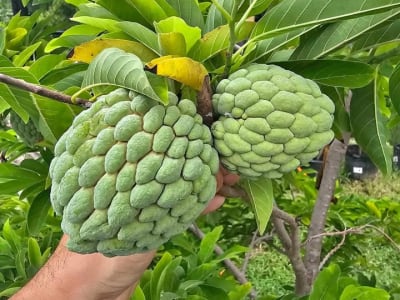
Sugar Apple
Annona Squamosa

Medicinal Facts
Annona squamosa, commonly known as Sugar Apple, is rich in acetogenins, alkaloids, and flavonoids, which are its primary bioactive compounds. It stands at the intersection of traditional folk medicine, particularly in tropical regions where it is used for its anti-parasitic and anti-inflammatory properties, and modern pharmacological research focusing on its potential anti-cancer and neuroprotective effects. The plant's diverse pharmacological profile is largely attributed to its unique acetogenins, which have been extensively studied for their selective cytotoxicity against cancer cells. Despite its promising bioactive profile, the challenge of compound isolation and standardization remains a focal point in its research.
What it helps with
Cancer-adjunct research
Acetogenins, particularly bullatacin and squamocin, inhibit mitochondrial complex I, leading to decreased ATP production and selective apoptosis in cancer cells. Preclinical studies demonstrate significant cytotoxic effects against various cancer cell lines, including breast and prostate cancer, but human trials are lacking.
Parasitic infections
Traditionally used for its antiparasitic properties, acetogenins disrupt mitochondrial function in parasites, leading to cell death. This mechanism is supported by in vitro studies showing efficacy against Leishmania and Plasmodium species, though clinical validation is sparse.
Neuroprotection
Flavonoids in Annona squamosa, such as quercetin, exhibit neuroprotective effects by modulating oxidative stress pathways, including the Nrf2 pathway, and inhibiting acetylcholinesterase. Animal models suggest potential benefits in neurodegenerative conditions like Alzheimer's disease.
Inflammation
The plant's alkaloids, such as liriodenine, inhibit pro-inflammatory cytokines through the NF-kB pathway. This anti-inflammatory action is corroborated by animal studies showing reduced edema and cytokine levels.
Diabetes management
Annona squamosa leaf extracts enhance insulin sensitivity and glucose uptake by activating the AMPK pathway. Animal studies indicate improved glycemic control and lipid profiles, but human evidence is preliminary.
Cardiovascular health
The flavonoids in Annona squamosa enhance endothelial function by upregulating eNOS, improving vasodilation. Preliminary studies suggest potential benefits in hypertension and atherosclerosis management.
Antimicrobial activity
Acetogenins and alkaloids exhibit broad-spectrum antimicrobial activity by disrupting bacterial cell membranes. In vitro studies show effectiveness against Gram-positive and Gram-negative bacteria, though clinical applications are still under investigation.
Skin health
The antioxidant properties of flavonoids and acetogenins support skin health by reducing oxidative stress and promoting collagen synthesis. Traditional use includes topical applications for wound healing and skin infections.
Key active compounds
Acetogenins
A class of polyketides that inhibit mitochondrial complex I, leading to ATP depletion and apoptosis in cancer cells. They show selective cytotoxicity, making them a focus of cancer research.
Bullatacin
A potent acetogenin known for its strong cytotoxic effects against cancer cells by targeting mitochondrial complex I. It is more stable and potent compared to other acetogenins.
Squamocin
Another acetogenin with similar mitochondrial inhibitory effects, contributing to the plant's anticancer potential. It is noted for its selective action against tumor cells.
Liriodenine
An alkaloid with anti-inflammatory properties, inhibiting the NF-kB pathway and reducing cytokine production. It also shows antimicrobial activity.
Quercetin
A flavonoid with antioxidant and neuroprotective effects, modulating the Nrf2 pathway and inhibiting acetylcholinesterase. It enhances the plant's overall pharmacological profile.
Anonaine
An alkaloid with potential antimicrobial and anti-inflammatory effects, contributing to the plant's traditional use in treating infections.
Kaempferol
A flavonoid that supports cardiovascular health by enhancing endothelial function through eNOS upregulation. It also exhibits antioxidant properties.
What the research says
Research on Annona squamosa focuses heavily on its acetogenins, particularly their anticancer properties, with strong preclinical evidence from in vitro and animal studies. These compounds are noted for their selective cytotoxicity, making them promising candidates for cancer therapies. In terms of neuroprotection and anti-inflammatory effects, flavonoids such as quercetin and kaempferol have shown potential in animal models, though human trials are limited. The main limitation in the use of Annona squamosa is the standardization and isolation of its active compounds, which is crucial for consistent therapeutic outcomes. Efforts to enhance bioavailability and develop standardized extracts are ongoing, aiming to translate promising preclinical findings into clinical applications.
Typical dosage
For tea or infusion, use 1-2 teaspoons of dried leaves per cup of boiling water, steep for 10-15 minutes, and consume up to twice daily. For decoction, simmer 1 tablespoon of dried leaves or bark in 2 cups of water for 20 minutes, strain, and drink once daily. Powdered leaves can be taken in capsules, typically 500 mg per capsule, up to twice daily. Topical applications should be used as directed by a healthcare provider.
About Sugar Apple
Traditional Use
Preparations & Dosage
Preparations
- Tea / Infusion: Use 1-2 teaspoons of dried Annona squamosa leaves per cup of boiling water. Steep for 10-15 minutes, strain, and serve warm. Add honey or lemon for taste if desired.
- Decoction: Simmer 1 tablespoon of dried leaves or bark in 2 cups of water for 20 minutes. Strain and let cool before drinking.
- Powder: Grind dried leaves into a fine powder. Take 500 mg of the powder in capsules, up to twice daily.
- Topical application: Make a paste using powdered leaves and water. Apply to the affected area and cover with a clean bandage.
Interactions & Warnings
Use with caution
Annona squamosa seeds and bark contain toxic compounds and should not be consumed. Pregnant and breastfeeding women should avoid using this plant due to potential risks. Always consult with a healthcare provider before using it for medicinal purposes.
Herb Interactions
May enhance the anti-inflammatory effects, potentially leading to increased risk of bleeding in sensitive individuals.
Combined use may potentiate anti-inflammatory and antioxidant effects, requiring caution in individuals on blood-thinning medications.
Community Plants
Real plants of this species grown and shared by the MyFloralVault community.
More in Digestive Health


Was this helpful?
0 · 0
Care Guide Available
Learn how to grow and care for Sugar Apple at home