Parsley
Petroselinum Crispum

Medicinal Facts
Parsley, or Petroselinum crispum, is a culinary herb with a rich history in traditional medicine and a growing body of modern research supporting its health benefits. At the heart of its medicinal properties are compounds like apigenin, myristicin, and apiol, which intersect the worlds of traditional European herbalism and contemporary studies on inflammation and detoxification. Parsley is renowned for its roles in urinary tract health and as a digestive aid, while modern research explores its potential in cancer prevention and cardiovascular support.
What it helps with
Urinary tract health
Parsley contains apiol and myristicin, which are known diuretics. These compounds increase urine output by modulating the renal tubular reabsorption process, promoting the excretion of excess fluid and potentially reducing the risk of urinary tract infections. Traditional use is supported by in vitro studies showing antimicrobial activity against common urinary pathogens.
Digestive support
Apigenin, a flavonoid in parsley, exerts antispasmodic effects on the gastrointestinal tract by modulating calcium channels and smooth muscle contraction. This can alleviate symptoms of indigestion and bloating. Animal studies highlight its ability to reduce gastric ulcers by inhibiting gastric acid secretion.
Anti-inflammatory effects
Apigenin inhibits the NF-kB pathway, reducing the expression of pro-inflammatory cytokines such as IL-1β and TNF-α. This action is supported by both in vitro and animal studies, suggesting potential benefits for inflammatory conditions like arthritis.
Antioxidant protection
Parsley's high content of flavonoids, including apigenin and luteolin, activates the Nrf2 pathway, enhancing the expression of endogenous antioxidant enzymes like superoxide dismutase (SOD) and catalase. This mechanism is primarily supported by in vitro studies, with implications for reducing oxidative stress-related damage.
Cardiovascular health
Parsley may support cardiovascular health through its folate content, which helps lower homocysteine levels, a risk factor for atherosclerosis. Additionally, apigenin has been shown to exert vasodilatory effects by enhancing endothelial nitric oxide synthase (eNOS) activity, improving blood flow and reducing blood pressure in animal models.
Cancer prevention
Apigenin and myristicin have been studied for their chemopreventive properties. Apigenin induces apoptosis in cancer cells by modulating the p53 pathway and inhibiting cell proliferation through the downregulation of cyclin-dependent kinases. Myristicin has shown potential in inhibiting tumor growth in preclinical models.
Bone health
Parsley is rich in vitamin K, which is crucial for bone mineralization and the activation of osteocalcin, a protein that binds calcium to the bone matrix. Human studies suggest that adequate vitamin K intake is associated with improved bone density and reduced fracture risk.
Key active compounds
Apigenin
A flavonoid with anti-inflammatory, antioxidant, and anticancer properties. It modulates pathways such as NF-kB and Nrf2, and affects calcium channels to exert antispasmodic effects.
Myristicin
An aromatic compound with potential chemopreventive effects. It modulates cytochrome P450 enzymes and has shown tumor-inhibitory activity in preclinical studies.
Apiol
A phenylpropene that acts as a diuretic by influencing renal tubular function. Traditionally used for urinary tract health, though high doses can be toxic.
Luteolin
A flavonoid that acts as an antioxidant and anti-inflammatory agent. It inhibits the NF-kB pathway and has been studied for its neuroprotective effects.
Folate
A B-vitamin essential for DNA synthesis and repair. It helps lower homocysteine levels, reducing cardiovascular risk.
Vitamin K
Essential for blood clotting and bone health. It activates osteocalcin, aiding in calcium binding to bones.
Chlorophyll
A pigment with detoxifying properties. It binds to carcinogens and other toxins, facilitating their excretion.
What the research says
Research on parsley focuses on its diuretic and anti-inflammatory properties, with apigenin and myristicin being the most studied compounds. Human trials are limited, but animal and in vitro studies provide evidence for its effects on urinary tract health and inflammation. The strongest evidence supports its antioxidant and chemopreventive potential, primarily through apigenin's modulation of key signaling pathways like NF-kB and Nrf2. The main limitation in parsley's medicinal use is the variability in active compound concentrations, which can be addressed by standardizing extracts to ensure consistent therapeutic effects.
Typical dosage
For tea or infusion, use 1-2 teaspoons of dried parsley leaves per cup of boiling water, steep for 5-10 minutes, and consume up to three times daily. For tinctures, a typical dose is 1-2 ml up to three times daily. Fresh juice can be consumed in small amounts, around 1-2 tablespoons per day. Essential oil should be used sparingly and diluted, typically 1-2 drops in a carrier oil for topical use. Culinary use involves adding fresh or dried parsley to dishes as desired.
About Parsley
Traditional Use
Preparations & Dosage
Preparations
- Tea / Infusion: Boil water and pour over 1-2 teaspoons of dried parsley leaves. Cover and steep for 5-10 minutes. Strain and drink warm. Add honey or lemon for flavor if desired.
- Tincture: Use a dropper to measure 1-2 ml of parsley tincture. Add to a small amount of water or juice. Consume up to three times daily.
- Fresh Juice: Juice fresh parsley leaves using a juicer. Consume 1-2 tablespoons of juice, either alone or mixed with other vegetable juices.
Interactions & Warnings
Use with caution
Parsley should be used with caution by pregnant women due to its potential to stimulate uterine contractions. High doses can lead to kidney irritation. Individuals with kidney disorders should avoid excessive consumption.
Herb Interactions
Both parsley and celery contain compounds that can increase sensitivity to sunlight, potentially leading to skin reactions.
Community Plants
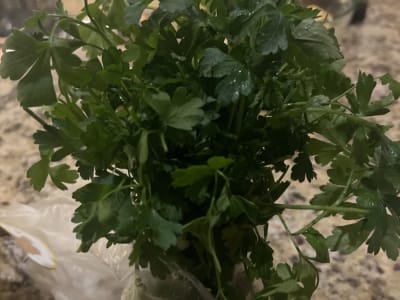
Real plants of this species grown and shared by the MyFloralVault community.
More in Digestive Health


Was this helpful?
0 · 0
Care Guide Available
Learn how to grow and care for Parsley at home