Malabar Spinach
Basella Alba

Medicinal Facts
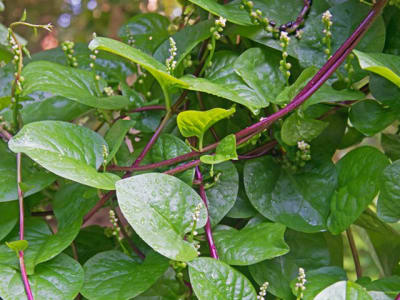
Basella alba, commonly known as Malabar Spinach, is rich in a variety of bioactive compounds, notably betacyanins, saponins, and flavonoids. It stands at the intersection of traditional Asian culinary and medicinal practices, where it is used for its nutritional and health-promoting properties, and modern research exploring its antioxidant and anti-inflammatory potential. Its mucilaginous texture is not just a culinary trait but also a part of its therapeutic profile, aiding in gastrointestinal health.
What it helps with
Gastrointestinal health
Basella alba is traditionally used to soothe the digestive tract, largely due to its mucilage content. This mucilage acts as a demulcent, forming a protective layer over mucous membranes. Research suggests it may modulate gut motility and secretion, potentially involving the modulation of intestinal smooth muscle receptors.
Anti-inflammatory effects
The saponins and betacyanins in Basella alba are implicated in its anti-inflammatory action. These compounds inhibit the cyclooxygenase (COX) enzymes and modulate the NF-kB pathway, reducing the production of pro-inflammatory cytokines such as IL-6 and TNF-a. Evidence is primarily from in vitro and animal studies.
Antioxidant activity
Flavonoids and betacyanins in Basella alba scavenge free radicals and upregulate endogenous antioxidant enzymes like superoxide dismutase (SOD) and catalase. This action is mediated through the Nrf2 pathway, which enhances cellular defense mechanisms. Studies highlight its potential in oxidative stress-related conditions, though human data are limited.
Iron deficiency anemia
Traditionally, Basella alba is consumed to support blood health, attributed to its high iron content. Its bioavailability is enhanced by the presence of vitamin C, which facilitates iron absorption in the gut. This traditional use is supported by nutritional analyses but lacks extensive clinical validation.
Skin health
The antioxidant and anti-inflammatory properties of Basella alba contribute to its use in skin health. Betacyanins and flavonoids reduce oxidative stress in skin cells, potentially modulating pathways like NF-kB to decrease inflammation and promote healing. Topical applications are traditionally used for minor wounds and skin irritations.
Weight management
Basella alba's high fiber and low-calorie profile make it beneficial for weight management. The fiber content promotes satiety and may modulate gut hormones such as ghrelin and peptide YY, influencing appetite regulation. This is supported by traditional dietary practices, though specific clinical studies are sparse.
Bone health
Rich in calcium and magnesium, Basella alba supports bone health. These minerals are crucial for bone mineralization and structural integrity. While traditional use emphasizes its nutritional benefits, direct clinical evidence on bone health outcomes is limited.
Key active compounds
Betacyanins
These are water-soluble pigments with potent antioxidant properties. They scavenge free radicals and modulate oxidative stress pathways, such as Nrf2, enhancing cellular defense mechanisms.
Saponins
These compounds have anti-inflammatory and immune-modulating effects. They bind to and modulate cell membrane receptors, influencing inflammatory pathways like NF-kB and COX enzymes.
Flavonoids
A diverse group of polyphenolic compounds that exert antioxidant effects by scavenging free radicals and modulating signaling pathways, including Nrf2 and MAPK. They also enhance the bioavailability of other nutrients.
Mucilage
A polysaccharide-rich component that acts as a demulcent. It forms a protective layer over mucous membranes, aiding in gastrointestinal health and soothing inflammation.
Iron
An essential mineral for hemoglobin synthesis and oxygen transport. Its absorption is enhanced by vitamin C, which is also present in Basella alba, facilitating its traditional use in anemia.
Calcium
Vital for bone health and neuromuscular functions. In Basella alba, it contributes to its nutritional value, supporting bone mineral density and structural integrity.
Magnesium
Essential for bone health and metabolic processes. It acts as a cofactor in numerous enzymatic reactions, playing a role in energy production and bone structure.
What the research says
Research on Basella alba is primarily focused on its antioxidant and anti-inflammatory properties. Betacyanins and saponins are the most studied compounds, with evidence largely from in vitro and animal models demonstrating their potential to modulate oxidative stress and inflammatory pathways. Human trials are limited, but nutritional studies highlight its role in dietary iron and mineral supplementation. The primary limitation in translating these findings to clinical use is the variability in compound concentration based on growing conditions and preparation methods. Addressing this, standardization of extracts and further human trials are needed to validate its traditional uses and uncover new therapeutic potentials.
Typical dosage
For tea or infusion, use 1-2 teaspoons of dried leaves per cup of boiling water, steep for 5-10 minutes, and consume up to three times daily. For tinctures, a typical dosage is 1-2 ml taken up to three times daily. As a poultice, crush fresh leaves and apply directly to the skin for wound healing. In salads or juices, consume fresh leaves as desired, ensuring they are washed thoroughly.
About Malabar Spinach
Traditional Use
Preparations & Dosage
Preparations
- Tea / Infusion: Boil 1 cup of water and pour over 1-2 teaspoons of dried Basella alba leaves. Let it steep for 5-10 minutes, strain, and drink. Add honey or lemon for flavor if desired.
- Tincture: Combine 1 part dried Basella alba leaves with 5 parts alcohol (such as vodka) in a glass jar. Seal tightly and store in a cool, dark place for 4-6 weeks, shaking occasionally. Strain and store in a dark bottle.
- Poultice: Crush fresh Basella alba leaves into a paste and apply directly to the affected skin area. Cover with a clean cloth or bandage and leave for 20-30 minutes.
Interactions & Warnings
Use with caution
Basella alba is generally safe for consumption and use. However, individuals with allergies to plants in the Basellaceae family should exercise caution. Pregnant and breastfeeding women should consult a healthcare provider before using it in medicinal amounts.
Community Plants
Real plants of this species grown and shared by the MyFloralVault community.
More in Digestive Health


Was this helpful?
0 · 0
Care guides for related plants
Care Guide Available
Learn how to grow and care for Malabar Spinach at home