Guarana
Paullinia Cupana
Medicinal Facts
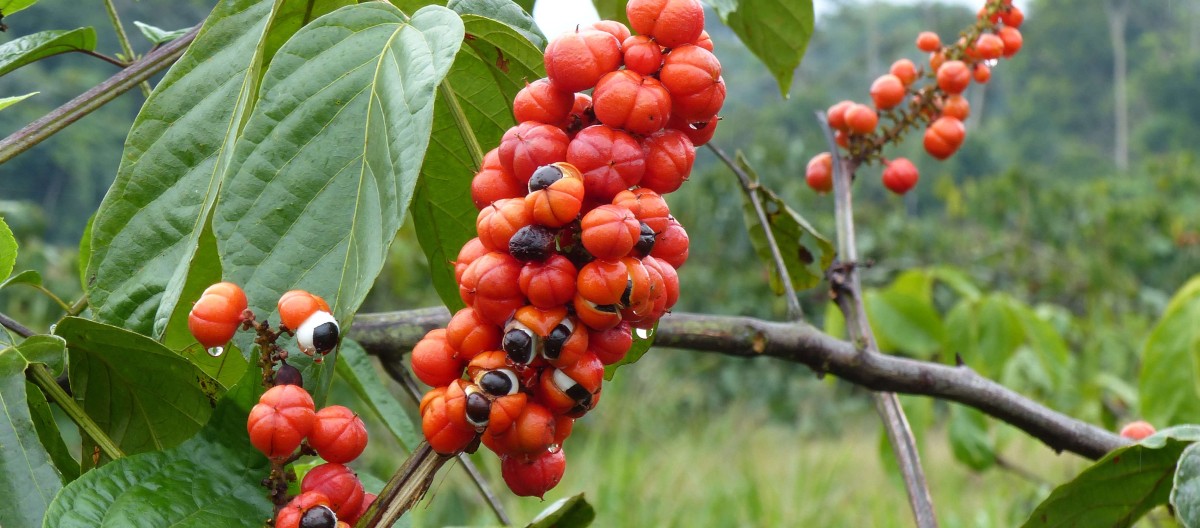
Guarana, derived from the seeds of Paullinia cupana, is rich in caffeine, theobromine, and catechins, standing at the intersection of traditional Amazonian uses for energy and alertness and modern research into cognitive enhancement and metabolic effects. The seeds are particularly noted for their high caffeine content, which is about twice that of coffee beans, making them a potent stimulant. Additionally, the presence of tannins and saponins contributes to its antioxidant and antimicrobial properties. The traditional use as a tonic for fatigue and as a weight management aid is supported by these active compounds, although bioavailability and dosage remain key factors in its efficacy.
What it helps with
Cognitive enhancement & alertness
Caffeine in guarana acts as a central nervous system stimulant by antagonizing adenosine receptors, which prevents the onset of drowsiness. This mechanism is supported by human trials showing improved attention and cognitive performance. Theobromine, also present, contributes to alertness by inhibiting phosphodiesterase, increasing cyclic AMP levels.
Weight management & metabolism
Guarana may support weight management through its caffeine content, which increases basal metabolic rate and lipolysis via the activation of catecholamines and the inhibition of phosphodiesterase. Animal studies suggest the combination of caffeine and catechins enhances thermogenesis and fat oxidation.
Antioxidant support
The catechins and tannins in guarana seeds exert antioxidant effects by scavenging free radicals and upregulating endogenous antioxidant enzymes such as superoxide dismutase. This activity is primarily supported by in vitro studies, with some animal models showing reduced oxidative stress markers.
Physical performance
Caffeine in guarana enhances physical performance by increasing adrenaline levels and promoting the release of fatty acids from adipose tissue, which muscles can use for energy. Human trials indicate improved endurance and reduced perceived exertion.
Antimicrobial activity
Guarana exhibits antimicrobial properties, partly due to its tannin content, which disrupts bacterial cell walls and inhibits enzyme activity. This has been demonstrated in vitro against various bacterial strains, though clinical relevance remains to be fully established.
Mood enhancement
Caffeine's antagonism of adenosine receptors can lead to increased dopamine release, contributing to mood elevation. Human studies have shown that guarana supplementation can improve mood and reduce fatigue, though the exact mechanisms are still under investigation.
Cardiovascular health
Guarana may positively influence cardiovascular health through its polyphenolic compounds, which improve endothelial function and reduce platelet aggregation. Theobromine also contributes by promoting vasodilation and reducing blood pressure, as observed in some human trials.
Key active compounds
Caffeine
A xanthine alkaloid that acts as a central nervous system stimulant by blocking adenosine receptors, leading to increased alertness and reduced fatigue. It also enhances metabolic rate and lipolysis.
Theobromine
A methylxanthine similar to caffeine, with milder stimulant effects. It inhibits phosphodiesterase, leading to increased cyclic AMP levels, and promotes vasodilation.
Catechins
Polyphenolic compounds with strong antioxidant properties. They scavenge free radicals and upregulate antioxidant enzymes, contributing to reduced oxidative stress.
Tannins
Polyphenolic compounds that provide antimicrobial activity by disrupting bacterial cell walls and inhibiting enzymes. They also contribute to the astringency of guarana.
Saponins
Compounds that possess immunomodulatory and antioxidant properties. They can enhance the bioavailability of other compounds by disrupting cell membranes.
Procyanidins
Oligomeric flavonoids that contribute to the antioxidant activity of guarana. They are involved in scavenging reactive oxygen species and chelating metal ions.
Guaranine
A term sometimes used to refer to the caffeine in guarana, emphasizing its natural occurrence and association with other synergistic compounds in the plant.
What the research says
Research on guarana is robust in areas of cognitive enhancement and metabolic effects. Human trials consistently show that guarana, due to its caffeine content, enhances alertness and cognitive performance, with additional benefits from theobromine and catechins. On metabolism, preclinical studies highlight its role in increasing basal metabolic rate and fat oxidation, though human data are more limited. The main limitation in guarana research is the variability in caffeine content and bioavailability, which can affect outcomes. Standardized extracts and formulations aim to address these issues, ensuring consistent dosing and maximizing the bioactive potential of the seeds.
Typical dosage
For powdered guarana, a typical dose is 1 to 3 grams per day, which can be mixed into water, juice, or smoothies. Capsules usually contain 200 to 500 mg of guarana extract, taken once or twice daily. For tea, steep 1 teaspoon of guarana powder in hot water for 5-10 minutes. Tinctures are typically dosed at 1-2 ml up to three times a day. It is important not to exceed 400 mg of caffeine per day from all sources.
About Guarana
Traditional Use
Preparations & Dosage
Preparations
- Tea / Infusion: Boil water and let it cool slightly. Add 1 teaspoon of guarana powder to a cup. Pour the hot water over the powder and let it steep for 5-10 minutes. Strain the mixture and serve. Optionally, add honey or lemon for flavor.
- Powder: Mix 1 to 3 grams of guarana powder into water, juice, or a smoothie. Stir well to ensure even distribution.
- Capsule: Take 1-2 capsules (200-500 mg each) with water, preferably in the morning or early afternoon to avoid sleep disturbances.
- Tincture: Use a dropper to measure 1-2 ml of guarana tincture. Add to a small amount of water or juice and consume up to three times daily.
Interactions & Warnings
Use with caution
Guarana contains high levels of caffeine and should be used with caution by individuals sensitive to stimulants. It may cause insomnia, nervousness, and increased heart rate. Pregnant or breastfeeding women, and individuals with heart conditions or anxiety disorders should avoid it.
Herb Interactions
Combining guarana with valerian may counteract the sedative effects of valerian due to guarana's stimulant properties.
Both are stimulants and may lead to increased heart rate and blood pressure if taken together.
Community Plants
Real plants of this species grown and shared by the MyFloralVault community.

More in Energy & Vitality





Was this helpful?
0 · 0
Care guides for related plants
Care Guide Available
Learn how to grow and care for Guarana at home