Cordyceps
Cordyceps Militaris

Medicinal Facts
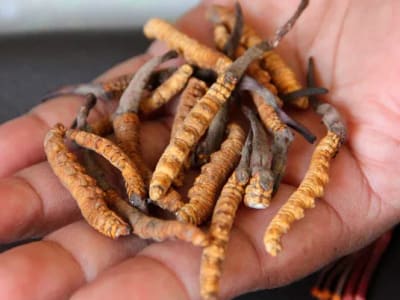
Cordyceps militaris, a renowned medicinal fungus, derives its therapeutic potential from a suite of bioactive compounds, notably cordycepin and polysaccharides. It bridges the ancient practices of Traditional Chinese Medicine, where it is revered for vitality and respiratory health, and modern pharmacological research, focusing on its immunomodulatory and anti-inflammatory properties. Cordyceps militaris is particularly noted for its ability to modulate adenosine receptors and influence ATP production, contributing to its use in energy and endurance enhancement. Its unique profile also includes potential anti-tumor and neuroprotective effects, making it a subject of extensive biochemical and clinical investigation.
What it helps with
Energy & endurance
Cordycepin enhances ATP production by modulating the AMP-activated protein kinase (AMPK) pathway, which increases cellular energy levels. This mechanism supports its traditional use for fatigue and stamina, with evidence from small human trials showing improved exercise performance.
Immune modulation
Polysaccharides in Cordyceps militaris activate macrophages and natural killer cells, enhancing the immune response. They modulate cytokine production, such as TNF-a and IL-1b, through the NF-kB pathway. This immunomodulatory effect is supported by animal studies and aligns with traditional uses for immune support.
Respiratory health
Cordycepin exerts bronchodilatory effects by antagonizing adenosine receptors, which can reduce airway resistance. This action underpins its traditional use in alleviating symptoms of chronic bronchitis and asthma, with some support from animal models.
Anti-inflammatory effects
Cordycepin inhibits the NF-kB pathway, reducing the expression of pro-inflammatory cytokines like IL-6 and TNF-a. This broad anti-inflammatory action has been demonstrated in vitro and in animal models, suggesting benefits for inflammatory conditions.
Anti-tumor potential
Cordycepin induces apoptosis in cancer cells by activating caspase pathways and downregulating Bcl-2, a key anti-apoptotic protein. Preclinical studies show promise in various cancer models, though human evidence is still emerging.
Neuroprotection
Cordyceps militaris may protect neurons by reducing oxidative stress and inhibiting apoptosis, mediated through the upregulation of antioxidant enzymes and downregulation of caspase-3. Animal studies suggest potential benefits for neurodegenerative diseases.
Metabolic health
Cordycepin enhances insulin sensitivity and lowers blood glucose levels by activating the AMPK pathway, which also reduces hepatic gluconeogenesis. Preliminary studies in animal models indicate potential for managing metabolic syndrome.
Longevity & cellular aging
Cordyceps militaris influences the sirtuin pathway, particularly SIRT1, which is involved in cellular stress resistance and longevity. This mechanism is supported by in vitro studies showing enhanced mitochondrial function and protection against cellular senescence.
Key active compounds
Cordycepin
A nucleoside analog that inhibits RNA synthesis and modulates adenosine receptors, contributing to its anti-inflammatory and anti-tumor effects. It also enhances ATP production, which is central to its energy-boosting properties.
Polysaccharides
Complex carbohydrates that modulate immune function by activating macrophages and enhancing cytokine production. They are crucial for the immunomodulatory effects of Cordyceps militaris.
Ergosterol
A precursor to vitamin D2 with antioxidant properties. It contributes to the overall health benefits of Cordyceps, particularly in supporting immune health.
Adenosine
A purine nucleoside that modulates cardiovascular function and has anti-inflammatory properties. It plays a role in the respiratory benefits of Cordyceps by influencing bronchodilation.
Beta-glucans
A type of polysaccharide known for its immune-enhancing properties, stimulating immune cells and modulating the immune response.
Cordycepic acid
An organic acid that contributes to the metabolic and energy-enhancing effects of Cordyceps, potentially through modulation of the AMPK pathway.
Selenium
An essential trace element found in Cordyceps militaris that supports antioxidant defenses and contributes to its overall health-promoting effects.
What the research says
Research on Cordyceps militaris focuses heavily on its energy and endurance-enhancing properties, with cordycepin showing strong evidence in small human trials for improving exercise performance through ATP modulation. Its immune-modulating effects, primarily driven by polysaccharides, are well-supported in animal studies, showing enhanced macrophage activity and cytokine modulation. The main limitation in Cordyceps research is the variability in bioactive compound concentrations across different preparations, which is addressed by standardizing extracts to specific compounds like cordycepin and polysaccharides. This standardization is crucial for ensuring consistent therapeutic outcomes in both clinical and traditional uses.
Typical dosage
For capsules, a common dosage is 500-1000 mg taken 1-2 times daily. As a powder, 1-2 grams can be mixed into smoothies or beverages daily. Tinctures are typically taken at a dose of 1-2 ml, 1-3 times per day. For tea or infusion, use 1-2 teaspoons of dried Cordyceps per cup of hot water, steep for 10-15 minutes, and consume 1-2 times daily. It is advisable to start with lower doses and gradually increase as tolerated.
About Cordyceps
Traditional Use
Preparations & Dosage
Preparations
- Tea / Infusion: Boil water and let it cool slightly to about 90°C (194°F). Add 1-2 teaspoons of dried Cordyceps to a cup. Pour the hot water over the Cordyceps and let it steep for 10-15 minutes. Strain the liquid and enjoy. Optionally, add honey or lemon to taste.
- Capsule: Take 1-2 capsules (500-1000 mg each) with water, preferably with a meal to enhance absorption. Follow the dosage instructions on the product label.
- Powder: Mix 1-2 grams of Cordyceps powder into smoothies, juices, or water. Stir well to ensure even distribution. Consume once or twice daily.
- Tincture: Use a dropper to measure 1-2 ml of Cordyceps tincture. Place the tincture under the tongue or mix it with a small amount of water. Consume 1-3 times daily.
Interactions & Warnings
Use with caution
Cordyceps militaris is generally considered safe for most people when used appropriately. However, individuals with autoimmune diseases should use caution, as it may stimulate the immune system. Pregnant or breastfeeding women should consult a healthcare provider before use.
Herb Interactions
Both herbs may stimulate the immune system, potentially leading to overactivity in individuals with autoimmune disorders.
Community Plants
Real plants of this species grown and shared by the MyFloralVault community.
More in Energy & Vitality



Was this helpful?
0 · 0
Care Guide Available
Learn how to grow and care for Cordyceps at home