Davidson's Plum
Davidsonia Jerseyana
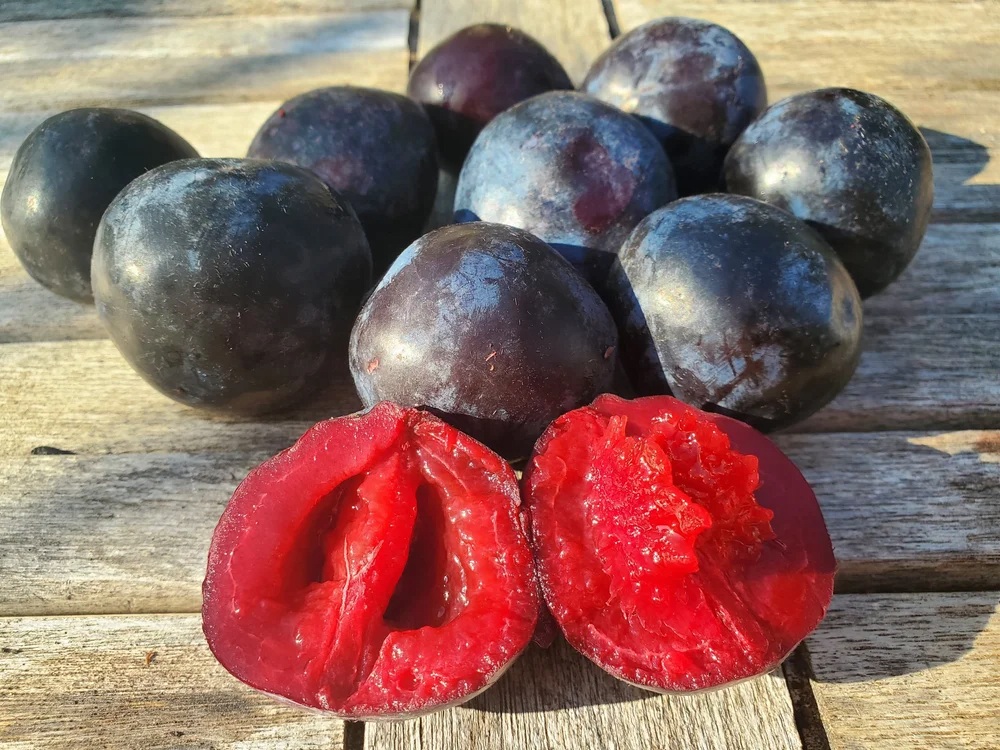
Medicinal Facts
Davidson's Plum, or Davidsonia jerseyana, is celebrated for its rich anthocyanin content, particularly cyanidin-3-glucoside, which positions this fruit at the intersection of traditional Australian Aboriginal medicine and modern antioxidant research. It is also noted for its ellagic acid and quercetin, compounds that contribute to its potential anti-inflammatory and anti-cancer properties. This fruit is a prime example of how native Australian botanicals are being integrated into contemporary health paradigms, particularly for their unique phytochemical profiles.
What it helps with
Antioxidant support
Davidson's Plum is high in anthocyanins, specifically cyanidin-3-glucoside, which acts by scavenging free radicals and reducing oxidative stress. This compound enhances endogenous antioxidant defenses by upregulating Nrf2, a transcription factor that controls the expression of antioxidant proteins. Evidence from in vitro studies supports its potent radical-scavenging activity.
Anti-inflammatory effects
Ellagic acid in Davidson's Plum inhibits the NF-kB pathway, reducing the expression of pro-inflammatory cytokines such as TNF-a and IL-6. This action is supported by animal models demonstrating decreased inflammation in conditions like colitis and arthritis.
Cardiovascular health
Quercetin, another key compound, modulates endothelial nitric oxide synthase (eNOS) to promote vasodilation and improve blood flow. It also inhibits LDL oxidation, a crucial step in atherosclerosis development. Human trials with quercetin supplements suggest benefits for blood pressure and vascular health.
Cancer-adjunct potential
Ellagic acid and quercetin both exhibit anti-carcinogenic properties by inducing apoptosis and inhibiting angiogenesis in cancer cells. These effects have been observed in vitro, with ellagic acid showing promise in models of prostate and breast cancer.
Skin health
Anthocyanins in Davidson's Plum contribute to skin health by protecting against UV-induced damage and supporting collagen synthesis. Cyanidin-3-glucoside enhances the expression of collagen-related genes, as demonstrated in cell culture studies.
Metabolic health
Anthocyanins and ellagic acid may improve insulin sensitivity and reduce lipid accumulation in liver cells by activating AMPK, a key energy sensor in cells. Animal studies suggest potential benefits for managing metabolic syndrome.
Gut health
The polyphenols in Davidson's Plum, particularly ellagic acid, support gut health by modulating the gut microbiota and enhancing the growth of beneficial bacteria. This prebiotic effect has been observed in preliminary in vitro studies.
Key active compounds
Cyanidin-3-glucoside
A potent anthocyanin responsible for the deep purple color and antioxidant activity. It scavenges free radicals and upregulates Nrf2, enhancing cellular antioxidant defenses.
Ellagic acid
A polyphenol with anti-inflammatory and anti-carcinogenic properties. It inhibits NF-kB, reducing inflammatory cytokines, and induces apoptosis in cancer cells.
Quercetin
A flavonoid that promotes cardiovascular health by enhancing eNOS activity and inhibiting LDL oxidation. It also exhibits anti-inflammatory effects through NF-kB modulation.
Gallic acid
An antioxidant that contributes to the fruit's overall radical-scavenging capacity. It also shows antimicrobial properties against certain pathogens.
Kaempferol
A flavonoid with antioxidant and anti-inflammatory effects. It modulates signaling pathways such as PI3K/Akt and MAPK, contributing to its protective roles.
Tannins
Polyphenolic compounds that provide astringency and contribute to the antimicrobial and antioxidant properties of the fruit.
What the research says
Research on Davidson's Plum focuses heavily on its antioxidant and anti-inflammatory properties. The strongest evidence comes from in vitro studies demonstrating the radical-scavenging activity of its anthocyanins and ellagic acid. Quercetin and ellagic acid are highlighted for their potential cardiovascular and anti-cancer benefits, with human trials primarily focusing on quercetin's effects on blood pressure and vascular health. The main limitation in translating these findings to clinical use is the bioavailability of these polyphenols, which is being addressed through the development of enhanced delivery systems such as nanoparticle formulations and co-administration with bioavailability enhancers like piperine.
Typical dosage
For juice, consume 100-150 ml daily, preferably diluted with water due to its high acidity. For powder, use 1-2 teaspoons per day mixed into smoothies or yogurt. Extracts can be taken as directed on the product label, typically 1-2 ml up to three times daily. Infusions can be made by steeping 1-2 teaspoons of dried fruit in hot water for 10 minutes, consuming up to twice daily.
About Davidson's Plum
Traditional Use
Preparations & Dosage
Preparations
- Juice: Blend fresh Davidson's Plums with water at a 1:1 ratio. Strain to remove pulp if desired. Serve chilled or over ice.
- Powder: Dry the plums at low heat until fully dehydrated. Grind into a fine powder using a food processor or spice grinder.
- Extract: Macerate the fruit in alcohol or glycerin for 4-6 weeks, shaking occasionally. Strain and bottle the liquid extract.
- Infusion: Steep 1-2 teaspoons of dried Davidson's Plum in hot water for 10 minutes. Strain and serve warm.
Interactions & Warnings
Use with caution
Davidson's Plum is generally safe for consumption. However, due to its high acidity, it may cause stomach discomfort if consumed in large quantities. Individuals with sensitive stomachs should consume it in moderation.
Community Plants
Real plants of this species grown and shared by the MyFloralVault community.

More in Digestive Health


Was this helpful?
0 · 0