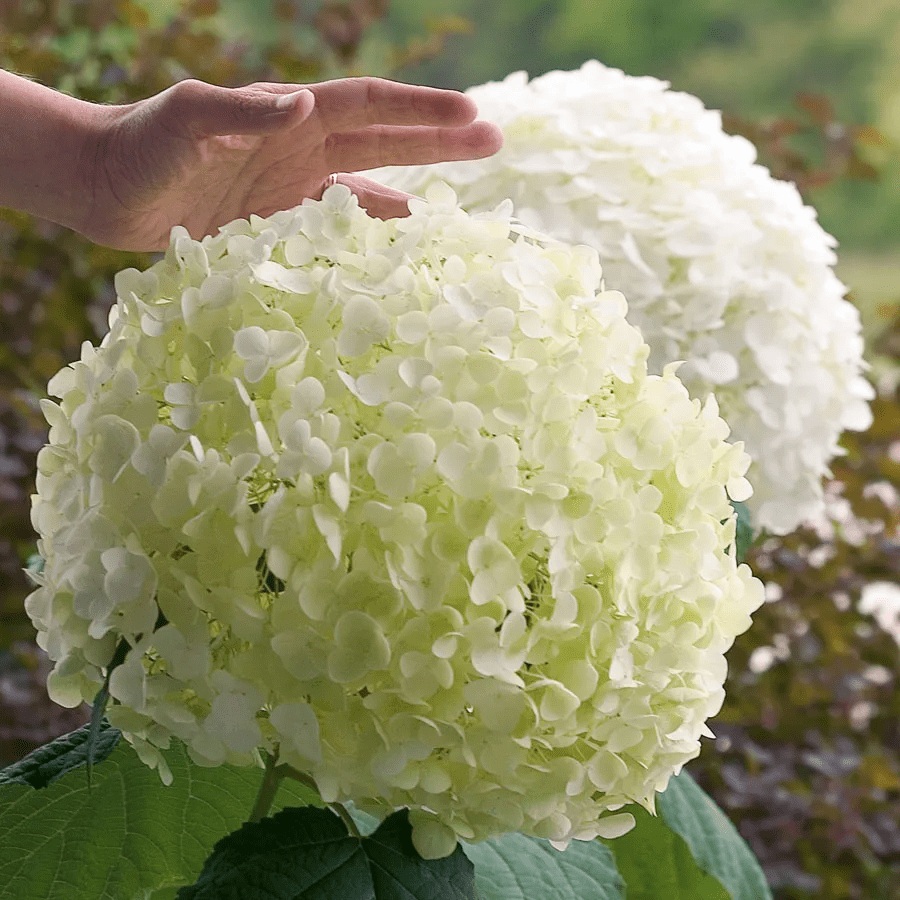
Incrediball Smooth Hydrangea
Hydrangea Arborescens
Medicinal Facts
Hydrangea arborescens, commonly known as Incrediball Smooth Hydrangea, is primarily noted for its active compounds such as hydrangin, saponins, and flavonoids. This plant sits at the intersection of traditional Native American medicine, where it has been used for urinary tract health and kidney stones, and modern herbal research focusing on its potential anti-inflammatory and diuretic effects. Despite its ornamental appeal, the plant's roots and bark have been the subject of phytochemical studies exploring their therapeutic potential.
What it helps with
Urinary tract health
Hydrangin, a coumarin derivative, is thought to exert diuretic effects by modulating renal tubular function, enhancing urine flow, and potentially preventing the crystallization of calcium oxalate, a common component of kidney stones. Traditional use is supported by anecdotal evidence, but clinical trials are limited.
Inflammation
The saponins in Hydrangea arborescens may inhibit pro-inflammatory cytokines such as TNF-alpha and IL-1beta by modulating the NF-kB pathway. This action suggests potential use in inflammatory conditions, although current evidence is primarily from animal studies and in vitro assays.
Kidney stones
Hydrangea's traditional use in dissolving kidney stones is attributed to its ability to alter urinary pH and prevent stone formation through the inhibition of crystal aggregation. The exact molecular mechanisms remain under investigation, with most data derived from traditional practices rather than controlled studies.
Rheumatoid arthritis
Flavonoids in Hydrangea arborescens may reduce joint inflammation by inhibiting COX-2 and lipoxygenase pathways, decreasing prostaglandin and leukotriene synthesis. This application is supported by preclinical models, with human evidence still emerging.
Prostate health
Hydrangea arborescens may support prostate health through its diuretic properties and possible anti-inflammatory effects mediated by saponins. These effects are mainly documented in traditional uses, with limited scientific validation in human trials.
Immune modulation
Compounds in Hydrangea arborescens, such as flavonoids, may modulate immune response by affecting cytokine production and enhancing macrophage activity. This is primarily supported by in vitro studies and traditional use, with limited clinical data.
Antioxidant support
The flavonoids and phenolic acids in Hydrangea arborescens scavenge free radicals and upregulate endogenous antioxidant enzymes like superoxide dismutase (SOD) and catalase, contributing to its potential protective effects against oxidative stress. Evidence is mainly preclinical.
Key active compounds
Hydrangin
A coumarin derivative that may contribute to diuretic effects by modulating renal tubular function. It is primarily noted for its role in traditional urinary tract applications.
Saponins
These compounds exhibit anti-inflammatory effects through NF-kB pathway modulation and may also enhance diuretic activity. They play a crucial role in the plant's traditional uses.
Flavonoids
These polyphenolic compounds have antioxidant and anti-inflammatory properties, inhibiting COX-2 and lipoxygenase pathways. They are central to the plant's potential therapeutic effects.
Phenolic acids
Contribute to the antioxidant capacity of the plant by scavenging free radicals and upregulating endogenous antioxidant enzymes.
Coumarins
Beyond hydrangin, other coumarins in the plant may also contribute to its diuretic and potential anticoagulant effects, although specific pathways are less defined.
Triterpenes
These compounds may provide additional anti-inflammatory effects, although their specific mechanisms in Hydrangea arborescens are less well-documented.
What the research says
Research on Hydrangea arborescens is primarily focused on its traditional uses for urinary tract health and kidney stones. The strongest evidence comes from preclinical studies examining the diuretic and anti-inflammatory properties of hydrangin and saponins. Human trials are sparse, with most data derived from historical and anecdotal sources. The primary limitation in current research is the lack of large-scale clinical trials, compounded by the challenge of standardizing active compound concentrations in plant preparations. Future studies may focus on bioavailability enhancements and more rigorous clinical testing to validate traditional claims.
Typical dosage
For tea or infusion, use 1-2 teaspoons of dried root per cup of boiling water, steep for 10-15 minutes, and consume up to three times daily. Tinctures can be taken in doses of 1-2 ml, up to three times a day. Capsules typically contain 500 mg of dried root, with a recommended dosage of 1-2 capsules up to three times daily. Always start with the lowest dose to assess tolerance.
About Incrediball Smooth Hydrangea
Traditional Use
Preparations & Dosage
Preparations
- Tea / Infusion: Use 1-2 teaspoons of dried Hydrangea arborescens root per cup of boiling water. Steep for 10-15 minutes, then strain. Drink up to three times daily.
- Tincture: Use a standard tincture ratio of 1:5 (herb to alcohol). Take 1-2 ml up to three times daily. Can be added to water or juice.
- Capsule: Take 1-2 capsules (500 mg each) up to three times daily with water.
Interactions & Warnings
Use with caution
Hydrangea arborescens should be used with caution, especially in large doses, as it may cause gastrointestinal upset. Pregnant or breastfeeding women and individuals with chronic kidney conditions should avoid it. Always consult a healthcare provider before use.
Herb Interactions
Both herbs are used for urinary tract health and may increase the risk of diuretic effects and dehydration if used together.
Community Plants
Real plants of this species grown and shared by the MyFloralVault community.

More in Specialized / Other




Was this helpful?
0 · 0