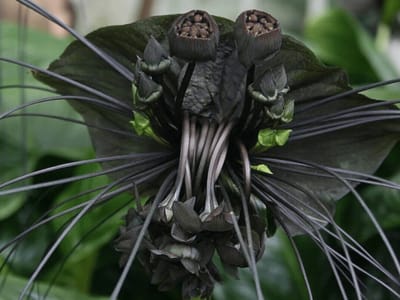
Black Bat Flower
Tacca Chantrieri

Medicinal Facts
Tacca chantrieri, known as the Black Bat Flower, is a striking plant whose medicinal potential is largely attributed to its unique taccalonolides, a class of steroidal lactones. This plant occupies a fascinating intersection between traditional Chinese medicine, where it has been used for its purported anti-inflammatory and pain-relieving properties, and modern pharmacological research, which investigates its role in cancer therapy as a microtubule stabilizer. The plant's bioactive compounds are also studied for their potential in modulating immune responses and promoting wound healing.
What it helps with
Cancer therapy
Taccalonolides from Tacca chantrieri stabilize microtubules by binding to a unique site distinct from taxanes and vinca alkaloids, which disrupts mitotic spindle formation and induces apoptosis in cancer cells. Preclinical studies highlight their efficacy against taxane-resistant cancer cell lines, suggesting a novel mechanism of overcoming drug resistance.
Inflammation
The plant's extracts exhibit anti-inflammatory effects through the inhibition of the NF-kB pathway, reducing the expression of pro-inflammatory cytokines such as TNF-alpha and IL-6. This action is supported by in vitro studies and aligns with traditional uses in reducing inflammation and pain.
Pain relief
Traditionally used as an analgesic, Tacca chantrieri may exert pain-relieving effects by modulating opioid receptors, although the specific compounds responsible and their mechanisms remain under investigation. Animal studies suggest a potential for use in neuropathic pain management.
Immune modulation
Tacca polysaccharides are implicated in enhancing immune responses by stimulating macrophage activity and increasing the production of nitric oxide and cytokines. This immunomodulatory effect is primarily supported by in vitro and animal studies, indicating potential applications in immune support.
Wound healing
The plant's extracts may promote wound healing through the activation of TGF-beta signaling, which enhances collagen synthesis and fibroblast proliferation. This mechanism is consistent with traditional applications for skin injuries and is supported by preliminary in vitro evidence.
Antimicrobial activity
Tacca chantrieri exhibits antimicrobial properties, likely due to its diverse phytochemical profile, including saponins and flavonoids, which disrupt microbial cell membranes and inhibit bacterial growth. These effects are primarily documented in vitro.
Antioxidant support
Flavonoids and phenolic compounds in Tacca chantrieri scavenge free radicals and upregulate endogenous antioxidant enzymes like superoxide dismutase (SOD) and catalase. This antioxidant activity is demonstrated in vitro and supports the plant's traditional use in promoting general health.
Key active compounds
Taccalonolides
Steroidal lactones that stabilize microtubules, binding at a novel site to induce cancer cell apoptosis. They are notable for their activity against drug-resistant cancer lines.
Tacca polysaccharides
Complex carbohydrates that enhance immune function by activating macrophages and promoting cytokine release. They are central to the plant's immunomodulatory effects.
Saponins
Glycosides with surface-active properties that contribute to the plant's antimicrobial and potential immune-stimulating effects by disrupting microbial membranes.
Flavonoids
Polyphenolic compounds that provide antioxidant support by scavenging reactive oxygen species and enhancing the activity of endogenous antioxidant enzymes.
Phenolic acids
Compounds that contribute to the plant's antioxidant and anti-inflammatory properties by inhibiting oxidative stress and modulating inflammatory pathways.
Alkaloids
Nitrogen-containing compounds that may interact with neurotransmitter systems, potentially contributing to the analgesic effects observed in traditional uses.
Sterols
Lipid-like compounds that may contribute to the plant's anti-inflammatory and immune-modulating activities by influencing cell membrane fluidity and signaling pathways.
What the research says
Research on Tacca chantrieri is primarily preclinical, with a focus on its unique taccalonolides and their role in cancer therapy. These compounds show promise in stabilizing microtubules and overcoming drug resistance, a significant finding in oncology. The plant's anti-inflammatory and analgesic properties are supported by traditional uses and in vitro studies, but human clinical trials are lacking. The main limitation is the need for more bioavailability and pharmacokinetic studies to understand how these compounds behave in the human body, which is crucial for translating preclinical findings into therapeutic applications.
Typical dosage
For decoctions, use 5-10 grams of dried root or leaves per 500 ml of water, boiled for 20-30 minutes. Consume up to twice daily. For poultices, apply a paste made from crushed leaves directly to the affected area, as needed. Capsules and tinctures should be used according to product-specific instructions, typically not exceeding 500 mg per dose or 1-2 ml of tincture up to three times daily. Always consult a healthcare provider before use.
About Black Bat Flower
Traditional Use
Preparations & Dosage
Preparations
- Decoction: Boil 5-10 grams of dried root or leaves in 500 ml of water for 20-30 minutes. Strain and consume warm.
- Poultice: Crush fresh leaves into a paste and apply directly to the affected area. Cover with a clean cloth.
- Capsule: Use standardized capsules as per product instructions, typically not exceeding 500 mg per dose.
Interactions & Warnings
Use with caution
Tacca Chantrieri should be used with caution as its safety profile is not well-documented. Pregnant or breastfeeding women, and individuals with pre-existing health conditions should avoid its use. Always consult with a healthcare provider before using this plant for medicinal purposes.
Herb Interactions
May alter the metabolism of active compounds in Tacca Chantrieri, affecting its efficacy.
Community Plants
Real plants of this species grown and shared by the MyFloralVault community.
More in Specialized / Other


Was this helpful?
0 · 0
Care guides for related plants
Care Guide Available
Learn how to grow and care for Black Bat Flower at home