Chokecherry
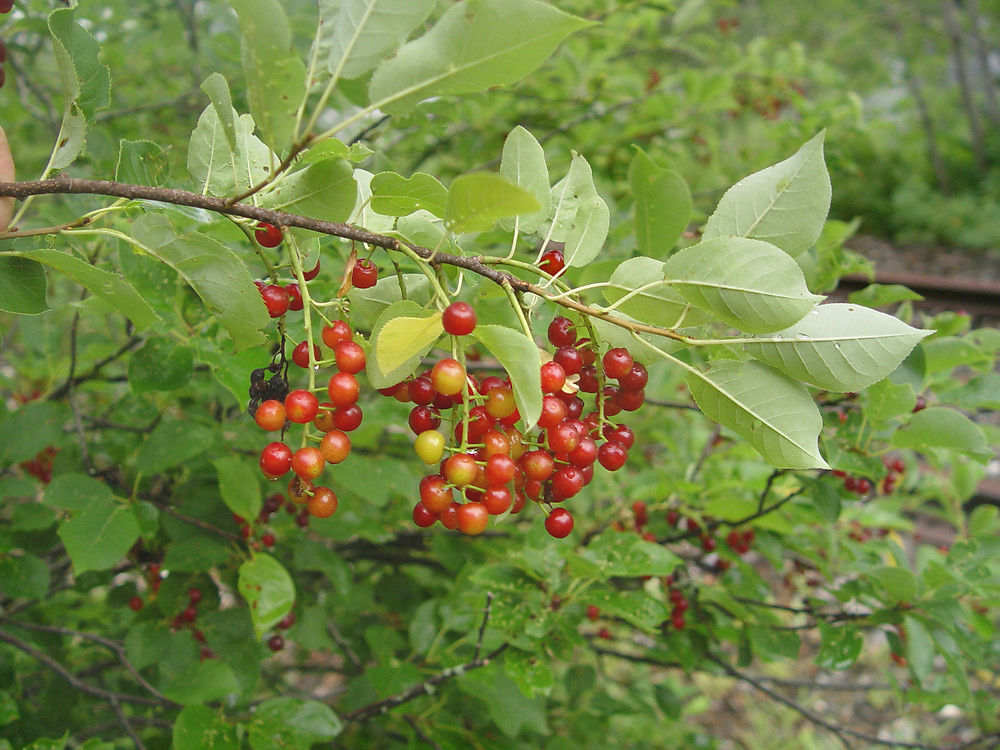
Description by @jominime
fruit is only edible when ripe, and only after cooking/drying for medicinal quantities.
the seeds, leaves, bark, stems, and wood ALL contain cyanide precursors (amygdalin, prunasin, isoamygdaline) that hydrolyze in water to release hydrocyanic acid (HCN-cyanide). the fruit FLESH when fully ripe is safe raw.
cooking or drying destroys the cyanide.
wilted leaves are the most dangerous. the almond-like scent is your warning. if it smells strongly of bitter almonds, cyanide content is high.
hydrocyanic acid toxicity signs (poisoning): rapid breathing, muscle weakness, difficulty breathing, headache, dizziness, seizures, coma. these develop within minutes to hours of ingesting large amounts of unprocessed cyanogenic plant material.
chokecherry is rich in bioactive molecules as phenolics which act as antioxidants.
freezing and swell drying preserves total phenolics content, total flavonoids content, kuromanin concentration, and antiradical activity.
the anthocyanin content, particularly kuromanin/cyanidin-3-glucoside, is among the highest of any North American wild fruit.
chokecherries rank among the highest ORAC scores of any North American berry.
prevents LDL cholesterol oxidation, protects blood vessel walls from oxidative damage, and reduces vascular inflammation.
good for cardiovascular disease prevention, high cholesterol, atherosclerosis prevention, and general vascular health.
chokecherry inner bark contains small amounts of prunasin (a cyanogenic compound), which mildly quiet the cough reflex, stimulate breathing, thin mucus, and relax bronchial spasms.
used in commercial cough syrups for centuries.
1 teaspoon dried inner bark simmered in water 15-20 min, add honey or licorice. traditional preparation says these lessen the toxic potential.
good for chronic cough, dry irritating cough, bronchitis with spasm, whooping cough, asthma with cough, laryngitis, and post-viral cough. inner bark of the roots is considered the most potent part.
do NOT use bark preparations for extended periods (over 2 weeks continuous). if used for chronic cough, cycle: 1-2 weeks on, 1 week off.
chokecherry rebuilds an irritated stomach and gut lining.
the tannins create a protective coating on inflamed tissue, the anthocyanins reduce gut inflammation, and it calms the irritation that causes ulcers and colitis to flare.
good for peptic ulcers, gastritis, ulcerative colitis flares, dyspepsia with sensitivity, chronic diarrhea, and dysentery.
helps prevent the most damaging complications of diabetes like the microvascular damage that causes retinopathy (eye damage), nephropathy (kidney damage), and neuropathy (nerve damage).
protect the small blood vessels that get damaged by chronic high blood sugar.
good for type 2 diabetes, diabetic retinopathy prevention, diabetic neuropathy prevention, diabetic kidney disease prevention, and metabolic syndrome support.
high total antioxidant capacity places chokecherry among the top berries for cellular protection.
activates Nrf2 (turning on glutathione and 200+ protective genes) through the anthocyanins, plus the quercetin content has documented senolytic activity (killing "zombie" cells that accumulate with aging).
blocks the cytokine cascade that drives sepsis through NF-kappaB inhibition.
mild antiplatelet activity that prevents new clots from forming.
NOT fibrinolytic. if you have active clots, you need nattokinase, lumbrokinase, bromelain, or serrapeptase.
anthocyanins concentrate in your retinal tissue where they protect the light-sensing cells, improve blood flow to the retina, and support the visual pigment that lets you see in low light.
good for night vision support, age-related macular degeneration prevention, diabetic retinopathy prevention, glaucoma adjunct support, computer eye strain, and general eye health as you age.
Related Plants
Plant information is for educational purposes only.