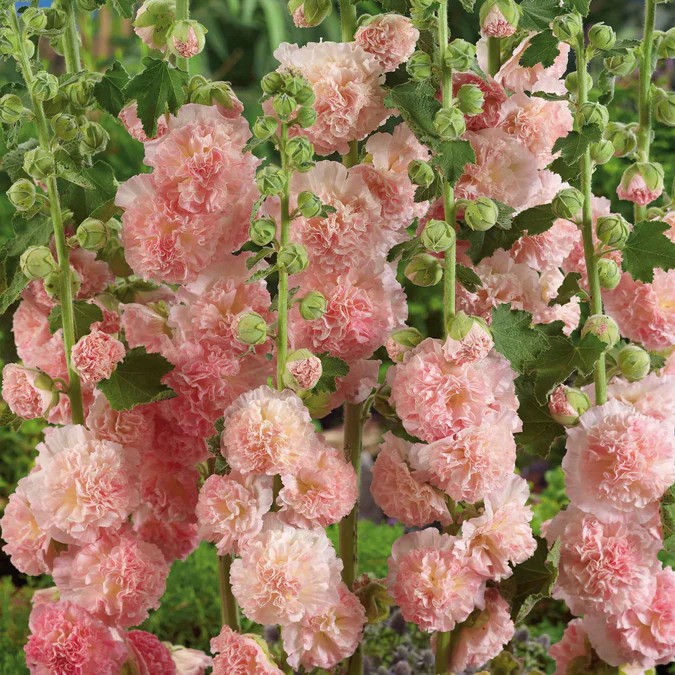
Hollyhock Peaches ’n Dreams
Alcea Rosea
Medicinal Facts
Alcea rosea, commonly known as hollyhock, is a traditional medicinal plant with a rich history in both Western herbalism and traditional Chinese medicine. Its therapeutic potential is attributed to its mucilage content, flavonoids, and anthocyanins, which together offer anti-inflammatory, demulcent, and antioxidant properties. Hollyhock sits at the intersection of traditional uses for respiratory and digestive support and modern research exploring its role in skin health and inflammation modulation. The plant's mucilage is particularly noted for its soothing effects on mucous membranes, making it a staple in herbal remedies for coughs and sore throats.
What it helps with
Respiratory health
The mucilage in Alcea rosea acts as a demulcent, forming a protective film over mucous membranes and soothing irritation. This is particularly beneficial in conditions like coughs and sore throats. The mucilage's ability to modulate cytokine production, potentially through the inhibition of NF-kB, supports its traditional use. Evidence is primarily from traditional and anecdotal sources, with limited clinical trials.
Digestive health
Hollyhock's mucilage content helps to protect and soothe the gastrointestinal tract. It may reduce inflammation by inhibiting pro-inflammatory cytokines and enzymes like COX-2. This demulcent action is traditionally used to ease conditions like gastritis and ulcers, though scientific validation is mostly preclinical.
Skin health & wound healing
Alcea rosea contains anthocyanins and flavonoids that exhibit antioxidant properties, aiding in skin repair and protection against oxidative stress. These compounds may enhance collagen synthesis and modulate TGF-beta signaling, promoting wound healing. Topical applications are supported by traditional use and some in vitro studies.
Anti-inflammatory effects
The flavonoids in hollyhock, such as quercetin, inhibit pathways like NF-kB and COX-2, reducing the production of inflammatory mediators. This action underpins its use in conditions characterized by chronic inflammation, though most evidence is from animal models and in vitro studies.
Urinary tract support
Traditionally, hollyhock has been used to support urinary tract health, likely due to its soothing mucilage. This demulcent action may help protect the urinary tract lining, while its mild diuretic effect can aid in flushing out pathogens. Evidence is largely anecdotal and from traditional practices.
Immune modulation
Hollyhock's polysaccharides may enhance immune function by stimulating macrophage activity and modulating cytokine production. This immunomodulatory effect is primarily supported by preclinical studies and traditional use in herbal medicine.
Antioxidant support
The anthocyanins and flavonoids in Alcea rosea scavenge free radicals and reduce oxidative stress. These compounds may upregulate Nrf2, a key transcription factor in the antioxidant response. Evidence comes from in vitro studies, highlighting potential protective effects against oxidative damage.
Key active compounds
Mucilage
A polysaccharide-rich component that forms a protective film over mucous membranes, providing soothing and anti-inflammatory effects. It is crucial for its demulcent properties in respiratory and digestive health.
Anthocyanins
Pigment compounds with potent antioxidant activity. They scavenge free radicals and may enhance collagen synthesis, contributing to skin health and wound healing.
Flavonoids (Quercetin)
These compounds inhibit NF-kB and COX-2 pathways, reducing inflammation. Quercetin is particularly noted for its broad anti-inflammatory and antioxidant effects.
Polysaccharides
These complex carbohydrates may stimulate immune function by enhancing macrophage activity and modulating cytokine production. They contribute to the plant's overall immunomodulatory effects.
Tannins
Astringent compounds that can help tighten and protect tissues, potentially contributing to the plant's wound healing and anti-inflammatory properties.
Saponins
These compounds have surfactant properties and may contribute to the plant's mild diuretic effects, supporting urinary tract health.
Phenolic acids
Compounds with antioxidant properties that can help reduce oxidative stress and inflammation, supporting overall health.
What the research says
Research on Alcea rosea is primarily focused on its mucilage and flavonoid content. Preclinical studies highlight its potential in soothing mucous membranes and reducing inflammation, with mucilage and quercetin being the most studied compounds. Anthocyanins and flavonoids are explored for their antioxidant and skin health benefits, with in vitro studies providing supportive evidence. The main limitation is the lack of robust human clinical trials, which constrains the ability to fully validate traditional uses. Enhancing bioavailability and conducting more rigorous human studies could help bridge this gap, potentially confirming its efficacy in modern therapeutic contexts.
Typical dosage
For tea or infusion, use 1-2 teaspoons of dried hollyhock flowers or leaves per cup of boiling water, steep for 10-15 minutes, and drink up to three times daily. For a poultice, crush fresh leaves and apply directly to the affected area. Tinctures can be taken in doses of 1-2 ml up to three times a day. Syrups, made by boiling the flowers with sugar, can be taken by the teaspoon as needed for cough relief. Topical applications should be used as needed for skin conditions.
About Hollyhock Peaches ’n Dreams
Traditional Use
Preparations & Dosage
Preparations
- Tea / Infusion: Use 1-2 teaspoons of dried hollyhock flowers or leaves per cup of boiling water. Steep for 10-15 minutes, strain, and drink. Add honey or lemon for flavor if desired.
- Poultice: Crush fresh hollyhock leaves and apply directly to the affected area. Cover with a clean cloth or bandage and leave for several hours or overnight.
- Tincture: Combine dried hollyhock flowers with alcohol (such as vodka) in a 1:5 ratio. Seal in a jar and let sit for 4-6 weeks, shaking occasionally. Strain and store in a dark bottle.
Interactions & Warnings
Use with caution
Hollyhock is generally safe for most people when used appropriately. However, individuals with allergies to plants in the Malvaceae family should exercise caution. Pregnant and breastfeeding women should consult a healthcare provider before use.
Herb Interactions
Both have mucilaginous properties that can soothe the digestive tract; combined use may enhance this effect.
Community Plants
Real plants of this species grown and shared by the MyFloralVault community.


More in Skin & Wound Care


Was this helpful?
0 · 0