
English Ivy
Hedera helix

Chapter oneMedicinal Facts
6 conditions · 5 compounds

Ivy leaf's principal studied constituents are triterpene saponins, especially hederacoside C and alpha-hederin. The plant sits at the crossroads of traditional European respiratory remedies, manufactured expectorant medicines, and laboratory research into airway receptor signaling. Human studies suggest standardized preparations may improve cough symptoms, but product differences and trial limitations make the magnitude of benefit uncertain.
What it helps with
Productive cough
Hederacoside C and alpha-hederin are saponins investigated for effects on airway secretions and clearance. Human trials of standardized ivy extracts suggest cough symptoms may improve, although small studies and variable designs limit confidence in the size of the effect.
Bronchial mucus clearance
In airway cell experiments, alpha-hederin alters beta-2 adrenergic receptor internalization and signaling, a proposed route to increased secretion of fluid and surfactant. This is a plausible laboratory mechanism, not proof that a particular commercial dose produces the same effect in patients.
Airway smooth-muscle response
Alpha-hederin has been studied for effects on beta-2 adrenergic receptors, which regulate airway smooth-muscle relaxation through cyclic AMP signaling. Evidence for meaningful bronchodilation in people is insufficient, and ivy should not replace prescribed asthma inhalers.
Acute bronchitis symptoms
Ivy saponins, including hederacoside C, are investigated for effects on mucus handling and beta-2 receptor signaling. Some human studies report relief of cough associated with acute bronchitis, but inconsistent trial quality makes the benefit uncertain.
Airway inflammation
Alpha-hederin has shown effects on inflammatory signaling, including NF-kB pathways, in experimental models. These findings do not establish that ivy extract treats inflammatory lung disease in humans.
Oxidative stress in laboratory models
Ivy flavonoids such as rutin and kaempferol derivatives can influence Nrf2-related antioxidant signaling in experimental systems. Their contribution to the effects of a particular ivy cough medicine is unknown, and clinical benefits cannot be inferred from these models.
Key active compounds
A major ivy-leaf triterpene saponin used to characterize extracts. Its relationship to alpha-hederin and the precise contribution of each compound to human expectorant effects remain under study.
A saponin that reduces beta-2 adrenergic receptor internalization in cell experiments, potentially prolonging receptor signaling. The clinical importance of this mechanism is uncertain.
A triterpene sapogenin forming the structural core of several ivy saponins. Experimental anti-inflammatory effects have been reported, but its exposure and therapeutic contribution after ivy extract use are not established.
A flavonoid reported in ivy leaves that can modulate oxidative-stress signaling, including Nrf2, in experimental models. Its absorption and contribution to ivy's clinical effects are uncertain.
Ivy-leaf flavonoids whose related aglycone, kaempferol, can modulate NF-kB and Nrf2 signaling in preclinical research. Their relevance at doses delivered by ivy cough products is unknown.
What the research says
On cough and bronchitis, human studies of standardized ivy-leaf extracts suggest symptom improvement, but differing formulations and methodological weaknesses limit certainty. On airway physiology, alpha-hederin has the clearest mechanistic evidence for altered beta-2 receptor handling in cells; translation to clinical benefit is unproven. On inflammation and oxidative stress, findings involving saponins and flavonoids are mainly preclinical. The main limitations are inconsistent clinical trial quality, product variability, and incomplete knowledge of constituent exposure after oral use.
Chapter twoHow to Prepare
3 methods with dosage
Standardized leaf extract syrup - Select a manufactured ivy-leaf cough syrup intended for the user's age. Shake the bottle if the label directs, measure the labeled dose with the supplied device, and take by mouth. Do not substitute a household spoon or use homemade ivy. Use only a commercially manufactured ivy-leaf product and follow its age-specific label. As an adult example, some tablets containing 35 mg of dry ivy-leaf extract per tablet are taken as one tablet twice daily, but extract strength varies and this schedule must not be assumed for another product. For syrup and oral drops, use the labeled adult or child dose with the supplied measuring device; concentrations vary too much to give a reliable universal volume. Do not prepare or ingest homemade leaf tea, tincture, berries, or raw leaves. Ready to use. Follow the package's storage and after-opening expiry instructions; seek medical advice if symptoms last longer than one week.
Standardized leaf extract oral drops - Choose a commercially manufactured oral preparation, check its age restrictions and concentration, and count or measure the labeled dose. Dilute in water only if the product instructions permit or recommend it. Check the label for alcohol content when relevant. Use only a commercially manufactured ivy-leaf product and follow its age-specific label. As an adult example, some tablets containing 35 mg of dry ivy-leaf extract per tablet are taken as one tablet twice daily, but extract strength varies and this schedule must not be assumed for another product. For syrup and oral drops, use the labeled adult or child dose with the supplied measuring device; concentrations vary too much to give a reliable universal volume. Do not prepare or ingest homemade leaf tea, tincture, berries, or raw leaves. Ready to use. Store and discard after opening according to the manufacturer; seek advice if symptoms persist beyond one week.
Standardized leaf extract tablet - Use a labeled commercial tablet and check its extract strength and age restrictions. Swallow with water unless the manufacturer directs otherwise; take only the dose stated for that specific product. Use only a commercially manufactured ivy-leaf product and follow its age-specific label. As an adult example, some tablets containing 35 mg of dry ivy-leaf extract per tablet are taken as one tablet twice daily, but extract strength varies and this schedule must not be assumed for another product. Do not prepare or ingest homemade leaf tea, tincture, berries, or raw leaves. Ready to use. Store as directed on the package and seek medical advice if symptoms persist beyond one week.
Do not give ivy medicines to children under 2; obtain professional advice for older children. Seek medical advice if symptoms persist beyond one week or worsen.
For every method: start with the lowest dose and adjust as needed under professional guidance. Daily limits and how long to take these aren't listed; check with your doctor before starting.
Chapter threeSafety Warnings
Warnings, herb and pharmaceutical interactions
Ivy berries and unprocessed plant material can cause poisoning, including vomiting and diarrhea; contact with the leaves or sap can also cause dermatitis. Avoid medicinal ivy during pregnancy and breastfeeding, do not give it to children under 2, and seek medical advice before use in young children or if you have gastritis or a stomach ulcer; suspected poisoning warrants prompt poison-control advice.
Herb and pharmaceutical interactions
Combining ivy cough preparations with cough suppressants such as codeine or dextromethorphan may make it harder to clear loosened mucus, so seek medical advice before combining them. No specific, well-established pharmaceutical drug interactions have been conclusively demonstrated, but people taking prescription respiratory medicines should consult a clinician rather than replace them. Avoid use in pregnancy or breastfeeding because safety data are insufficient, and use caution with gastritis or peptic ulcers. Excessive ingestion may cause nausea, vomiting, diarrhea, and abdominal pain; fresh leaves and sap can trigger allergic contact dermatitis.
Chapter fourPet Safety
Cats, dogs and other pets
- CatsToxicCare guide
- DogsToxicCare guide
- ChildrenToxicCare guide
- BirdsNot documentedNo source
- Small mammalsRabbits, guinea pigs, hamstersNot documentedNo source
- ReptilesTortoises, iguanas, bearded dragonsNot documentedNo source
English Ivy is considered toxic to pets, particularly cats and dogs, as well as children. The leaves contain saponins, which can cause gastrointestinal upset, including vomiting and diarrhea, if ingested. Source: English Ivy care guide.
No source covers birds, small mammals or reptiles for this plant. Ask your vet before letting them nibble it.
Chapter fiveAbout This Plant
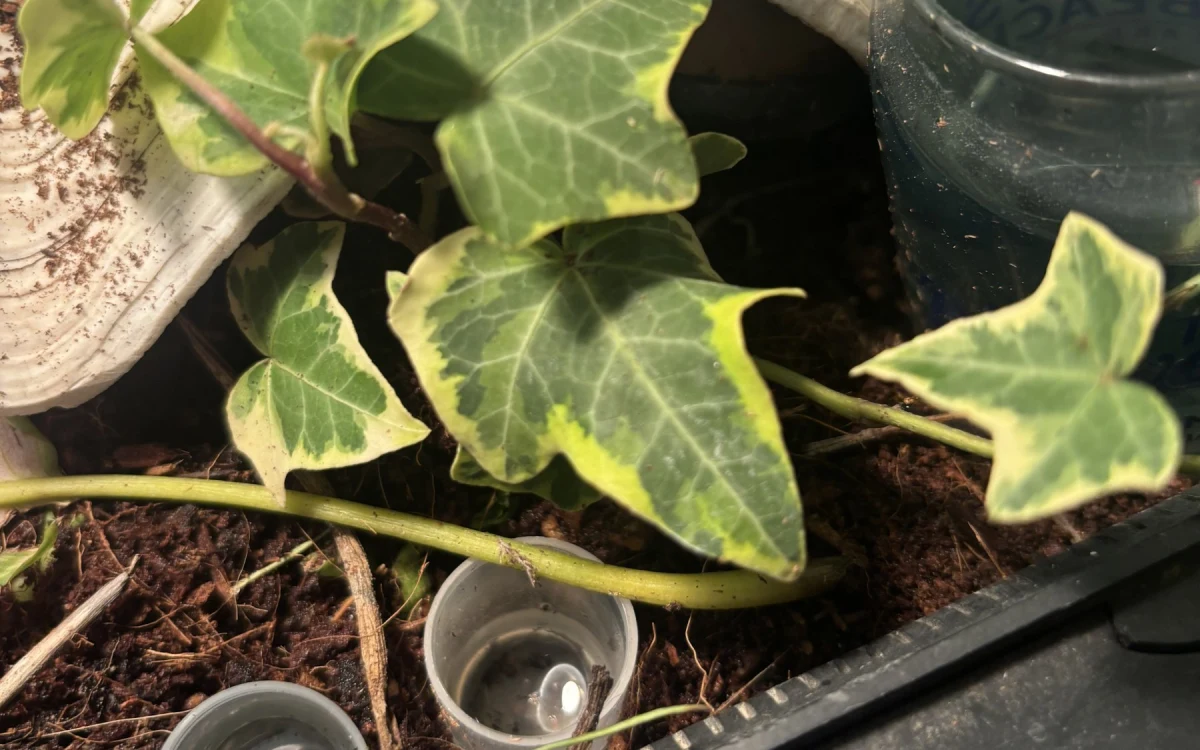
English ivy, Hedera helix, is an evergreen climbing plant in the Araliaceae family, native to much of Europe and western Asia and widely cultivated elsewhere. Its leaves contain triterpene saponins, particularly hederacoside C, along with smaller amounts of alpha-hederin and other constituents. Standardized extracts made from the leaves are used in commercial cough medicines, especially in Europe. The berries and unprocessed leaves should not be treated as food or used to make home remedies: they can cause gastrointestinal poisoning, and the sap may irritate or sensitize the skin.
Ivy has a history of traditional European use for respiratory complaints and externally for various skin problems, although historical uses are not proof of safety or effectiveness. Its best-established modern application is short-term relief of productive cough associated with colds or uncomplicated bronchial irritation. Saponins are thought to contribute to mucus clearance. Laboratory studies suggest that alpha-hederin can affect beta-2 adrenergic receptor signaling in airway cells, but how much this mechanism contributes to symptom relief in people is uncertain.
Clinical studies of ivy-leaf preparations have reported improvements in cough symptoms, but many trials are small, use different products, or have methodological limitations. A person with a cold may also improve without treatment, making the size of ivy's specific benefit difficult to establish. Evidence does not justify using ivy instead of prescribed treatment for asthma, pneumonia, or chronic lung disease. Commercial extracts differ in concentration and manufacturing, so directions for one product cannot be transferred to another. Ivy can also spread aggressively outside cultivation, where it may damage habitats and require careful management.
Community Plants
Real plants of this species grown and shared by the MyFloralVault community.
Was this helpful?
Was this helpful?
0 · 0
More in Respiratory Health
View all



Explore by ailment
Information is for educational purposes only and should not replace professional medical advice.
Disclaimer: This content is for educational and informational purposes only. It is not intended as medical advice, diagnosis, or treatment. Always consult a qualified healthcare professional before using any herbal remedy or making changes to your health regimen. MyFloralVault does not claim that any plant cures, treats, or prevents any disease.