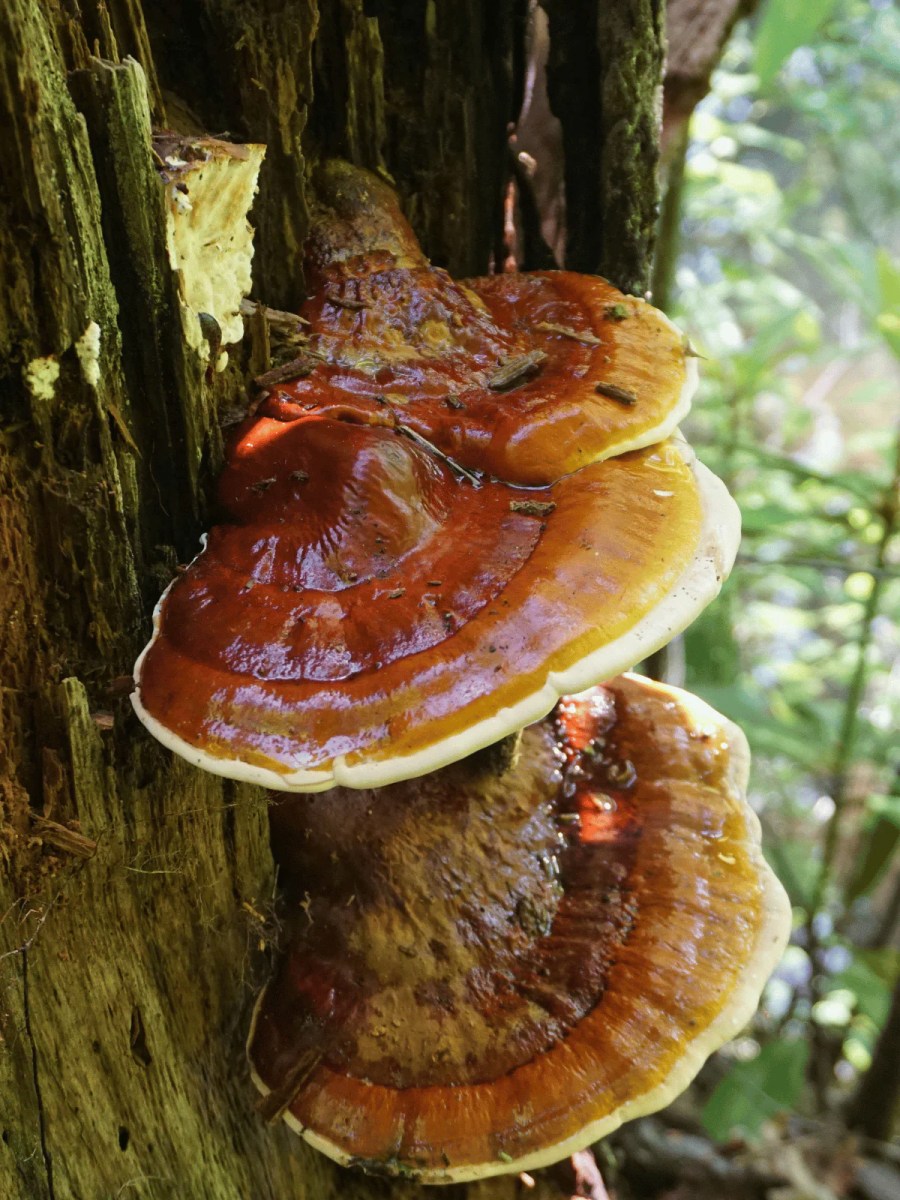
Description by @jominime
known as the mushroom of immortality in Chinese culture, listed in Shennong's Herbal Classic as top-grade, and used continuously for over 2,000 years.
cancer patients commonly reported improvements with their fatigue, depression, nausea, and poor appetite, when taking reishi.
reishi polysaccharides regulate the immune system in both directions, activating it when it's underperforming against cancer or infection, and calming it when it's overactive in autoimmune conditions. this bidirectional modulation is what makes reishi adaptogenic rather than simply immunostimulant.
ganoderic acids from reishi kills cancer cells through the same mitochondrial pathway as multiple chemotherapy drugs, block tumor spread by inhibiting the enzymes cancer cells use to invade tissue, and simultaneously act like statins to lower cholesterol. documented activity against breast, colon, prostate, liver, lung, and stomach cancer. MMP-9 inhibition specifically blocks tumor invasion and metastasis (the process that makes cancer fatal).
antiviral activities of G. lucidum compounds proven against coronavirus, hepatitis virus, HIV, enterovirus, herpes simplex virus, H1N1 virus, and H5N1 virus.
the HIV-1 protease inhibition identifies specific ganoderic acid compounds that block the same enzyme targeted by pharmaceutical HIV protease inhibitor drugs.
reishi activates Nrf2, the longevity pathway that upregulates the body's own antioxidant gene expression.
ganoderic acids also inhibit telomerase in virus-infected cells, preventing EBV-driven cell immortalization that leads to lymphoma.
its Nrf2/Keap1 activation pathway directly counters the oxidative stress and mitochondrial dysfunction associated with spike protein-driven vascular damage.
reishi's beta-glucans and triterpenoids both modulate NF-κB, the same inflammatory master switch overactivated in severe COVID-19 and implicated in vaccine-associated hyperinflammation and myocarditis.
lowers cholesterol synthesis. adenosine from reishi inhibits platelet aggregation, reducing blood clot risk through aspirin-like antiplatelet activity.
reduces chronic brain inflammation that drives Alzheimer's and Parkinson's disease by suppressing microglial NF-κB activation, calming overactive brain immune cells that damage neurons.
reishi polysaccharide is a Chinese FDA-approved injectable drug used for over 40 years for muscle disease.
hepatoprotective activity protects the liver from toxic damage.
reishi lowers blood sugar after meals, improves insulin sensitivity (through the same pathway as berberine and metformin), and inhibits formation of new fat cells.
used for restlessness, insomnia, palpitations, lung deficiency, cough and asthma.
reishi reduces the stress hormone cortisol and contains adenosine, the same compound that accumulates during waking hours to create sleep pressure.
cracked spore oil is the most potent form for the anticancer and antiviral applications.
the antiplatelet activity (adenosine) means caution with blood thinners.
Related Plants
Plant information is for educational purposes only.