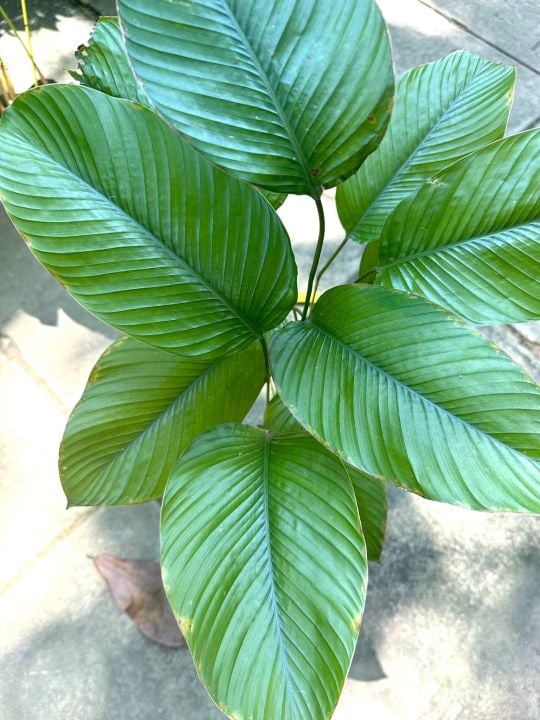
Description by @jominime
used to wrap food for cooking and storage, and as construction material.
used locally as a taste modifier and for preparing fish traps, ornamental bags, and mats.
organs of the plant are used in folkloric medicine as a laxative and in treating ailments such as mental disorders, high blood sugar, and lung diseases.
aril contains a nontoxic, nondiabetic, low-calorie, extremely sweet, hydrophilic protein known as thaumatin.
thaumatin is exceptionally sweet — 1,600 to 5,500 times sweeter than sucrose depending on concentration.
unlike sugar, thaumatin's sweetness onset is slow, building gradually to a peak and lingering, sometimes with a faint licorice-like aftertaste at higher concentrations. thaumatin exhibits remarkable stability across wide pH range (2.5–10) and remains stable during heating including pasteurization and UHT conditions.
produces no glycemic response, making it directly useful as a sugar substitute for diabetics.
thaumatin proteins are classified as PR-5 (pathogenesis-related class 5) proteins — a class of plant defense proteins that inhibit fungal growth by disrupting fungal cell walls through beta-1,3-glucanase-like activity.
seeds and leaf sap are potent as antidote against snake venom and bee stings and for preventing dystocia and prolonged child labor.
compounds in leaf powder are known to reduce inflammation and alleviate pain. seed powder consumption linked with improved cardiovascular function by helping reduce hypertension.
Related Plants
Plant information is for educational purposes only.