Green Tuft Algae
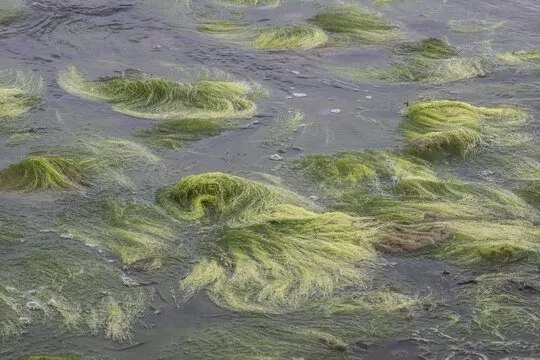
Description by @jominime
filamentous green macroalgae (Chlorophyta, Cladophorales) found in marine and freshwater environments worldwide, growing attached to rocks and submerged surfaces in coastal zones and volcanic lakes. tough, branching, hair-like filaments that form dense mats. classified as a nuisance species in most water bodies because it blooms aggressively and disrupts aquatic ecology
among macroalgae tested, C. rupestris showed the highest total carotenoid content (1.26 mg/g) compared to other species tested.
antidiabetic — methanol, ethanol, and ethyl acetate extracts showed α-amylase inhibition of 72%, 65%, and 70% respectively, and α-glucosidase inhibition of 67%, 61%, and 64% at 1000 µg/ml. hitting both enzymes simultaneously, same dual mechanism as pharmaceutical antidiabetic drugs.
antimicrobial — the lipidic extract collected in January showed antibacterial activity against Enterococcus sp., Streptococcus agalactiae, and Vibrio cholerae non-O1.
African sleeping sickness has very few effective treatments, most of which are highly toxic. Extracts of this algae was very effective against this sickness; T. brucei rhodesiense.
also showed activity against T. cruzi (Chagas disease) and Leishmania donovani (visceral leishmaniasis).
Can be made and used as a bioplastic.
generates the highest-crystallinity cellulose nanocrystals of any plant-like organism, and can be used to make paper batteries and biodegradable composites.
Related Plants
Plant information is for educational purposes only.