Irish Sea Moss
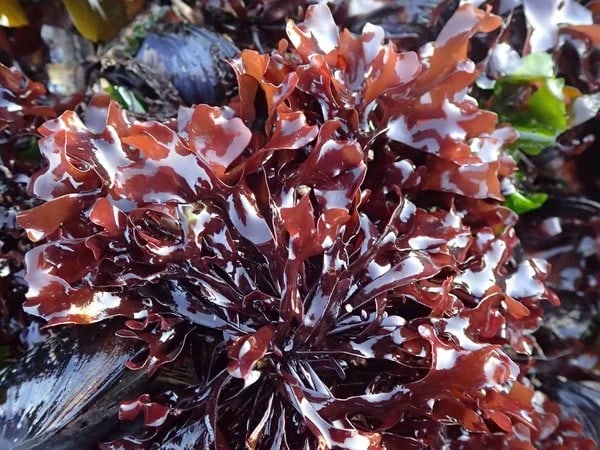
Description by @jominime
Irish moss (Chondrus crispus) is a red seaweed from the North Atlantic, known as a traditional food and herbal remedy, and for its high content of carrageenan, a natural thickening agent used in many processed foods like ice cream and jellies.
It's rich in minerals and has been used to treat coughs and skin conditions, but its high iodine content requires caution, and it can cause allergic reactions in those sensitive to shellfish.
When boiled, it releases carrageenan, a gelatinous substance that thickens liquids. use it as a food additive (like thickening up some soup) or a base for puddings and drinks.
Contains minerals like iodine, potassium, and calcium, and is a source of protein.
boosts the immune system and may protect the body from contracting salmonella. 20 grams (4 tablespoons) contains 10 calories, iodine, vitamins A, C, D, E, and K, phosphorus, iron, magnesium, zinc, copper, selenium, calcium, protein, and is gluten free. full of antioxidants, and taurine.
Irish sea moss, and sea moss are practically the same, but here are some differences between them:
Sea moss is broad, more stick-like seaweed. It has a scientific name like Eucheuma and Gracilaria, which grow in more tropical climates such as Southern Asia, the Caribbean, and Southern Africa.
Sea Moss is made up of fatty acids, sterols, agar, amino acids, and phenolic compounds. Most people use sea moss gel because it provides 80% of the world's agar, a gel-forming substance used in food and cosmetics.
Additionally, the species - Gracilaria can be purple. It is mistaken for the dark purple Irish moss. Gracilaria sea moss grows year-round on rocks and is farmed on ropes in the ocean, making it abundant and widely consumed.
Sea Moss helps with losing weight, and its potential lies in its content of high fiber. When you consume fiber, it makes you feel full, which is why high-fiber food helps you lose weight.
Irish Moss is scientifically known as Chondrus Crispus. It is a seaweed with flat, fan-like leaves. The leaves are dark purple, but some people bleach them in the sun which gives it a gold color.
Irish Moss grows on rocks and tide pools in the colder regions of the North Atlantic Ocean, such as Canada, the British Isles, and Maine. People living in Ireland were the first to highlight Irish Moss's use during the Irish potato famine of 1845-1849.
Irish Moss contains a pigment known as fucoxanthin. It acts as an antioxidant for humans.
Everything in sea moss (eucheuma, gracilaria) is in irish sea moss. There aren't many differences besides a slight appearance difference and genus.
Related Plants
Plant information is for educational purposes only.