Indian Gooseberry
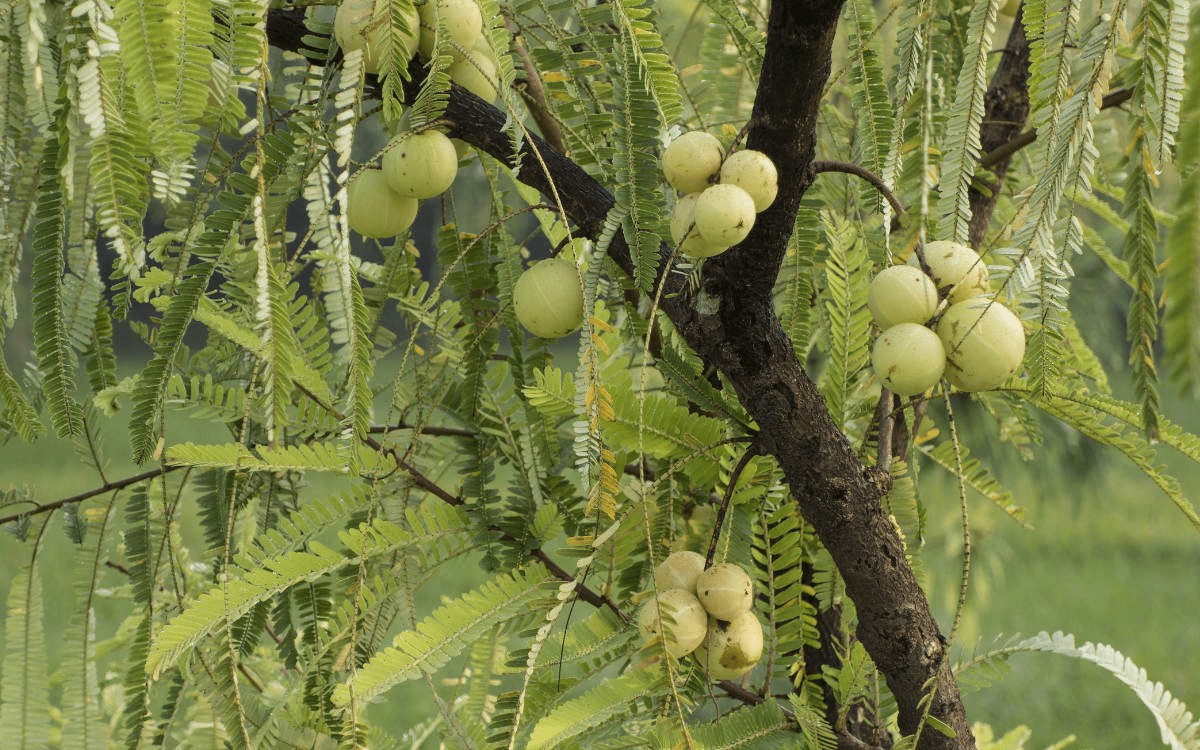
Description by @jominime
Aka: Amla
amla addresses hair loss at the root cause.
it blocks 5-alpha-reductase, the enzyme that makes DHT, and DHT is the hormone that shrinks your follicles in male and female pattern baldness, so blocking it targets the actual cause of pattern hair loss.
it strengthens strands, reduces breakage, and helps prolong the hair's growth phase.
on top of that, it feeds the dermal papilla cells so they multiply, and a women's hair-loss trial using an oral amla product showed real improvement.
for graying, its antioxidants shield the pigment cells in your follicles from the oxidative damage that turns hair gray, and its tannins and iron naturally darken hair.
use as amla oil massaged into the scalp, an amla powder rinse or paste, or taken internally.
reduced lipid peroxidation, supported endogenous antioxidant enzymes (SOD, catalase, glutathione), anti-glycation activity (protecting proteins like collagen from sugar damage), and telomere and cellular-aging interest.
has very high amounts of vitamin C, and the fruit's tannins keep it from degrading in heat and storage.
it is acidic and high in vitamin C, so rinse with water after fresh fruit or juice to protect enamel.
a compound in it (beta-glucogallin) blocks aldose reductase, the enzyme that turns high blood sugar into sorbitol, which is the exact process that clouds the lens and wrecks the retina in diabetics. so amla delays diabetic cataracts and retinopathy at the cause.
also shields the retinal cells behind age-related macular degeneration from oxidative and mitochondrial damage.
good for diabetic eye protection (cataract and retinopathy), macular degeneration support, and general vision health.
protects the brain by soaking up the oxidative stress and inflammation that damage neurons, and it improves memory.
also being studied to reverse some autism -
quick overview if you don't wanna read the link: tested as the ethyl acetate fraction of amla (EAFA) at 100 mg/kg in a sodium-valproate (VPA)-induced postnatal autism model in BALB/c mice, dosed postnatal day 13 to 40 (VPA is the same drug that raises autism risk in human pregnancy. it shut down brain oxidative stress by restoring the glutathione antioxidant enzymes and dropping lipid peroxidation and nitric oxide. it calmed neuroinflammation by lowering IL-1-beta and TNF-alpha, two cytokines that run high in autism. it corrected serotonin and dopamine receptor levels (5-HT1D, 5-HT2A, and D2), the exact signaling tied to autism's social and repetitive-behavior symptoms.
https://www.sciencedirect.com/science/article/pii/S2405844024110237
amla ethanolic extract sharply lowers blood glucose through enzyme inhibition and improved insulin sensitivity.
it also improves lipid profiles, lowers total cholesterol, LDL, and triglycerides, and raises HDL.
calms excess stomach acid and protects the stomach lining against ulcers, and as part of Triphala it gently keeps digestion regular. good for acid reflux and hyperacidity, gastritis, ulcers, and sluggish digestion. taken as the fresh fruit, juice, powder, or in Triphala.
has antioxidants, anti-inflammatory and anti-mutagenic properties, anti-elastase, and anti-collagenase (substances that play a role in wrinkle formation and aging skin) activities.
the ellagitannins and ellagic acid in the fruit might regulate blood processes and prevent arterial thrombosis..
amla fruit extract protected mice from arsenic-induced liver damage, DNA damage, and immune-cell death (thymocytes and splenocytes) through its antioxidant systems. could be useful, that's why im noting it.
https://www.youtube.com/shorts/jfZVHBvVFM4
doesnt look like regular european gooseberry
Related Plants
Plant information is for educational purposes only.