Fusarium wilt
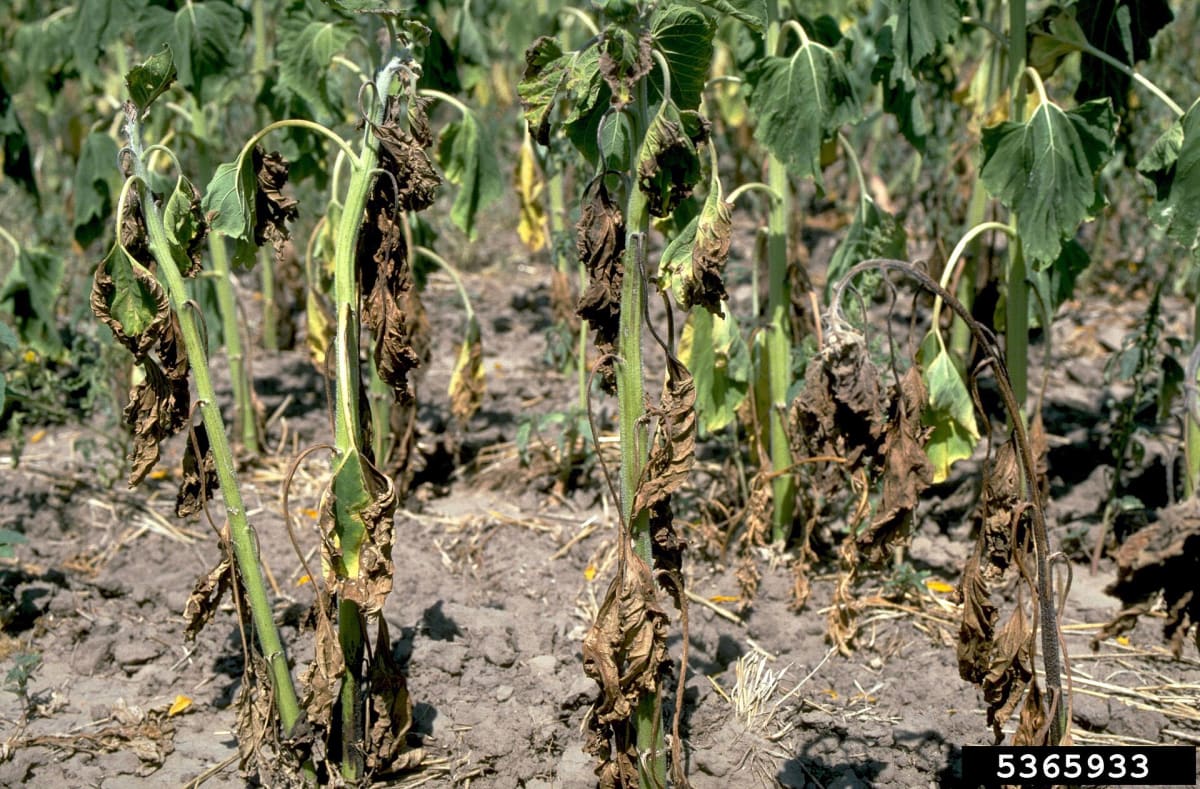
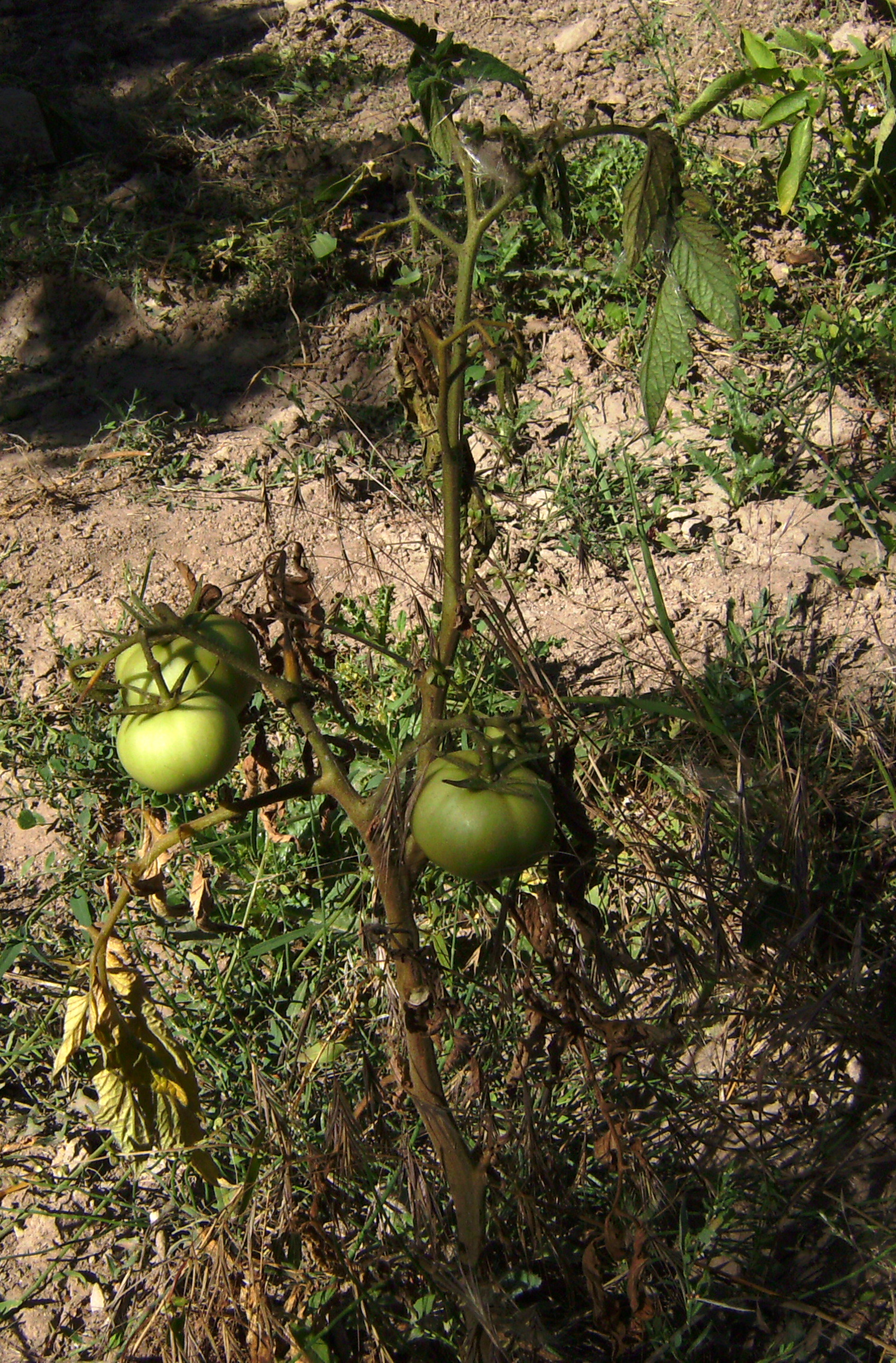
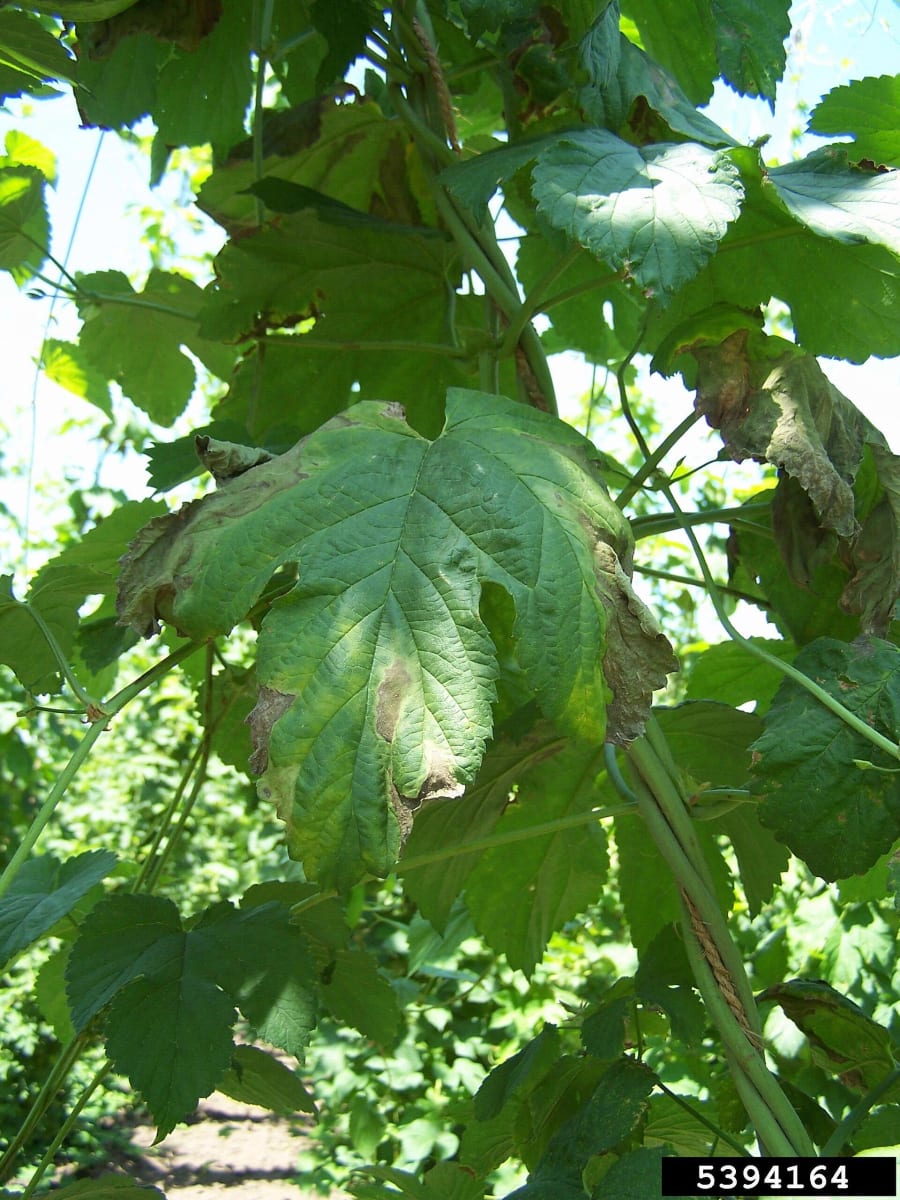
Fusarium wilt is a plant disease caused by the soil-borne fungus Fusarium oxysporum. It primarily affects the vascular system of plants, leading to wilting, yellowing, and eventual death of the plant. The disease is characterized by one-sided wilting and yellowing of leaves, often starting from the lower leaves and progressing upwards.
About this problem
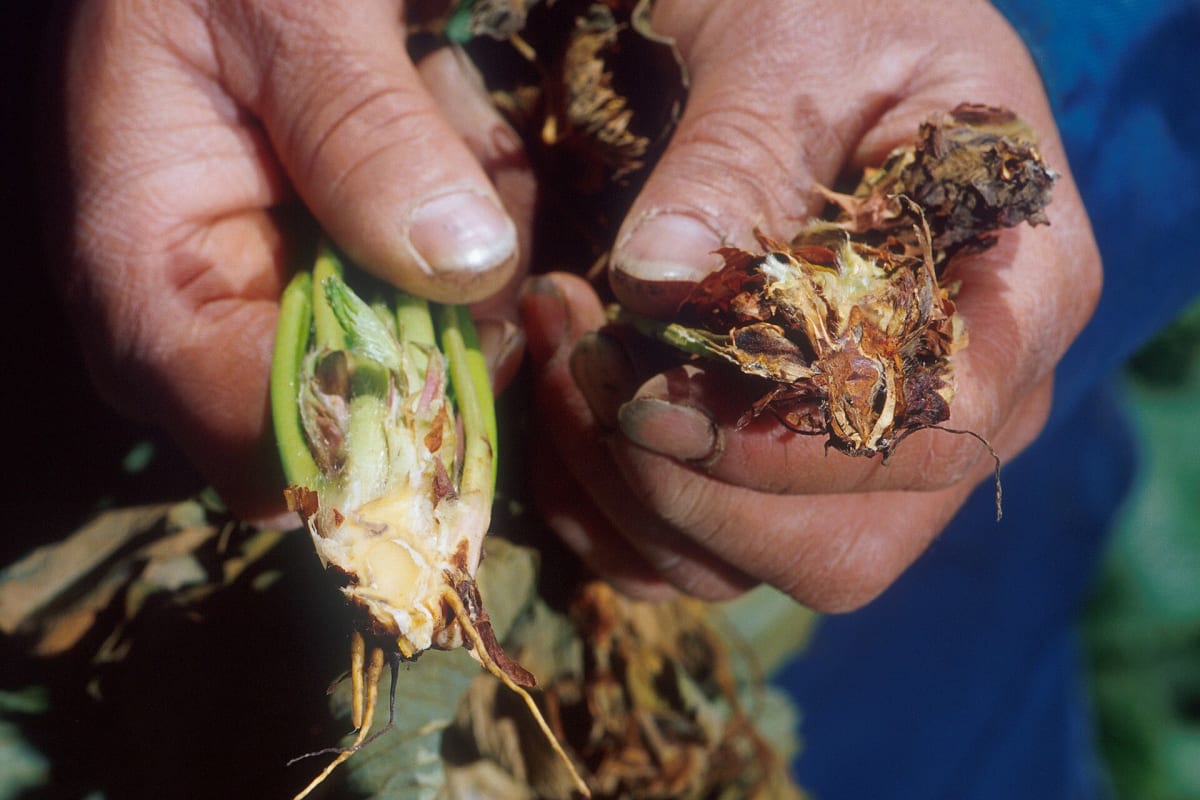
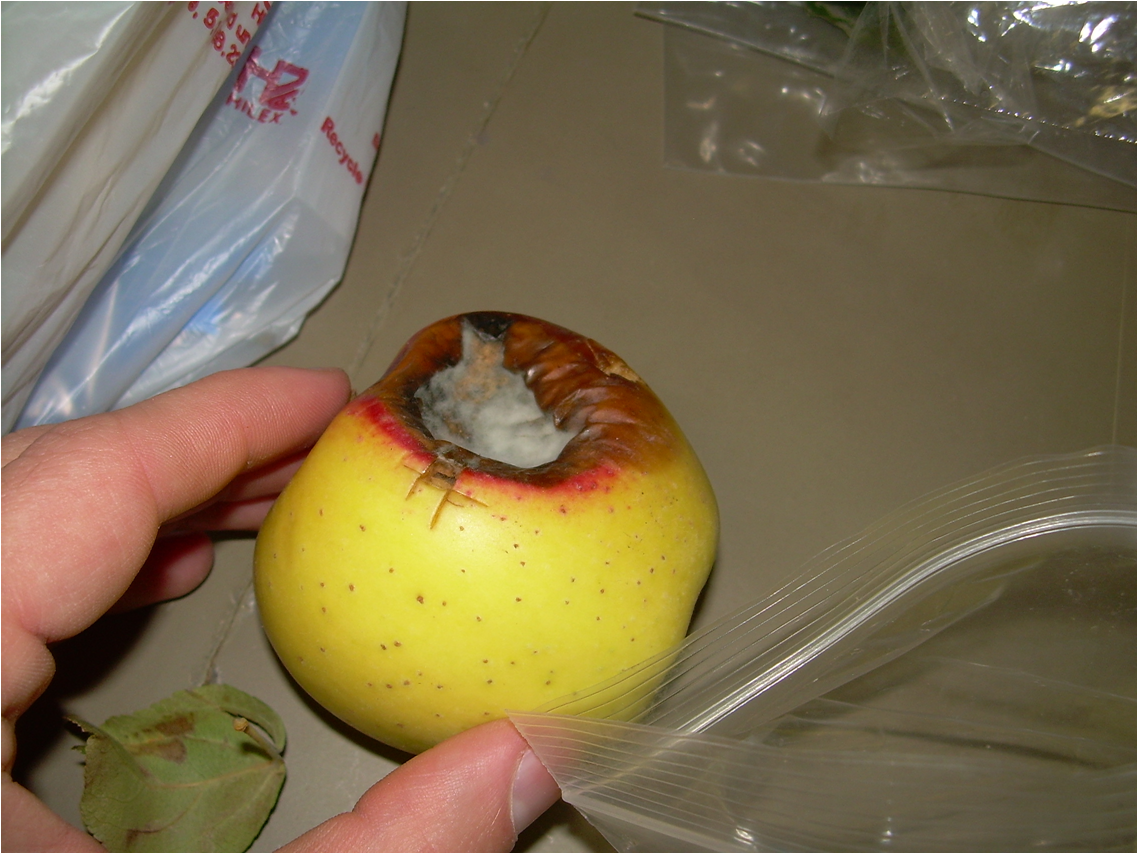
Fusarium wilt is caused by the fungus Fusarium oxysporum, which invades the plant through the roots and colonizes the vascular tissue, disrupting the flow of water and nutrients. This results in wilting and yellowing of the foliage, often leading to plant death if not managed properly. The disease is often confused with Verticillium wilt due to similar symptoms, but Fusarium wilt is more prevalent in warmer climates. Over time, affected plants exhibit stunted growth and may show brown streaks in the vascular tissue when stems are cut open. The fungus can persist in the soil for many years, making management challenging.
Symptoms
- Wilting of leaves
- Yellowing of lower leaves
- Stunted growth
- Brown streaks in vascular tissue
- Leaf drop
- Root discoloration
Cause
Fusarium oxysporum is the causal organism, thriving in warm, moist soil conditions. It enters the plant through the roots and spreads through the vascular system.
Conditions that favour it
- Warm soil temperatures
- High soil moisture
- Poor soil drainage
- Presence of infected plant debris
- Monoculture planting
Lifecycle and spread
Fusarium oxysporum spreads through soil and infected plant debris. It can survive in the soil for many years as spores. The cycle is broken by crop rotation with non-host plants and improving soil drainage.
Plants most affected
- Tomato
- Banana
- Cucumber
- Melon
- Pea
- Sweet potato
- Pepper
- Eggplant
- Watermelon
- Strawberry
Treatment
Educational information only, and not a substitute for professional diagnosis. Identify the problem before treating it, and check that any product is registered for this plant and this use where you live.
Cultural control
- Rotate crops with non-host plants
- Improve soil drainage
- Remove and destroy infected plant debris
- Avoid overwatering
- Ensure proper plant spacing
Organic options
- Neem oil
- Compost tea
- Trichoderma-based biocontrol agents
Chemical options
- Thiophanate-methyl Used to manage fungal infections
Read and follow the product label. The label is the legally binding instruction. Confirm the product is registered for this plant and for this use in your area before applying it.
Prevention
- Use resistant plant varieties
- Maintain good soil health
- Practice crop rotation
- Sanitize tools and equipment
- Avoid planting in infected soil