Citrus canker
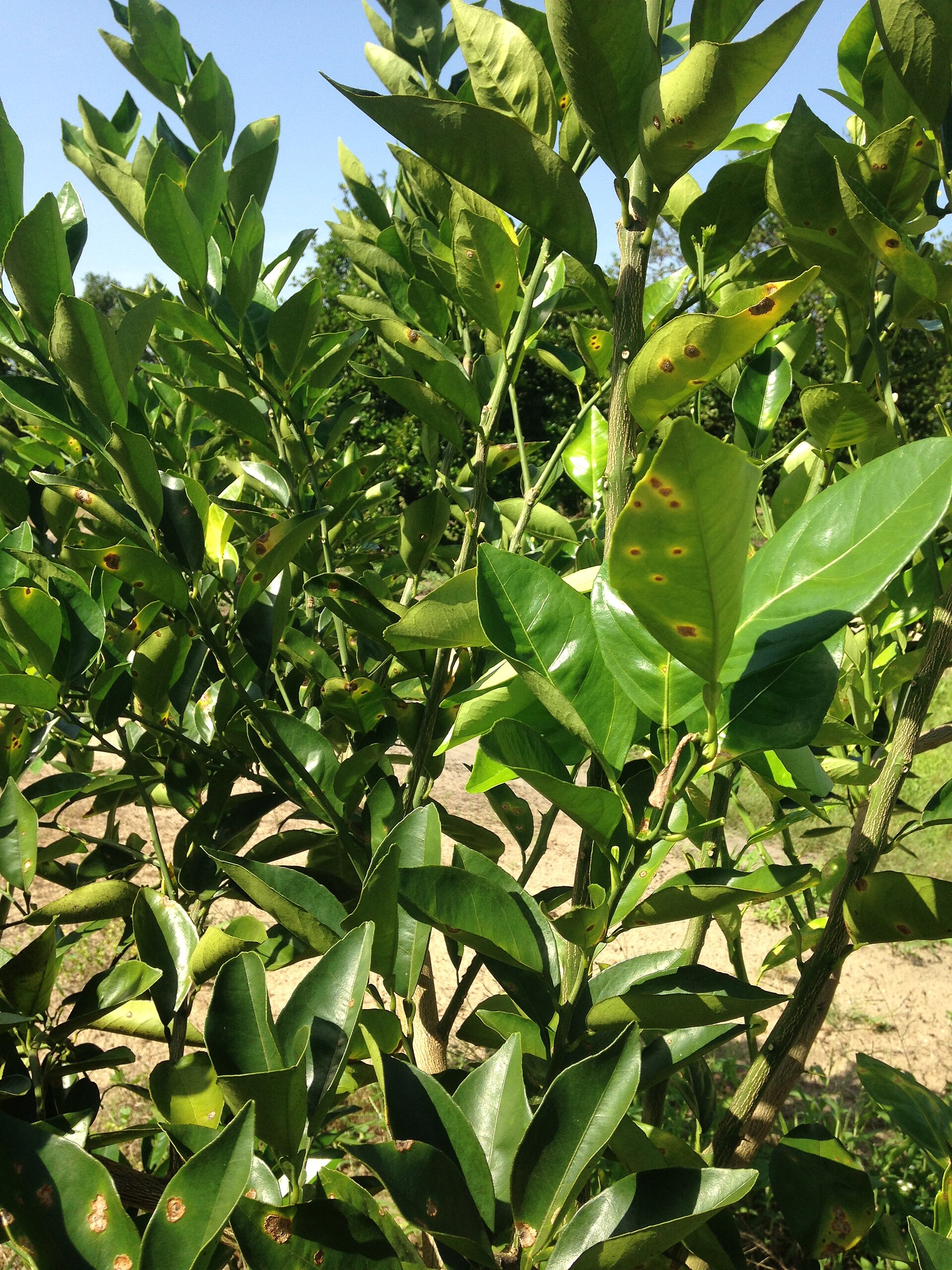
Citrus canker is a bacterial disease caused by Xanthomonas citri, affecting citrus plants. It is characterized by raised, corky lesions on leaves, stems, and fruit, often surrounded by an oily, water-soaked margin and a yellow halo. These symptoms can lead to defoliation, blemished fruit, and premature fruit drop, impacting the yield and marketability of citrus crops.
About this problem
Citrus canker is caused by the bacterium Xanthomonas citri, which infects a wide range of citrus species. The bacterium enters the plant through stomata or wounds and multiplies in the intercellular spaces, leading to the formation of lesions. These lesions are initially small, raised, and oily, eventually becoming corky and surrounded by a yellow halo. Over time, the lesions can coalesce, causing extensive damage to leaves, stems, and fruit. The disease is often confused with other citrus diseases like greasy spot or melanose, but the distinctive raised lesions with yellow halos help in its identification. Citrus canker can significantly reduce fruit quality and yield, making it a serious concern for citrus growers. The disease spreads rapidly under warm, wet conditions, especially during periods of heavy rain or high humidity. Wind-driven rain is a primary mode of dispersal, carrying the bacteria from infected to healthy plants. The bacterium can survive on plant surfaces and debris, making sanitation and removal of infected material crucial in managing the disease.
Symptoms
- Raised corky lesions on leaves
- Oily, water-soaked margins
- Yellow halos around lesions
- Defoliation
- Premature fruit drop
- Blemished fruit
Cause
Citrus canker is caused by the bacterium Xanthomonas citri. The disease thrives in warm, humid conditions and spreads through wind-driven rain, contaminated equipment, and human activity.
Conditions that favour it
- Warm temperatures
- High humidity
- Frequent rain
- Windy conditions
- Presence of wounds on plants
Lifecycle and spread
Xanthomonas citri spreads primarily through wind-driven rain, entering plants via stomata or wounds. It can overwinter in infected plant debris and on surfaces of host plants. Breaking the cycle involves removing and destroying infected plant material and implementing strict sanitation measures.
Plants most affected
- Orange
- Lemon
- Lime
- Grapefruit
- Tangerine
- Pomelo
- Kumquat
- Citron
- Bergamot
- Mandarin
Treatment
Educational information only, and not a substitute for professional diagnosis. Identify the problem before treating it, and check that any product is registered for this plant and this use where you live.
Cultural control
- Prune infected branches
- Increase plant spacing for better airflow
- Remove and destroy infected plant material
- Avoid overhead irrigation
- Implement strict sanitation practices
Organic options
- Copper-based fungicides
- Neem oil
- Bordeaux mixture
Chemical options
- Copper hydroxide Used to prevent bacterial infection
Read and follow the product label. The label is the legally binding instruction. Confirm the product is registered for this plant and for this use in your area before applying it.
Prevention
- Plant resistant citrus varieties
- Implement windbreaks to reduce spread
- Regularly inspect and remove infected material
- Sanitize tools and equipment
- Avoid working in wet conditions