Water Hyacinth
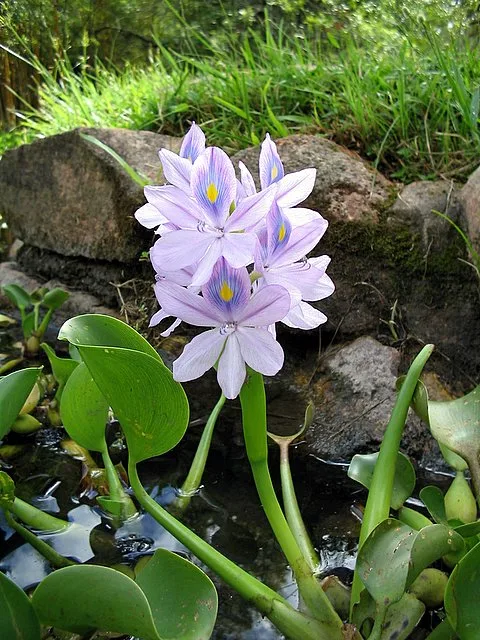
Description by @jominime
the bulb at the base of the stem, is filled with air and makes them buoyant.
easy to control in colder climates because they will die under frozen water, and can't tolerate frost. so they're really good to have in cold climate ponds if you want to make sure your water is clean and pristine.
you can bring a couple of them indoors during the winter and then put them back outside in your pond to grow again during the summer.
Produces thousands of seeds per plant that can remain viable in sediment for 20–30 years.
Spreads aggressively through horizontal runners (stolons) that produce new daughter plants; mats can double in size every 1–2 weeks under favorable conditions. Broken fragments can root and grow into new colonies.
Blocks sunlight from reaching submerged plants and lowers dissolved oxygen in the water, leading to fish kills and reduced biodiversity. this plant is only good if you need to clean out a contaminated pool of water.
As the plant drinks water through its feathery underwater roots, dissolved chemicals (including pesticides, herbicides, and trace pharmaceuticals), are absorbed into the roots and stems, where the plant's internal enzymes partially break them down or lock them inside plant tissue.
Its dense roots absorb excess nitrogen and phosphorus, starving algae of the nutrients they need to bloom and helping clear "green water". root systems can help trap suspended solids.
In wastewater treatment and bioremediation, it can take up heavy metals and organic pollutants.
water hyacinth can absorb and remove significant amounts of lead from contaminated water.
it can also pull out arsenic, mercury, cadmium, hexavalent chromium, copper, zinc, nickel, aluminum, iron, manganese, silver, and lithium.
also phosphates from fertilizers, detergents, and sewage.
Both live plants and dried water hyacinth biochar/adsorbents can pull complex synthetic compounds out of wastewater.
live plants act as heavy-metal hyperaccumulators, pulling lead out of the water and storing most of it inside their dense root systems. Studies on contaminated water have shown lead removal rates exceeding 80% to 90% depending on exposure time and concentration.
does not destroy lead, it traps it. If the plants die and rot in the water, the absorbed lead is released right back into the pond or basin.
Even when dried and ground into powder or converted into biochar, water hyacinth roots bind to lead ions in wastewater filters without the risk of spreading a live invasive plant.
Biochar can be made from water hyacinth. Through a safe burning process, biochar enriches the soil with nutrients and improves its ability to retain water. It also helps reduce pollution by trapping carbon.
When dried water hyacinth is baked at high temperatures without oxygen (pyrolysis), it turns into a porous, carbon-rich sponge. Because of its large surface area and chemical surface groups, water hyacinth biochar and treated biomass trap organic molecules on their surfaces.
The dense, oxygen-releasing root mat hosts millions of beneficial microbes. These bacteria actively eat and break down petroleum hydrocarbons, oils, and synthetic chemicals into harmless byproducts like carbon dioxide and water.
Live plants absorb and help degrade common farm and lawn chemicals (such as atrazine, glyphosate, malathion, chlorpyrifos, and 2,4-D) from agricultural and stormwater runoff.
In wastewater treatment lagoons, live plants uptake and reduce trace medications like ibuprofen, acetaminophen, caffeine, and certain antibiotics (such as sulfamethoxazole and tetracycline).
Instead of being discarded, water hyacinth can be transformed into natural fertilizer to help plants grow. When used as compost or liquid fertilizer, it enriches the soil with essential nutrients, making crops healthier and stronger.
can be processed into briquettes that burn efficiently and produce less smoke than wood.
Water hyacinth can be used to make biofuel, a cleaner energy source. This fast-growing plant is turned into biogas or bioethanol, which can replace wood, coal, or gas for cooking and power.
Crafting material can be made from water hyacinth to create baskets, plastic, mats, and furniture.
https://www.youtube.com/watch?v=HQGDJB_Sqvk
https://www.youtube.com/shorts/yFt99jZi1-c
Related Plants
Plant information is for educational purposes only.