Arrowroot
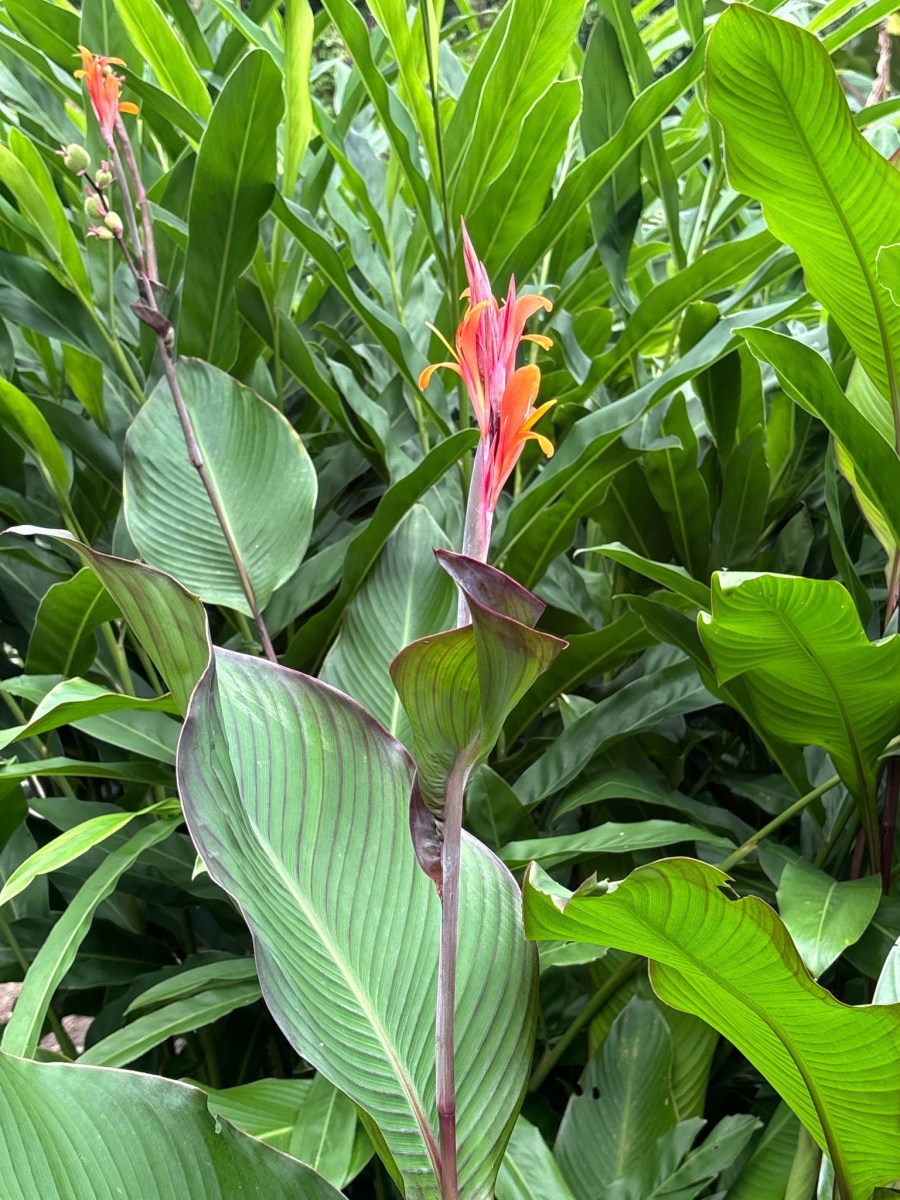
Description by @jominime
has been used in Vietnam as a direct replacement for rice flour and cassava starch in the noodle industry.
the rhizomes are particularly rich in polyphenols and natural antioxidants, with secondary metabolites including alkaloids, saponins, tannins, flavonoids, and phenolic compounds, and polyphenol content reaching 42.71 mg GAE/g with significant flavonoid levels.
hot water extraction of the rhizome yields the highest phenol and flavonoid content, with total phenols at 42.71 mg GAE/g and flavonoids at 21.92 mg QE/g, and demonstrates strong hydrogen peroxide scavenging and electron donation ability.
the rhizome contains caffeic and rosmarinic acids, both documented for their role in blood glucose regulation.
the tubers are very high in fiber as well.
its anti-parasitic and has pain blocking effects.
hepatoprotective.
reverse transcriptase is the enzyme HIV uses to convert its RNA genome into DNA inside human cells.
water extract of Canna indica rhizomes showed HIV-1 reverse transcriptase inhibition ratio above 90% at 200 µg/ml, with an IC50 of 22.56 µg/ml. two proteins — Cip31 (31 kDa) and Cip14 (14 kDa) — were isolated and purified from the extract, showing IC50 values of 17.41 and 19.25 µg/ml respectively for HIV-1 RT inhibition.
the fact that a simple water extract of Canna rhizome can inhibit this enzyme at those concentrations, and that two specific proteins responsible for the activity were isolated and characterized, puts this in a completely different category from generic "antiviral" claims.
you can also use the flowers as a natural dye.
Related Plants
Plant information is for educational purposes only.