African Baobab
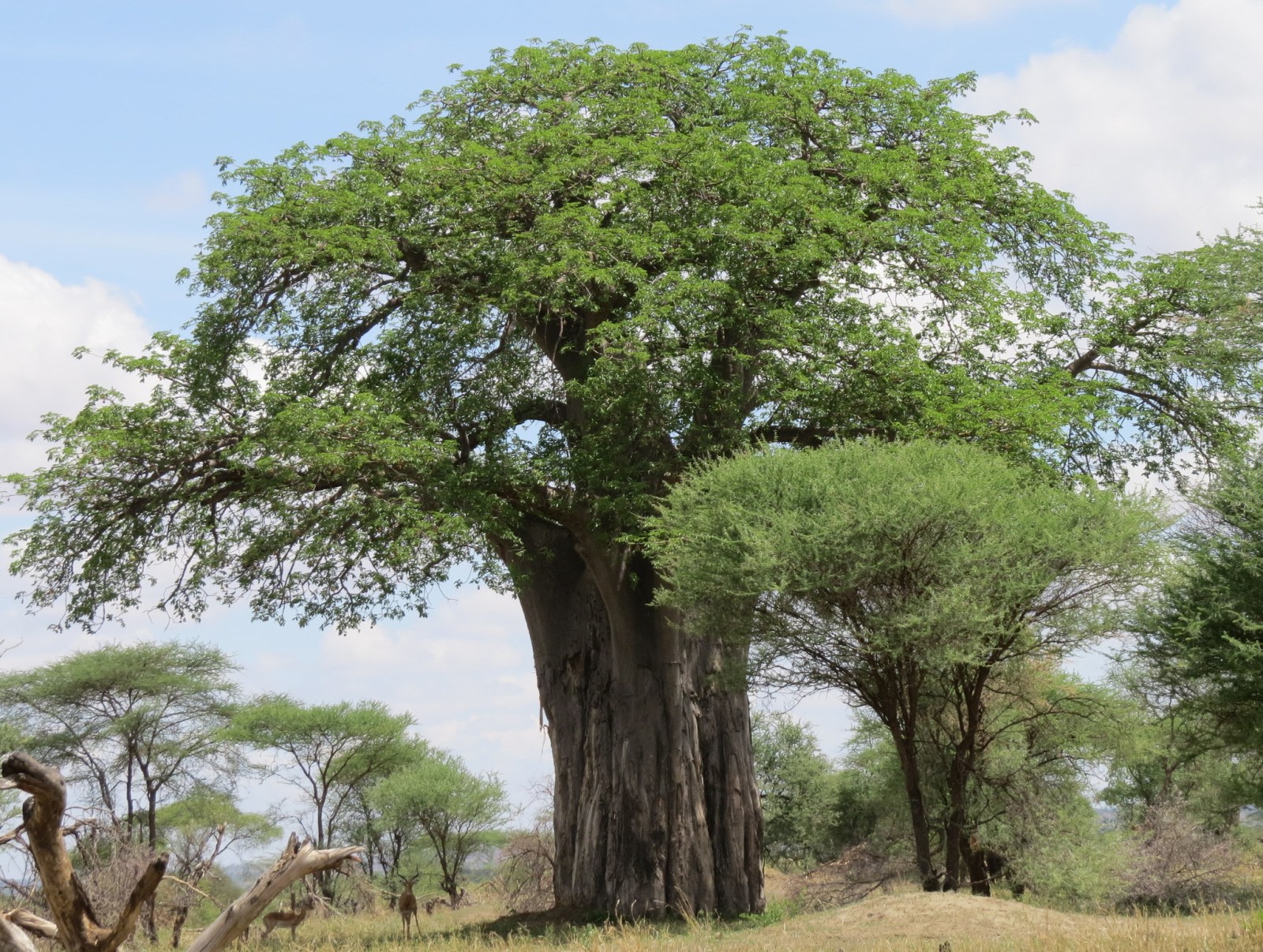
Adansonia digitataThe African Baobab, also known as Adansonia digitata, is a large tree belonging to the Malvaceae family. This distinctive tree is recognized for its thick trunk and broad, spreading branches that give it a unique silhouette. It is often referred to as the upside-down tree due to its unusual appearance, which resembles roots sticking up into the air. The African Baobab is a deciduous tree, shedding its leaves during dry seasons. It is native to Angola, Benin, Botswana, Cameroon, Chad, Congo, DR Congo, Eritrea, Ethiopia, Gambia, Ghana, Guinea-Bissau, Guinea, Ivory Coast and Kenya.
The African Baobab thrives in dry, hot savannas and open forests, where it can dominate the landscape. It is commonly found in various regions across sub-Saharan Africa. This tree has been valued for its many uses, including providing food, water, and shelter. It is also steeped in cultural significance, often associated with local legends and traditions. The African Baobab is a vital part of its ecosystem, serving as a food source for numerous animals.
Related Plants
Plant information is for educational purposes only.